
Australian Prefabricated Housing
Australian prefabricated housing combines innovation and practicality in both design and application, with government promotion and market recognition jointly driving its development.
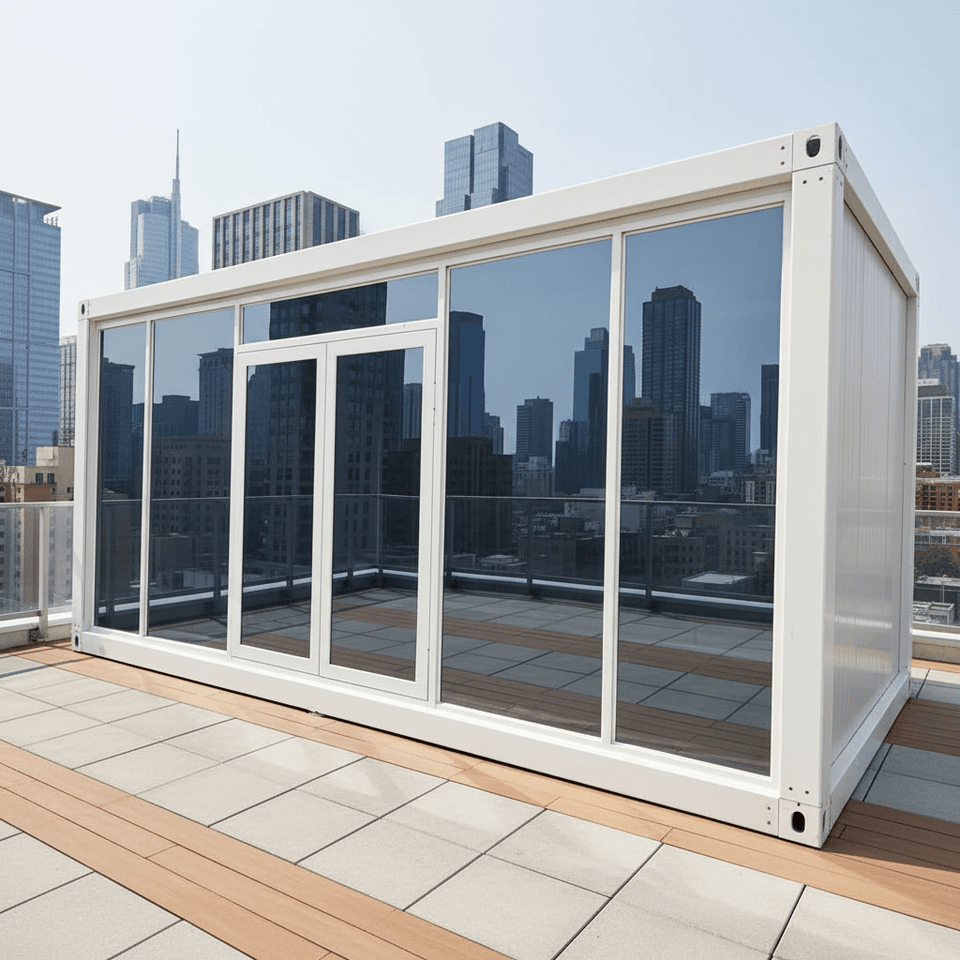
Design Innovation: Integrating Environmental Protection and Functional Needs
Australian prefabricated housing emphasizes the integration of environmental protection and functionality in its design. For example, Archiblox's Clydesdale House adopts passive design principles, optimizing building orientation, insulation materials, and natural ventilation systems to reduce reliance on artificial energy and achieve low carbon emissions. Ecoliv's houses incorporate environmental measures into landscape design by leveraging ocean views, such as rainwater harvesting systems and solar panels, enhancing living comfort while minimizing environmental impact. These designs demonstrate the flexibility of prefabricated housing in adapting to different geographical environments while meeting modern demands for sustainable living.
Application Efficiency: Shortening Construction Time and Reducing Costs
The core advantage of prefabricated housing lies in modular construction. Taking Enclave, a 15-story apartment building in Broadbeach, Gold Coast, as an example, its main structure was installed using prefabricated concrete modules within 48 hours, reducing the construction period by approximately 60% compared to traditional methods and decreasing on-site labor requirements. This efficiency improvement stems from factory-standardized production, where modules are completed with interior finishes and equipment installations in the factory before being transported to the site for assembly, significantly reducing the impact of weather and labor factors on construction. Additionally, the use of standardized components reduces material waste, further controlling costs.
Policy Support: Government Promotion of Standardization and Scaling
The Australian government is actively promoting the application of modular construction and prefabricated components through a 39.3 million AUD pilot project. The policy objectives include:
- Improving construction efficiency: Reducing repetitive labor through standardized design to shorten project cycles;
- Reducing costs: Lowering unit module prices through scaled production to enhance the market competitiveness of prefabricated housing;
- Enhancing quality: Minimizing human errors through precision manufacturing in factory environments to ensure building structural safety. Government support provides momentum for the prefabricated housing industry, attracting more enterprises to invest in technological research and development and market expansion.
Market Prospects: From Leisure Venues to Family Homes
Prefabricated housing in Australia has a wide range of applications, covering small leisure venues, temporary office spaces, to full-sized family homes. With technological maturity, its design diversity and functional completeness can meet various needs. For example, some enterprises offer customized services, allowing customers to select module combinations based on their budget and requirements, even achieving "turnkey" solutions. Market feedback indicates that prefabricated housing is gaining increasing attention from consumers and developers due to its short construction time, stable quality, and environmental characteristics.
In conclusion, Australian prefabricated housing has become a significant direction in modern construction through design innovation, efficiency improvements, and policy support, and is expected to play a greater role in residential, commercial, and public projects in the future.



