
Australia Container Mobile House
Australia container mobile houses are a type of movable housing based on containers or modular units. They are prefabricated in factories and then transported to Australian sites for assembly, featuring rapid construction, environmental friendliness, and flexibility.
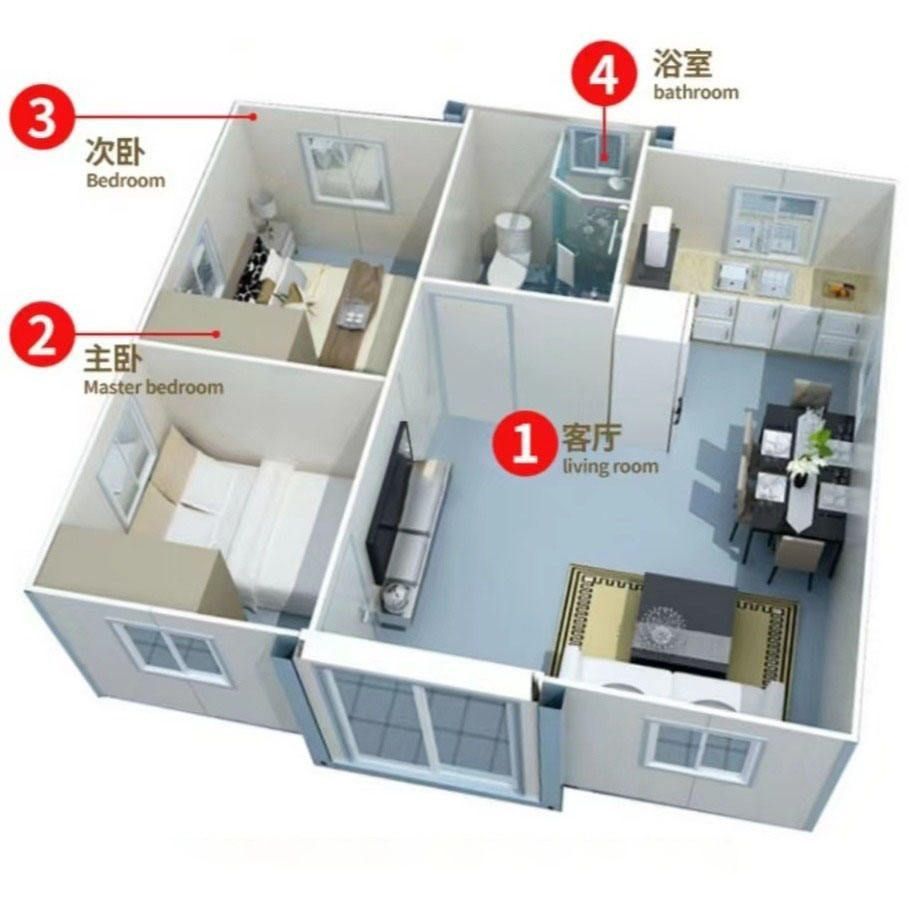
I. Core Types and Structural Features
Modular Houses
Independent "room modules" are manufactured on factory assembly lines, integrating water and electricity, interior decoration, and even soft furnishings. The main structure consists of a steel frame paired with fire-resistant rock wool sandwich panels, providing insulation, fire resistance, sound insulation, and waterproofing. For example, China Construction Integration Architecture customized modular houses for Australia using a "Shenzhen R&D + Shenshan Manufacturing + Direct Port Shipping" model. The transfer from the factory to the port is completed within 20 kilometers, and after a 20-day voyage, they can be assembled on-site in Australia like building blocks, with installation completed in just a few days.Container Houses
Using standard shipping containers as shells, these houses are transformed to serve residential functions. For example, Suzhou Chengsong Exhibition & Display Co., Ltd. launched SAA-certified expandable container houses with rooftop terraces and large balconies, suitable for coastal vacation homes. Wanbang Integration Technology (Suzhou) Co., Ltd.'s creative container buildings, such as Apple Pods and Double-Wing Expandable Boxes, combine lightweight steel structures with energy-saving materials to meet office and residential needs.Prefabricated Villas and Small Mobile Houses
This category includes two-story prefabricated villas, space capsule B&Bs, and portable clinics. For example, Guangdong Xinggang Steel Structure Housing Co., Ltd.'s steel-glass prefabricated expandable cabins are suitable for Airbnb vacation projects. Shanghai Changxu International Trade Co., Ltd.'s mobile prefabricated clinics use modular container designs to meet medical scenario requirements.
II. Application Scenarios and Advantages
Rapid Deployment and Cost-Effectiveness
The construction period is reduced by more than 50% compared to traditional methods, cutting down on construction time and labor costs. For example, China Construction Integration's modular houses can be installed on-site in Australia in just a few days, significantly reducing construction waste, dust, and noise pollution.Flexibility and Relocatability
The houses can be repeatedly disassembled and relocated, adapting to scenarios such as temporary residences, vacation investments, and disaster emergency responses. For example, Seven Seas Worldwide's "Mobile Wooden Houses" provide dedicated shipping containers for international relocation of personal belongings. Users can load directly at their doorstep, with a global warehouse network supporting city-to-city or country-to-country relocation.Environmental Protection and Sustainability
The factory prefabrication model reduces on-site construction pollution, while the steel frame and rock wool sandwich panel structure enhance resource utilization. For example, China Construction Integration's modular houses reduce transportation losses and energy consumption through integrated design.
III. Market and Supply Chain
Major Suppliers
Domestic companies such as China Construction Integration Architecture, Wanbang Integration Technology, and Suzhou Chengsong Exhibition & Display provide one-stop services from design and manufacturing to transportation, with products covering markets in Australia, New Zealand, North America, and Southeast Asia.Pricing and Customization
Prices vary significantly depending on specifications and functions. For example, the starting price for basic container houses is approximately 268 yuan per square meter, while luxury prefabricated villas can range from 1204 to 2006 yuan per square meter. Suppliers support customization based on needs, such as additional features like rooftop terraces, balconies, and solar systems.



