
American Residential Container House
American residential container houses are a form of housing that uses containers as basic modules, prefabricated in factories and assembled on-site. They are characterized by affordability, efficient construction, environmental friendliness, and durability, gradually becoming a new trend in the American housing market.
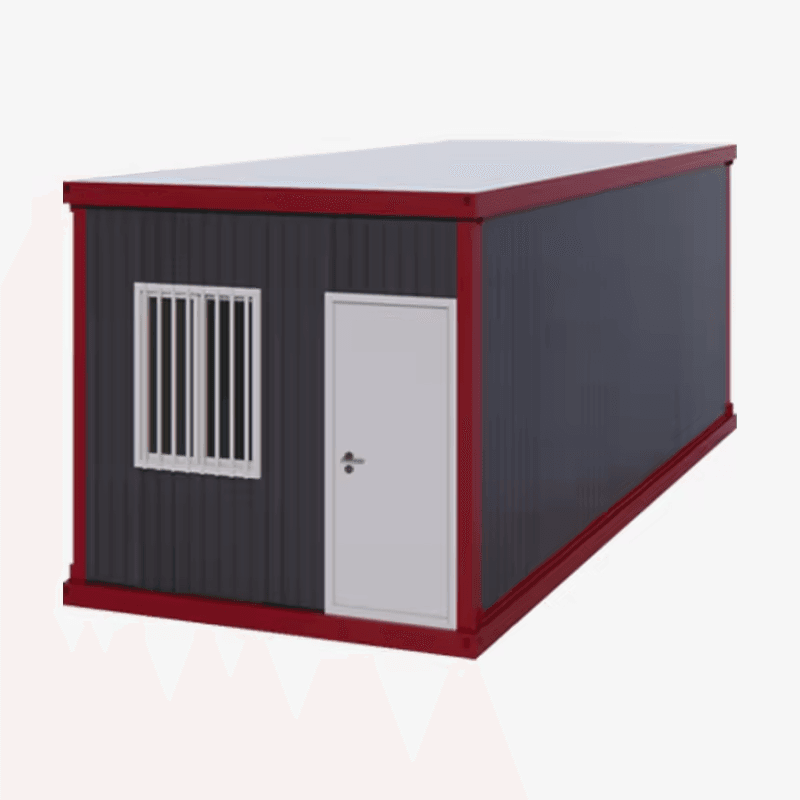
Affordable and Cost-Controllable
The main structure of container houses utilizes new or used containers, resulting in relatively low material costs. Additionally, prefabricated container houses complete most of the processes in factory workshops, reducing labor costs for on-site construction. According to HomeGuide data, the cost of building a container house ranges from $25,000 to $250,000, depending on factors such as house size, number of containers, and foundation installation. For example, an American couple purchased a 40-foot prefabricated house from China for $15,800. After adding shipping costs, tariffs, and other fees, the total landed cost was $28,689, approximately 200,000 yuan, significantly lower than the construction cost of traditional houses.
Efficient Construction and Shortened Cycle
Unlike traditional buildings constructed brick by brick on-site, container houses adopt a "factory-built, on-site assembly" model. The factory disassembles the entire building into several independent space units and completes over 80% of the processes, including the main structure, interior decoration, and installation of mechanical and electrical pipelines, in the workshop. After the house arrives at the designated location, only a few processes, such as module assembly and water and electricity connection, are required before it can be put into use. This construction method significantly shortens the construction cycle. For example, an 18-story high-rise residential project in Hong Kong adopted a modular construction plan and completed delivery within one year, reducing the overall construction cycle by 60% to 70%.
Environmentally Friendly, Durable, and Highly Adaptable
Container houses generate less noise and construction waste during the construction process, highlighting their low-carbon and environmentally friendly advantages, which meet the stringent requirements for green construction in the North American market. Containers themselves are structurally sturdy and durable, and after reinforcement, they can even withstand hurricanes or tornadoes. Some containers are reinforced with additional steel beams, enabling them to resist wind speeds of up to 170 miles per hour. Furthermore, container houses can be flexibly combined and modified according to needs, making them suitable for various scenarios such as hotels, schools, hospitals, and apartments.



