
American Prefabricated Housing Units
Among American prefabricated housing units, modular housing is an important type, featuring unique construction methods, speed, cost, quality, and application characteristics.
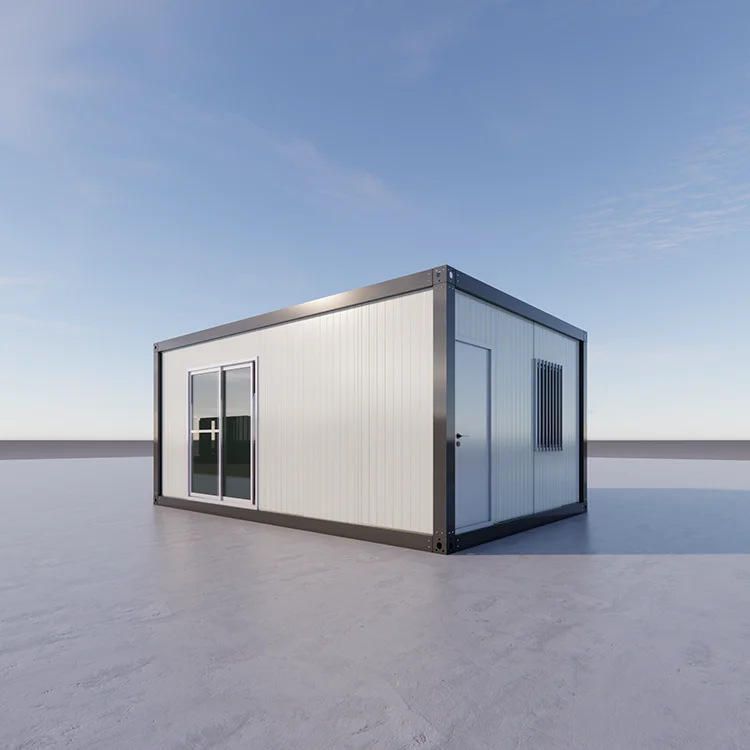
Construction Method: Modular housing completes a significant portion of the house construction in a factory, while the foundation is poured on-site. After both the foundation and the house are completed, the house is transported from the factory to the construction site and anchored to the foundation. For example, in the modular housing projects of China Construction Steel Structure Jiangsu Co., Ltd., the entire building is disassembled into several independent space units in the factory. Over 80% of the processes, including the main structure, interior decoration, and installation of mechanical and electrical pipelines, are completed in the workshop. Once the house arrives at the designated location, only a small amount of work, such as module assembly and connection of water and electricity, is required before it can be put into use.
Construction Speed: Modular construction allows the foundation and house building to proceed simultaneously. Additionally, factories are often located in areas with lower labor costs, enabling centralized procurement and cutting, saving on building materials, and achieving higher construction standards. Construction speed is not affected by weather conditions. Moreover, with unified licensing by state governments and resident inspectors in factories, immediate inspections and rectifications can be carried out, significantly shortening the process. For instance, a modular housing builder in Colorado constructed over 500 houses in three years, with each house taking 5 to 7 days to build. People could move in within six weeks of delivery. The 18-story high-rise residential project in Hong Kong undertaken by China Construction Steel Structure, which would have taken 3 to 5 years using traditional local construction methods, was completed and delivered within one year using a modular construction plan, reducing the overall construction period by 60% to 70%.
Cost Advantages: Factories are usually located in regions with lower labor costs. For example, labor in Idaho is 50% cheaper than in Seattle. Centralized procurement and cutting can save 10% to 20% on materials, and faster construction speeds reduce time costs.
Quality and Standards: Modular buildings have higher construction standards because they must withstand transportation stresses, requiring higher sealing and material quality, making them more eligible for various government energy subsidies. However, the lack of uniform construction standards for modular housing makes it difficult to promote widely in the United States.
Application: In 2024, approximately 100,000 modular houses were shipped to various states across the United States, compared to around 60,000 ten years ago. Clayton Homes is the largest manufacturer and seller of prefabricated houses (modular houses) in the United States. In 2014, it sold a total of 30,871 houses, accounting for about 45% of the total number of prefabricated houses purchased by Americans.



