
American Modular Prefabricated Housing
American modular prefabricated housing, centered on factory-standardized production, has become a crucial solution for addressing housing shortages and labor shortages by shortening construction periods, reducing costs, and enhancing environmental performance.
Corporate Representatives and Market Position
Clayton Homes is a leading enterprise in the American modular prefabricated housing industry. Founded in 1956, its business covers manufacturing, sales, lending, and insurance services, with core products including modular homes and prefabricated homes, primarily targeting middle- and low-income families and the essential housing market. In 2014, the company sold 30,871 homes, accounting for approximately 45% of the U.S. prefabricated housing market. In 2026, after Berkshire Hathaway acquired Taylor Morrison and integrated it with Clayton Homes, a full product line ranging from prefabricated homes to high-end single-family homes was formed, making it the fourth-largest residential developer in the United States and further solidifying its industry position.
Technical Characteristics and Core Advantages
Modular homes are produced through factory-standardized manufacturing of building components, enclosure structures, equipment pipelines, and interior finishes, forming prefabricated assembly space modules that are then transported to the site for assembly and connection. Their advantages are significant:
- Shortened Construction Period: The total construction cycle is reduced by approximately 50% compared to traditional methods. For example, a farmhouse can be built in just 14 days.
- Enhanced Environmental Performance: Construction waste is reduced by about 80%, meeting sustainable development needs.
- Improved Earthquake Resistance: The modular structural design enhances earthquake resistance, making it suitable for disaster-prone areas.
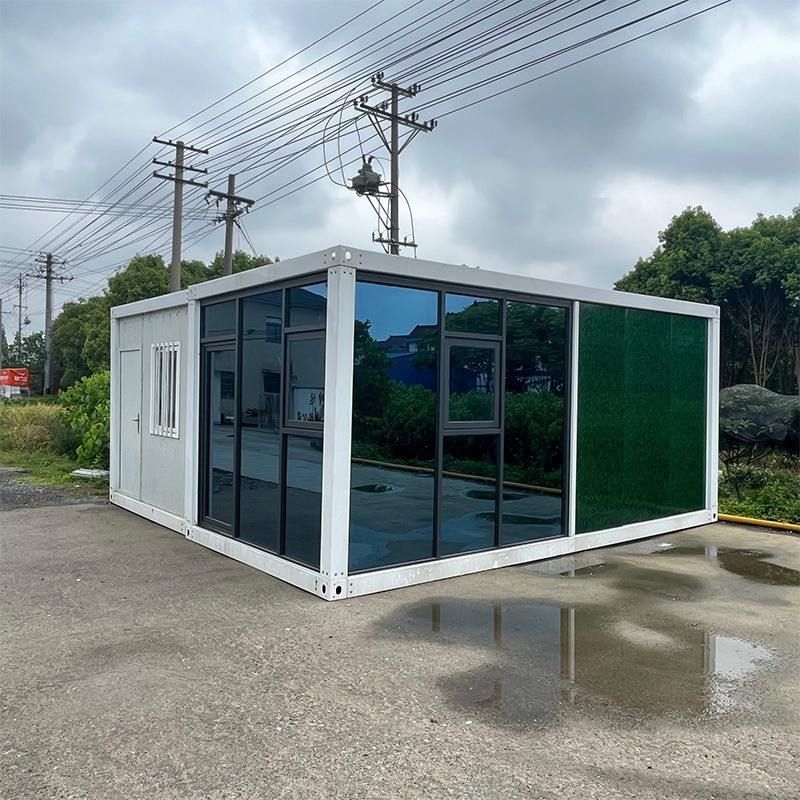
In addition, modular prefabricated homes exported from China have garnered significant attention in the U.S. market due to their low cost (approximately $30,000 for a 70-square-meter home), fast installation (up to two months), and exemption from real estate taxes (not involving ground hardening).
Market Challenges and Opportunities
The American modular housing market faces two major challenges:
- Labor Shortage: There is a shortage of nearly 500,000 construction workers, leading to high traditional construction costs ($165 per square foot) and long construction periods (1-1.5 years). Modular homes can alleviate this issue.
- Housing Shortage: The U.S. housing supply gap has reached 4.03 million units, with the homeownership vacancy rate dropping to a historical low of 0.8%. Modular homes have become an important option for filling the market gap.
In terms of opportunities, policy support and industry consolidation are driving development. For example, the macroeconomic environment (such as mortgage interest rates) has a significant impact, while the export of modular prefabricated homes from China has grown rapidly (export value reached $2.79 billion in the first half of 2026, a year-on-year increase of 45%), further promoting the global application of this technology.
Historical Development and Industry Trends
The concept of modular housing originated from "kit houses" in mid-19th-century America, became popular through mail-order toolkits in the 1920s-1930s, and was used for rapid town construction during World War II, later expanding to suburban housing after the war. Since the 21st century, to address housing affordability issues, container housing and modular micro-apartments have emerged, with technology developing rapidly worldwide. Currently, the industry is evolving toward standardization, intelligence, and green development, with modular construction becoming an important trend in the global housing sector.



