
Accommodation Unit Prefabricated House
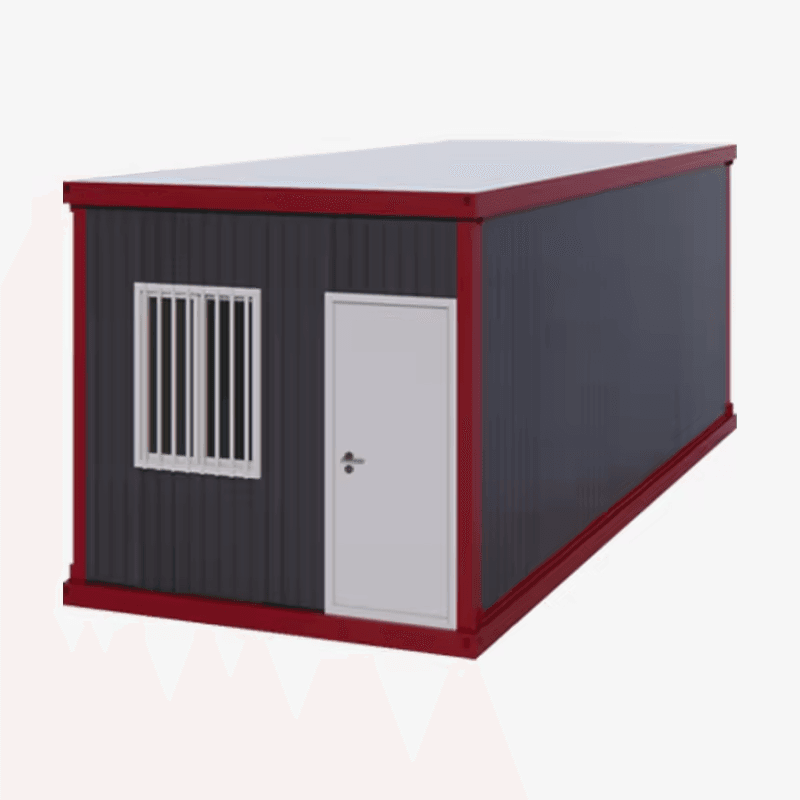
An accommodation unit prefabricated house is an assembled accommodation unit produced through modular prefabrication methods, offering significant advantages such as short construction periods, controllable quality, and energy efficiency and environmental protection.
I. Production and Construction Characteristics
Accommodation unit prefabricated houses break down buildings into independent modules, which are manufactured in factories and then transported to construction sites for assembly. Taking the Apple Pod homestay as an example, its production process includes skeleton welding, wall filling, interior decoration installation, and plumbing and electrical pre-embedding. All ceilings, floors, plumbing, and electrical lines are prefabricated on factory assembly lines. This "building block" construction method significantly shortens the on-site construction period, typically requiring only foundation leveling and municipal interface connections before being put into use. Compared to traditional construction methods, modular construction can reduce the construction period by more than 60%, decrease on-site labor by about 50%, and significantly reduce noise, dust, construction waste, and traffic congestion that disturb residents.
II. Structural and Material Advantages
Modular buildings adopt reasonable structural and material designs. Taking the Apple Pod as an example, its walls feature a multi-layer composite structure, consisting of metal carved panels, waterproof and breathable membranes, OSB structural panels, rock wool insulation layers, and interior decorative panels from the outside in. This layered structure provides both sound insulation and thermal insulation, meeting energy efficiency design requirements. Additionally, the roofs or walls of the entire prefabricated house are directly poured and formed, with fewer connection points, resulting in stronger earthquake resistance. For example, the rounded appearance of the Apple Pod homestay is not only aesthetically pleasing but also reduces wind resistance, making it suitable for complex terrains such as campsites, scenic areas, and forested slopes.
III. Application Scenarios and Limitations
Accommodation unit prefabricated houses are widely used in scenarios such as campsites, scenic areas, and forested slopes, creating a natural living environment. However, this model places extremely high demands on industrial infrastructure, relying on a complete technical system, production system, and industrial cluster support. For example, the Apple Pod homestay is prefabricated in the factory in Weifang by Shandong Yunsen Integrated Housing Co., Ltd. and then transported to the site for installation. This process requires a highly coordinated supply chain and standardized production processes. Without industrial support, the advantages of modular construction will be difficult to fully leverage.



