
Zunyi Mobile Toilet Design
The design of mobile toilets in Zunyi focuses on modularity, mountain adaptability, luxury features, environmental protection, and user-friendliness, balancing functionality and scenario adaptability.
1. Modular and Customized Design
Zunyi mobile toilets adopt a modular architecture, offering a full range of solutions from basic models to high-end customizations. They support various combinations, including single units, connected units, and units with management rooms, and can be customized based on power supply methods (e.g., mains electricity, solar power), sewage discharge cycles (e.g., fecal tank capacity), and pedestrian traffic demands. For example, scenic spots can choose connected structures to enhance reception efficiency, while temporary events can use single units for rapid deployment, meeting diverse scenario needs.
2. Mountain Environment Adaptability
Designed for the karst landscape features of Zunyi, the structure is reinforced with lightweight steel, reducing unit weight by over 30% for easy transportation on narrow mountain roads. Quick leveling devices are equipped for slope installations to ensure stability. The product has passed anti-overturning reinforcement tests to withstand strong winds and has undergone full-temperature range operation verification (-5°C to 42°C) to ensure reliability in environments with long rainy seasons and large temperature variations between day and night. Additionally, the outer shell is coated with anti-corrosion material to extend service life.
3. Luxury Feature Configuration
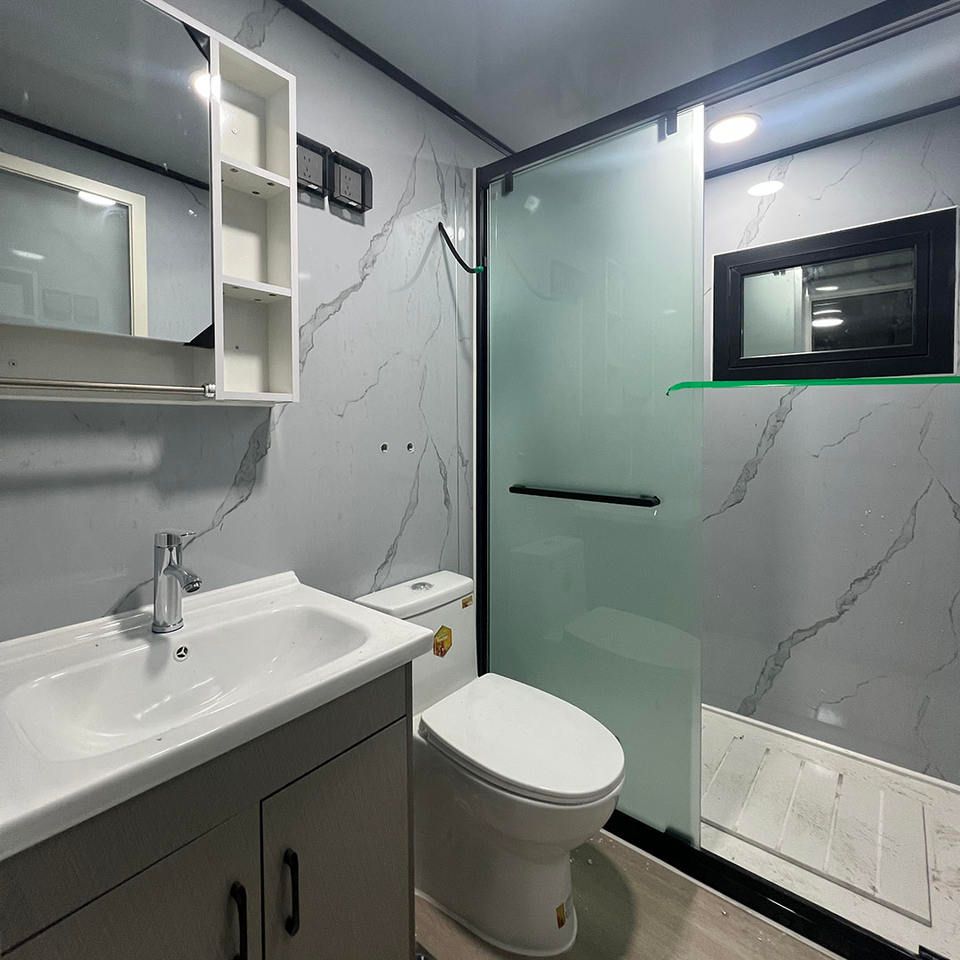
The interior configuration prioritizes user experience, featuring thickened double-layer insulation panels (50% improved thermal insulation), non-slip and wear-resistant PVC flooring, and LED smart induction lighting that saves energy and avoids direct glare. Sanitary facilities include constant-temperature water heaters, smart induction handwashing basins, antibacterial ceramic toilets, and automatic hand sanitizer dispensers. Some models integrate solar power supply and rainwater recycling modules for energy self-sufficiency. Silent sewage pumps (noise ≤ 45 decibels) and constant-temperature ventilation devices further optimize user comfort.
4. Integrated Environmental Protection Technology
Water conservation and emission reduction are core design principles. The toilets are equipped with a standard 0.8L/flush ultra-low water system, combined with biological enzyme decomposition technology to replace chemical agents. After primary treatment, fecal waste meets agricultural irrigation standards. Waterless urinals and plant-based deodorizers reduce water consumption per use by 40%. The outer shell material is 100% recyclable, with no paint emissions during production, and installation requires no concrete foundation, minimizing site disturbance.
5. User-Friendly Detail Optimization
Barrier-free design is implemented across all models, with reserved passageways and handrails in each toilet, and magnetic silent locks for doors. The exterior offers five textures, including wood grain and stone grain, with colors adjustable according to the client's VI system. Ventilation openings are hidden beneath the eaves for both air circulation and visual cleanliness. Extended services include classified garbage bins, nighttime reflective signs, and the addition of barrier-free ramps, enhancing public space friendliness.
Through technological integration and scenario-based innovation, Zunyi mobile toilets achieve a balance between functionality, environmental protection, and user experience, providing replicable solutions for public sanitation facilities in complex terrains.



