
Zongyang Container House Wholesale
When wholesaling container houses in Zongyang, it is necessary to pay attention to product types, production processes, selection points, and the service scope of manufacturers. Here is the specific information:
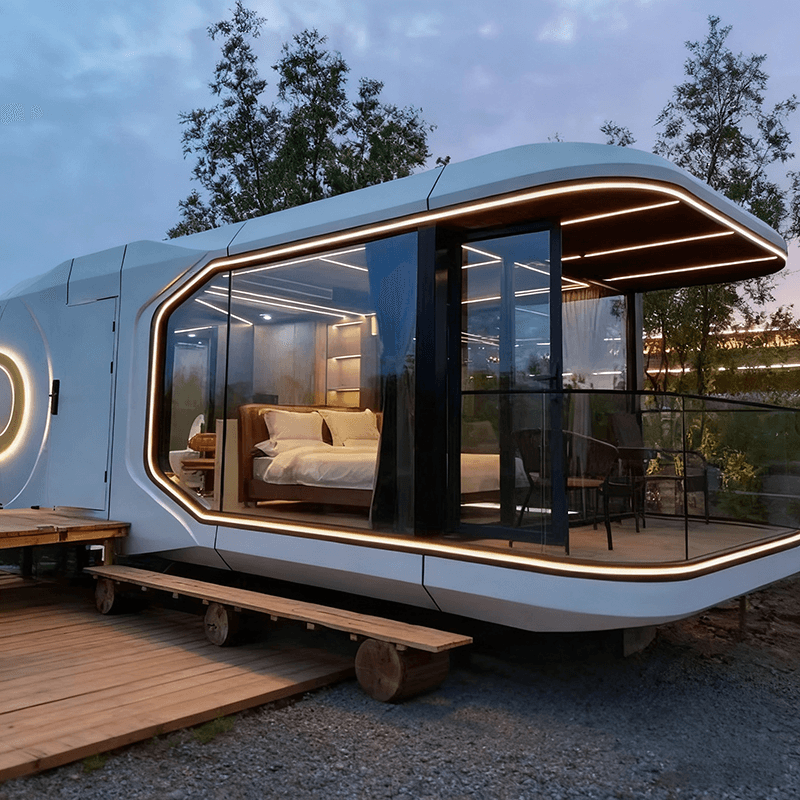
Common Product Types
- Packing-box Container Houses: These use hot-dip galvanized cold-formed steel frames paired with fire-resistant polyurethane sandwich panels, providing thermal insulation and fire resistance. They can be used independently or stacked in multiple layers, suitable for construction site dormitories, office areas, and temporary meeting rooms.
- Light Steel Frame Houses: These adopt cold-formed thin-walled light steel frames as the load-bearing structure, with walls filled with insulation materials. The appearance and layout can be flexibly customized, making them suitable for long-term use scenarios such as self-built houses, homestays, and scenic area support facilities.
- Functional Kiosks and Supporting Buildings: Their sizes and internal layouts can be adjusted according to actual needs, commonly found in security kiosks, property kiosks, and environmental protection public toilets.
Production Process and Characteristics
Container house wholesalers typically use standardized production lines for mass manufacturing. The core processes include welding of steel structural frames, prefabrication of wall and roof panels, and pre-embedding of internal water and electricity pipelines. After most processes are completed in the factory, the components are transported to the site for rapid assembly. This production method effectively shortens the construction period, reduces on-site wet work, and ensures component accuracy. The modular design enables the products to be repeatedly disassembled and reused, offering significant cost advantages in scenarios such as construction site temporary buildings and emergency housing.
Selection Points
- Material Selection: Structural steel commonly uses hot-dip galvanized cold-formed steel, which has good rust and corrosion resistance. Wall panels often use rock wool, glass wool, or polyurethane sandwich panels, providing both thermal insulation and fire resistance. Floors typically use cement fiber boards or steel-wood composite floors, while walls and ceilings can use metal panels or calcium silicate boards.
- Performance Requirements: Determine whether thermal insulation, fire resistance, water resistance, sound insulation, and other functions are needed based on the usage scenario. For example, long-term living scenarios require attention to the environmental friendliness and durability of materials.
Manufacturer Service Scope
- Production Capacity: Pay attention to whether the manufacturer's steel structural processing technology is mature, whether the fire rating of wall panels meets standards, and whether they support customization of irregular sizes or special functions.
- Delivery Cycle: Differences in the automation level of production lines, quality control systems, and project experience among manufacturers directly affect the service life and installation efficiency of the products.



