
What Does Prefabricated Housing Mean? English Translation
Prefabricated housing is a form of construction that involves the industrial production of building components, which are then assembled on-site. It is also known as modular construction.
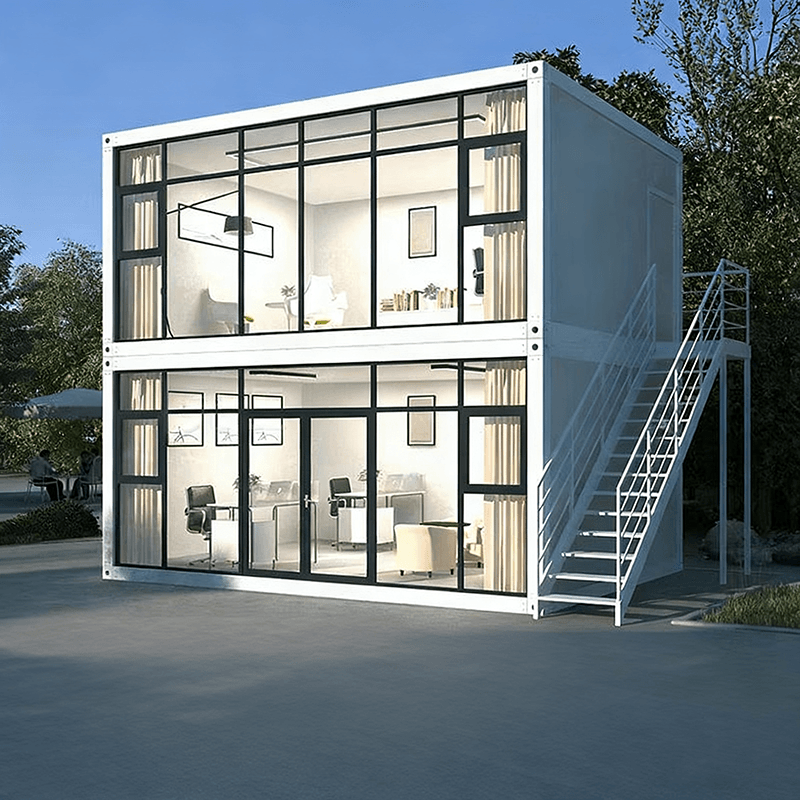
From the perspective of production mode, prefabricated housing breaks down a building into individual modules. These modules encompass various parts of the house, such as ceilings, floors, and plumbing and electrical systems. All of them are prefabricated on factory assembly lines. Factories have standardized production environments and advanced production equipment, which can ensure the quality and precision of each component and reduce errors caused by human factors. For example, walls can be manufactured in the factory according to precise dimensions and specifications, and the laying of plumbing and electrical systems can be more standardized and reasonable with the assistance of professional equipment.
In terms of transportation and assembly, the manufactured modules are transported to the construction site. Upon arrival, construction workers simply assemble these modules like building blocks. This construction method significantly reduces the complexity of on-site construction. Instead of starting from the foundation and gradually building up as in traditional construction, it directly involves the lifting and assembly of modules.
From the perspective of process proportion, 90% of the processes in prefabricated housing are completed in the workshop. This means that most of the construction work is carried out in a factory environment, which is less affected by external factors such as weather, effectively ensuring the construction schedule. On-site, only the final node connections are required, such as the treatment of gaps between modules and the reinforcement of structural connection parts, greatly shortening the on-site construction time.
This construction method of prefabricated housing offers numerous advantages. It improves the production efficiency of buildings and shortens the construction cycle. Due to factory production, quality is easier to control and guarantee. At the same time, it reduces the construction waste and noise pollution generated by on-site construction, making it more environmentally friendly and energy-efficient. With the continuous development of construction technology, the application of prefabricated housing in residential and commercial buildings is becoming increasingly widespread, becoming an important development trend in the modern construction field.



