
Yulin Mobile Toilet Construction
The construction of mobile toilets in Yulin requires the integration of geological conditions, functional requirements, and environmental standards, utilizing modular design and professional construction techniques to ensure structural stability, ease of use, and compliance with environmental regulations.
1. Pre-construction Preparation and Geological Treatment
The geological conditions in Yulin are complex, necessitating detailed geological surveys. For example, the construction of mobile toilets in the Jingbian Wave Valley scenic area requires a foundation bearing capacity of ≥150 kPa. In areas with loose sand layers, graded sand and gravel replacement (with a thickness of 500 mm) should be used, followed by layered compaction with a compaction coefficient of ≥0.93 to prevent foundation settlement. The foundation design must consider frost heave resistance, such as using prefabricated reinforced concrete strip foundations (C30 concrete, with Φ12 reinforcement at 200 mm intervals), buried at a depth of 1.2 m, with a 300 mm wide expanded polystyrene foam board frost heave prevention layer around the perimeter to ensure structural stability in low-temperature environments.
2. Key Points of Main Structure Construction
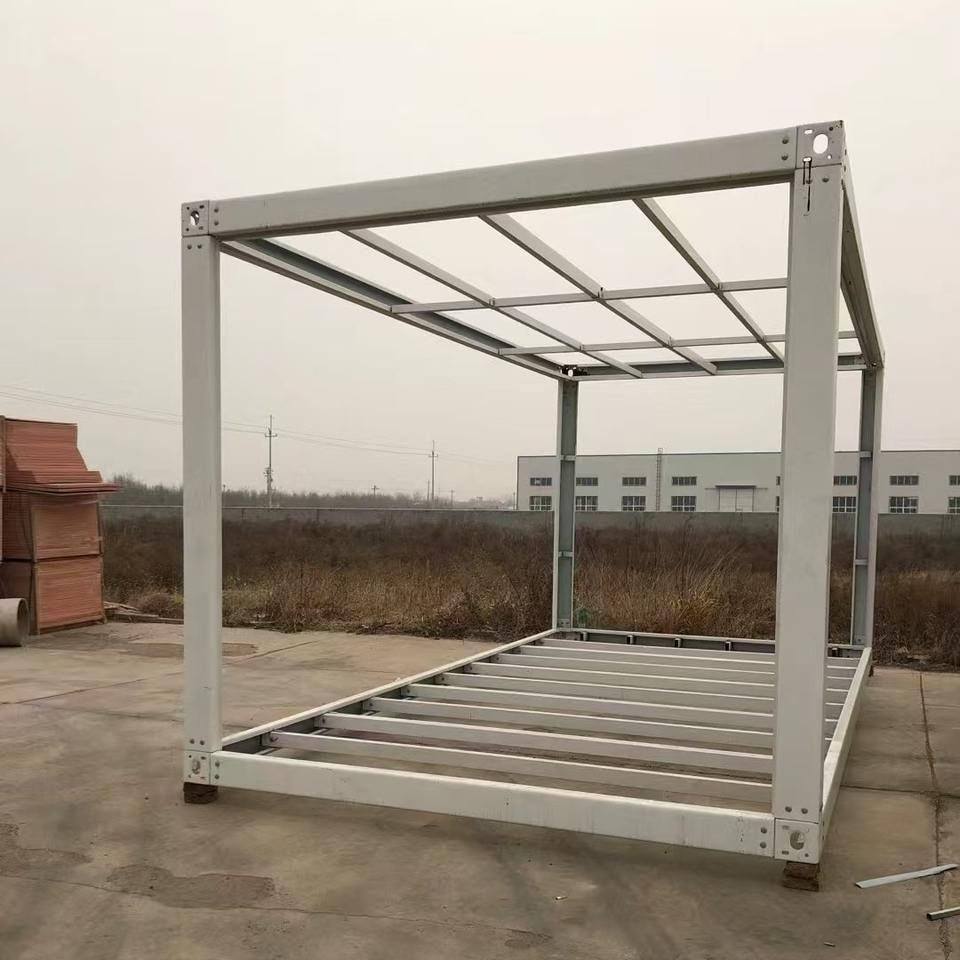
- Steel Structure Installation: Factory-prefabricated H-shaped steel frames are assembled on-site, connected using M12 high-strength bolts, with strict control over installation deviations (verticality ≤1.5 mm/m, planar bending ≤L/1000). Four corners are secured with Φ10 mm steel wire rope diagonal anchors, with ground anchors buried at a depth of 1.5 m, at a 45° angle, and a pre-tension of 5 kN to enhance wind resistance (wind resistance rating ≥12).
- Enclosure Structure Installation: Wall panels are selected as tongue-and-groove polyurethane sandwich panels (with a thickness of 100 mm), with fire-resistant sealant filling the panel joints. The exterior is pasted with fluorocarbon-coated aluminum panels mimicking the texture of Danxia landforms (with weather resistance of ≥15 years), balancing aesthetics and durability. Windows and doors adopt broken-bridge aluminum double-glazed windows (5+12A+5 mm) to improve thermal insulation.
3. Functional Design and Environmental Protection Technologies
- Water Conservation and Sewage Disposal: Vacuum water-saving technology is employed, with a single water usage of ≤0.3 L and a daily water consumption of ≤500 L (for a 6-toilet example). Sewage is remotely transported via vacuum pumps, complying with the GB 7959-2012 standard for sewage disposal.
- Modular Design: Each toilet unit measures 5 m × 3 m × 2.8 m, containing 3 squat toilets (with a male-to-female ratio of 1:1.5), 1 accessible toilet, and 1 management room, allowing for rapid assembly and adaptation to scenic areas, construction sites, and other scenarios.
4. Construction Precautions
- Cleaning and Maintenance: Avoid using alkaline cleaners or hard tools to strike sanitary ware to prevent porcelain surface damage.
- Pipe Unblocking: Immediately address drainage blockages; minor blockages can be cleared using a wire hook to remove foreign objects, while severe blockages require notification of specialized personnel for repair.
- Odor Control Management: Regularly replace odor-absorbing materials such as bamboo charcoal or adopt photocatalytic odor control methods (where nano-titanium dioxide decomposes organic matter under light exposure) to maintain fresh air.
The construction of mobile toilets in Yulin requires a comprehensive consideration of geological, climatic, functional, and environmental requirements, achieving efficient, durable, and environmentally friendly goals through standardized design and meticulous construction.



