
Yangquan Mobile Toilet Recommendation
When choosing mobile toilets in Yangquan, it is recommended to comprehensively consider from four dimensions: product type, sales company, leasing service, and customized production. Here are specific recommendations:
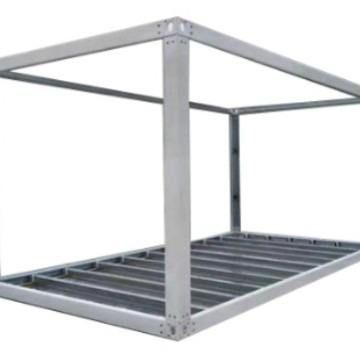
1. Three-compartment toilet products: Hebei Huizhe Environmental Protection Technology Co., Ltd.
The three-compartment toilets provided by this company for Yangquan, Shanxi, use a 1.5-cubic-meter injection-molded septic tank, including a flush bucket, squat toilet, and mobile toilet cabin, meeting rural non-hazardous transformation standards. Its core advantages are as follows:
- Septic tank design: The volume ratio of the three compartments is 2:1:3. The tank body is sealed to prevent leakage and is equipped with an odor-proof device, effectively reducing odor diffusion.
- Supporting materials: It provides foot-operated flushers, PVC pipes, etc., reducing the risk of pollution from manual operations.
- Applicable scenarios: Suitable for rural areas, construction sites, and other scenarios with high requirements for sewage treatment, with relatively low long-term usage costs.
2. Sales company evaluation: Haoshitong Pipeline Engineering (Beijing) Co., Ltd.
If it is necessary to ensure the reliable connection between mobile toilets and temporary sewage pipe networks and the cleaning and transportation of septic tanks, priority can be given to enterprises with full-chain service capabilities:
- Core capabilities: Covering pipeline system maintenance, installation, and septic tank cleaning and transportation, it can solve the sewage disposal problems of mobile toilets.
- Evaluation points: It is necessary to check the enterprise's business registration information (such as registered capital and business scope), past project cases (such as local service experience in Yangquan), and customer feedback to ensure its local service capabilities.
- Applicable scenarios: Suitable for large construction sites, temporary events, and other scenarios that require long-term maintenance.
3. Leasing service recommendations: Service providers of microbial degradation or chemical treatment technologies
Choose the technology type according to the usage frequency and operation and maintenance costs:
- Microbial degradation technology: It decomposes excrement through microorganisms, reducing the frequency of cleaning and transportation. However, it requires maintaining the temperature and humidity environment (such as installing temperature control equipment), suitable for scenic spots, high-end events, and other scenarios with high environmental protection requirements.
- Chemical treatment method: It has relatively low costs but requires regular addition of chemicals, suitable for short-term events or scenarios with limited budgets.
- Service provider selection: Priority should be given to professional service providers that offer site planning, cleaning and maintenance, and emergency response. The leasing agreement should clarify clauses such as equipment damage liability and cleaning and transportation time.
4. Customized production manufacturer: Cangzhou Hengtai Sanitation Equipment Co., Ltd.
If special specifications or functions are required, manufacturers that support customization based on drawings can be selected:
- Product types: Including single-unit structures (lightweight and easy to transport) and composite structures (can be spliced), with materials covering fiberglass, polyethylene, etc.
- Service capabilities: It has integrated capabilities in research and development, production, sales, and after-sales service, meeting the personalized needs of scenic spots, temporary events, etc.
- Applicable scenarios: Suitable for scenarios with special requirements for the appearance and functions of mobile toilets.
Suggestions: Choose the technology type according to the usage scenario (such as construction period, pedestrian traffic, and environmental protection requirements), and give priority to examining the supplier's local service capabilities, product quality standards (such as leakage prevention and odor prevention), and after-sales response mechanisms (such as 24-hour emergency services).



