
Xining Prefabricated Assembled Housing
Xining prefabricated assembled housing is a green building product with building modules prefabricated in factories and rapidly assembled on-site. Its construction and application are closely related to Xining's unique geographical and climatic conditions.
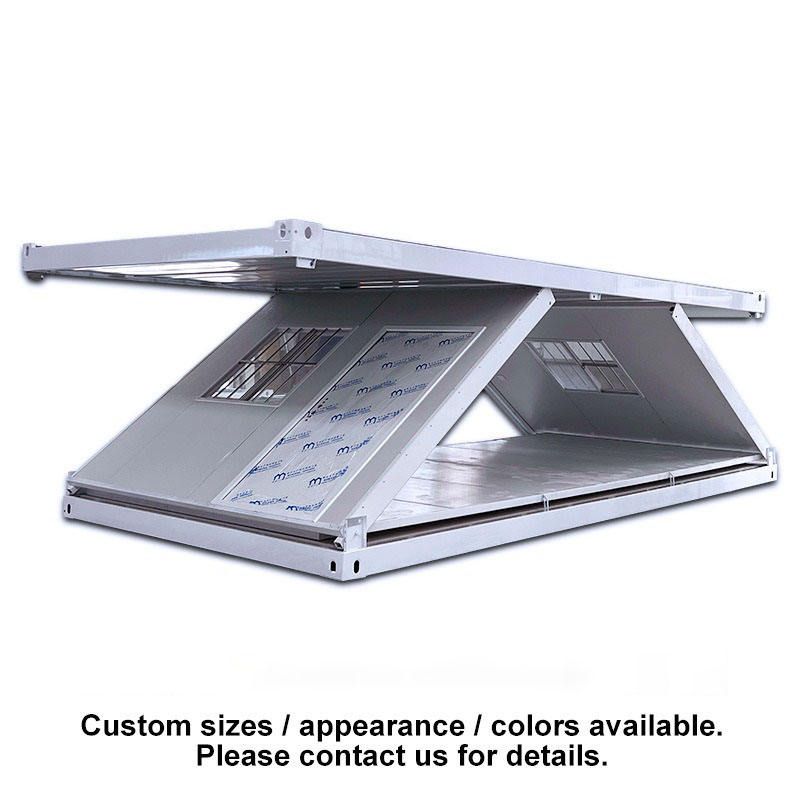
Technical Features
- Integrated Design: Structural, insulation, and utility components are integrated into standardized modules, produced using high-precision molds. Component tolerances are controlled to the millimeter level, enhancing construction efficiency and quality.
- Materials and Structure: Lightweight steel frames or concrete composite walls are used, with high-density insulation layers (such as rock wool or polyurethane) embedded to withstand Xining's winter temperatures as low as -20°C. Enhanced node connections and flexible seismic designs meet the 8-degree seismic fortification intensity requirements of the Qinghai-Tibet Plateau, ensuring structural safety.
- Performance Advantages: Construction periods are reduced by over 60% compared to traditional buildings, with minimal on-site wet work, reducing ecological disturbance in high-altitude areas. Some products incorporate passive ultra-low-energy technologies, significantly reducing winter heating energy consumption through airtight designs and thermal bridge treatments, achieving outstanding energy-saving effects.
Application Scenarios
- Ecological Relocation: In ecological protection projects around Qinghai Lake, modular housing enables rapid occupancy and is equipped with solar heating systems, addressing residential challenges in areas far from urban utility networks.
- Temporary Accommodation: Widely adopted at Qinghai-Tibet Railway stations and construction camps for new energy power plants, with a disassembly and reassembly turnover rate exceeding 5 times, saving resources and costs.
- Tourism Campsites: Prefabricated starry-sky houses and log cabins in the Qilian Mountains are gently placed on the land and rapidly constructed, minimizing long-term ecological impact and enhancing high-altitude tourism accommodation experiences.
- Industrial Support Housing: Meets the rapid construction and flexible usage needs of industrial scenarios, adapting to diverse functional requirements.
Local Industry
Xining boasts technologically advanced modular integrated housing factories, such as an assembly building industrial base in Qinghai that has introduced German fully automatic flexible production lines with an annual capacity of 100,000 square meters. A prefabricated integrated housing manufacturing enterprise employs automated production lines and BIM digital management platforms, achieving an annual production capacity of tens of thousands of square meters. Factories implement digital management through BIM full-process management and optimize panel freeze-thaw and UV resistance formulas for high-altitude climates, ensuring component precision and durability. Products are supplied to Qinghai and high-altitude regions such as Tibet and Gansu, achieving a fire resistance rating of Class A and an insulation coefficient below 0.3W/(m·K), and obtaining multiple provincial-level construction method certifications.
Development Prospects
As the gateway city to the Qinghai-Tibet Plateau, Xining's geographical climate and urbanization needs provide broad application scenarios for modular integrated housing. Local factories leverage accumulated high-altitude adaptability technologies to drive product iteration towards greater energy efficiency, seismic resistance, and ease of disassembly and reassembly, with significant potential in ecological sensitive area construction, emergency support, and high-altitude livable renovations. With the advancement of green building policies and the refinement of prefabricated building standards, such products will play a greater role in Xining's urban and rural construction.



