
Portable Toilets at Construction Sites in Xiangyang
When renting portable toilets for construction sites in Xiangyang, it is crucial to focus on five core elements: equipment type, cost, hygiene assurance, operation and maintenance scheduling, and odor control design.
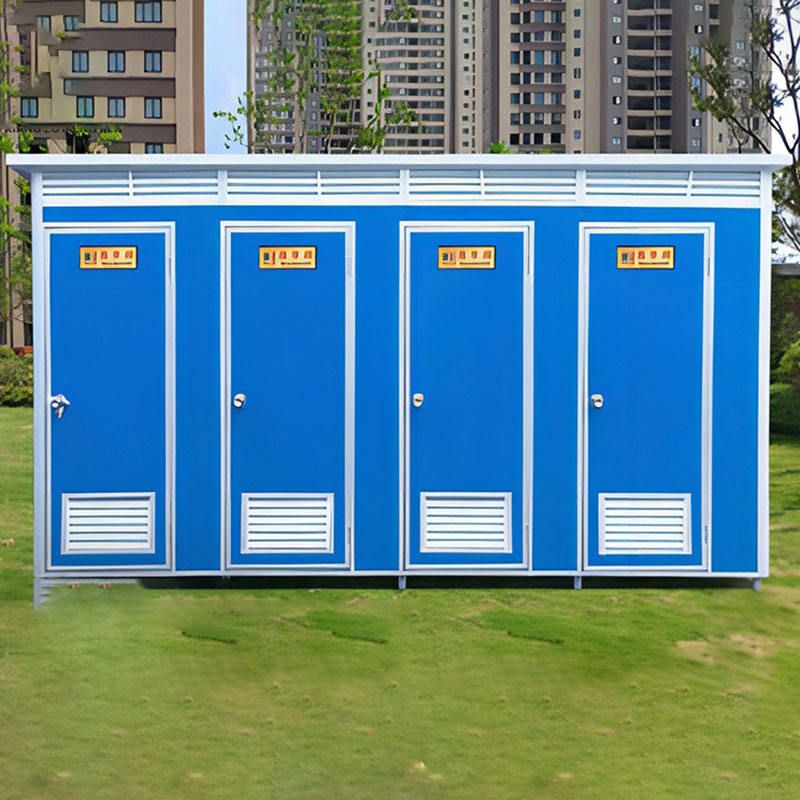
1. Equipment Types and Suitable Scenarios
Standalone single-unit restrooms are the mainstream choice for construction sites. They consist of a single toilet cubicle, a fecal storage tank (with a capacity of 100-200 liters), a flushing water tank, and ventilation equipment. Their advantage lies in the fact that they do not require complex water and electricity connections, making them suitable for construction scenarios with open spaces but weak infrastructure. The capacity of the fecal storage tank directly affects the waste removal cycle. A larger capacity means longer intervals between cleanouts, but it is necessary to balance the equipment size with the available site space.
2. Rental Cost Structure
The cost follows a 'daily rental fee + deposit' model. The daily rental fee for a standalone single-unit restroom ranges from 80 to 150 yuan, and the deposit is 30%-50% of the total rental amount. Additional fees to pay special attention to: transportation and installation fees (an extra charge is applied for distances over 10 kilometers outside the urban area) and cleaning and waste removal fees (300-600 yuan per waste removal). For example, when the average daily usage is 50 person-times, the number of waste removals per month may reach 10, significantly increasing the waste removal cost.
3. Hygiene Assurance Mechanisms
Waste disposal methods include direct discharge (manual extraction of the fecal storage tank) and circulating flushing (using chemicals to break down odors). For long-term rentals, the service provider should offer cleaning services at least twice a week, including disinfection and replenishment of hand soap and toilet paper (if the equipment is so equipped). In high-frequency usage scenarios (with an average daily usage of over 50 person-times), the disinfection interval should be shortened to 2-3 hours to prevent the deterioration of hygiene conditions and avoid disputes.
4. Operation and Maintenance Scheduling Logic
For construction sites with a construction period exceeding one month, it is necessary to dynamically adjust the cleaning cycle. For example, in high-intensity usage scenarios, relying solely on a 'daily cleaning' model is insufficient, and the disinfection frequency of key parts (such as door handles and flush buttons) should be increased. The service provider should offer a 24-hour emergency response to ensure that equipment failures are repaired within 4 hours.
5. Structural and Odor Control Design
The ventilation system should combine mechanical ventilation (fans + exhaust pipes) with activated carbon filtration to deal with odors in high-temperature environments. The integrity of the floor drain odor control structure (U-shaped water traps or sealing strips) is of utmost importance. If damaged, it can lead to the backflow of pipe odors. It is recommended to regularly check the sealing of the floor drains and give priority to choosing circulating flushing equipment to reduce odor generation.



