
Volver al blog
Artículo
Customization of Mobile Toilets in Wuhan Urban Areas
Admin 12 de octubre de 2026
The customization of mobile toilets in Wuhan urban areas requires a comprehensive consideration of technical aspects and enterprise selection, with the core being functional adaptation and matching of scenario requirements.
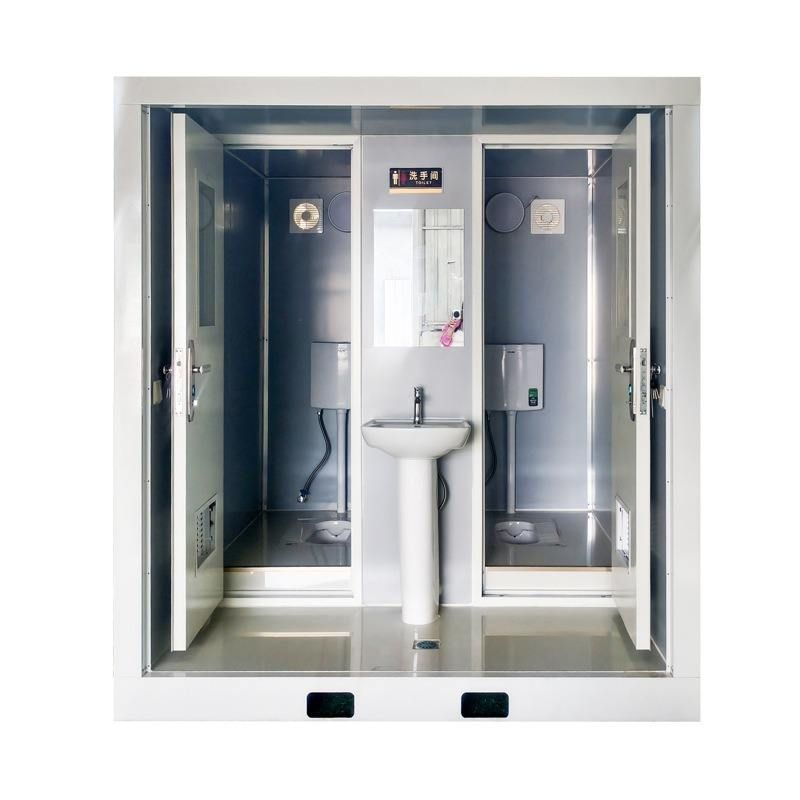
I. Key Points for Customization of Technical Aspects
Sanitary Treatment Systems
- Biodegradation: Relies on microorganisms to decompose excreta. It is environmentally friendly but requires regular maintenance (such as adding bacterial strains) and is sensitive to ambient temperature (optimal range: 5-40℃). It is suitable for low-frequency usage scenarios such as parks and scenic spots.
- Chemical Agents: Uses reagents to rapidly decompose and deodorize excreta, with short maintenance intervals (usually 1-3 days). It is applicable to high-frequency usage scenarios such as commercial events and temporary exhibitions.
- Vacuum Collection: Requires extremely low water consumption (only 0.5L per use) and has a large-capacity sewage storage tank. It is suitable for water-scarce areas or construction sites and emergency rescue scenarios that require frequent relocation.
The choice of technology directly affects pipeline design, sewage storage tank capacity, and cleaning interface specifications, necessitating coordinated design with subsequent structural materials.
Structural Framework and Materials
- Framework: Made of corrosion-resistant steel or aluminum alloy profiles. The load-bearing nodes need to be calculated based on the weight of the sanitary system, foundation conditions (such as the need for reinforcement in soft soil foundations), and wind resistance level (Wuhan has a subtropical monsoon climate, requiring consideration of wind forces up to Level 8).
- Enclosure Panels: Priority is given to metal sandwich panels (thermal insulation coefficient ≤ 0.5W/m²·K) or fiberglass-reinforced plastic panels, which need to meet requirements for airtightness (leak prevention), fire resistance rating (above B1 level), and weather resistance (UV resistance and corrosion resistance).
In Wuhan, with its hot and humid summers and cold and damp winters, the panels need to be rigorously tested for thermal insulation and moisture resistance to prevent internal condensation.
Spatial Layout and Ergonomics
- Functional Zoning: Plan toilet areas (with a minimum single-room area of 1.2㎡), handwashing areas (including hand-drying equipment), and luggage storage areas based on peak usage numbers (such as 50 people per hour during peak periods in scenic spots).
- Barrier-Free Design: Ramps (with a slope ratio ≤ 1:12), handrails, and low-level handwashing stations (with a height ≤ 0.8m) need to be installed. The opening direction of door leaves should avoid conflicts with internal facilities.
- Ventilation and Lighting: Install exhaust fans (with a power ≥ 50W) on the roof, complemented by sidewall vents. Windows should use frosted glass or translucent panels (with a light transmittance ≥ 60%) to balance lighting and privacy.
II. Recommendations for Selecting Local Enterprises in Wuhan
- Wuhan Jintongchuang Technology Development Co., Ltd.: Provides full-process services (design-production-installation-after-sales), suitable for large-scale projects such as urban management and livelihood projects. It can customize multifunctional integrated toilets (such as those including sanitation restrooms).
- Wuhan Hongyu Tianrun Environmental Protection Technology Co., Ltd.: Specializes in the manufacture of ecological mobile public toilets, with flexible leasing services suitable for temporary events (such as music festivals and marathons). It supports personalized designs such as water-free packaging and foam sealing types.
- Wuhan Longao Environmental Protection Technology Co., Ltd.: Mainly deals in mobile toilets and sanitation facilities, serving security and weak current engineering contractors. It is suitable for projects that require integration with monitoring and lighting systems.
Recommendations for the Customization Process: First, clarify the usage scenario (such as high-frequency/low-frequency, fixed/mobile), then select the sanitary treatment technology, and finally determine the structural materials based on the climate and budget. Priority should be given to enterprises that offer on-site surveys and after-sales maintenance.
Relacionados



