
Wuhan and Chongqing Mobile Toilets
Both Wuhan and Chongqing offer mobile toilet services, with Wuhan focusing on rental and the application of tidal public toilets, while Chongqing emphasizes custom processing and the promotion of tidal public toilet designs.
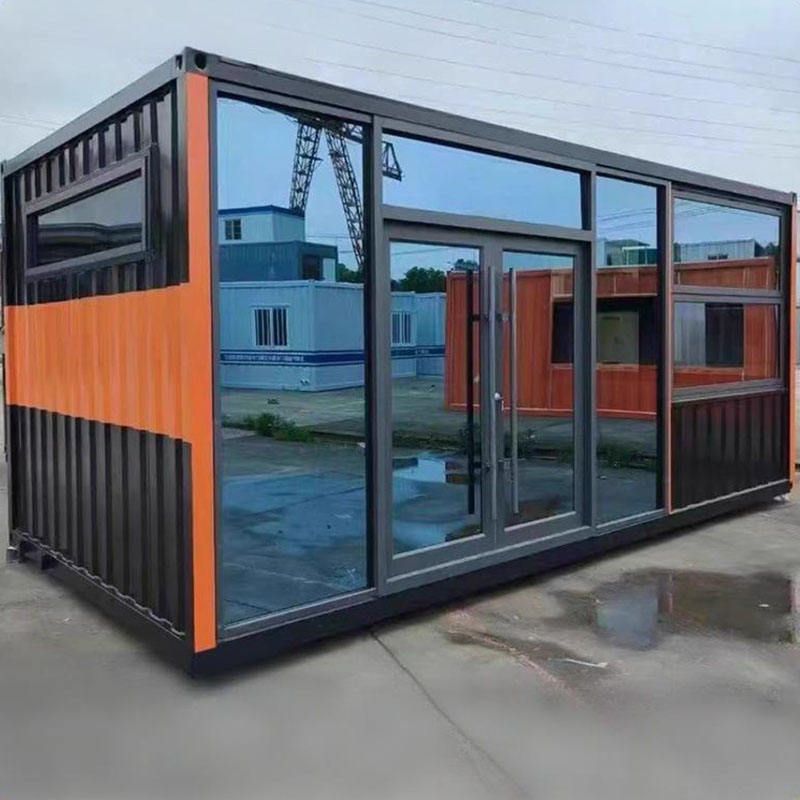
Features of Mobile Toilet Services in Wuhan
Mobile toilet services in Wuhan are centered around rental businesses, covering temporary event scenarios such as marathons, concerts, music festivals, and construction sites, providing flexible short-term solutions. Rental companies offer a diverse range of main product types, including mobile toilets dedicated to epidemic prevention centers (meeting sanitary isolation needs), portable mobile toilets (lightweight and easy to transport, suitable for outdoor activities), and outdoor mobile toilets (adaptable to complex environments, such as construction sites and parks). Additionally, Wuhan is at the forefront of public toilet innovation. In August 2025, the first tidal public toilet was launched at the Yangtze River Bridge's Hanyang Bridgehead. Through movable partition designs, it dynamically adjusts the ratio of male to female toilet stalls, increasing female stalls by 50% during peak hours, effectively alleviating queuing issues.
Features of Mobile Toilet Services in Chongqing
Mobile toilet services in Chongqing are centered around custom processing. Local companies, such as Chongqing Shuda Municipal Facilities Co., Ltd., provide full-chain services covering design, production, sales, and maintenance. Their products, represented by mobile public toilets, emphasize the durability and functionality of outdoor public facilities, such as the use of anti-corrosion materials and the provision of independent septic tanks, adapting to Chongqing's hilly terrain and humid climate. In terms of technological innovation, Chongqing has taken the lead in piloting and promoting the design concept of tidal public toilets, achieving rapid reconfiguration of toilet stalls through modular structures. Some public toilets have already implemented a regularized "tidal mode" operation. For example, the public toilet on Jiefangbei Pedestrian Street adjusts the ratio of male to female toilet stalls from 1:2 to 1:3 during holidays, significantly improving usage efficiency.
Comparison and Complementarity of Services in Both Regions
Wuhan's service model focuses more on responding to short-term needs, meeting temporary event scenarios through rentals. In contrast, Chongqing focuses on long-term facility construction, adapting to different geographical environments through customized production. Both regions have introduced tidal public toilet technology, but Wuhan primarily demonstrates it at single points, while Chongqing has established replicable design standards. In the future, services in both regions can be further integrated. For example, Wuhan's rental companies can introduce Chongqing's modular designs to enhance equipment reusability, while Chongqing's manufacturers can learn from Wuhan's operational data to optimize the intelligent scheduling systems of tidal public toilets.



