
Volver al blog
Artículo
What is the Translation of Photovoltaic Container House in English
Admin 17 de septiembre de 2026
A photovoltaic container house is an innovative product that combines a photovoltaic power generation system with a modular container building, achieving energy self-sufficiency through integrated solar energy.
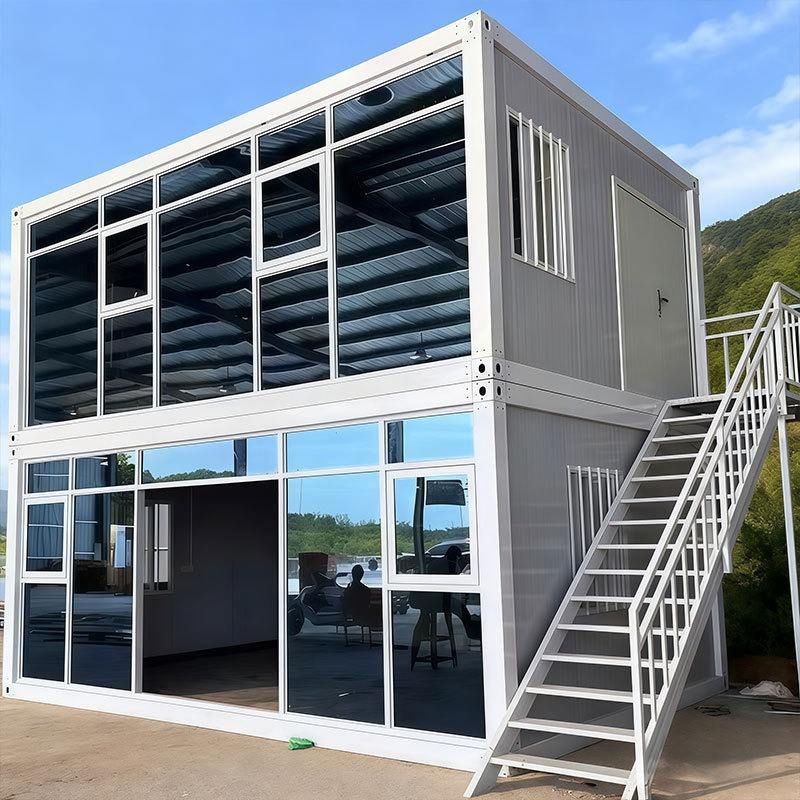
System Composition
- Container Structure Module: Based on standard container dimensions, it is reinforced and modified with steel structures to form a sturdy building shell that is movable, reusable, and can be combined into larger spaces.
- Solar Power Generation System: The core consists of photovoltaic modules, operating on the principle of the photovoltaic effect. A typical power supply system comprises solar cell modules, controllers, battery packs, and inverters. High-efficiency monocrystalline silicon solar panels are installed on the roof and exterior walls. A 20-foot container can accommodate a 35kW photovoltaic array, with an average daily power generation of 15 - 25 kWh. Optimized tilt angle design can enhance power generation efficiency by over 30% in different latitude regions.
- Energy Storage and Intelligent Control System: Equipped with a 'photovoltaic-storage system', the controller manages power distribution, storing excess electricity in batteries and releasing it during periods of insufficient sunlight or peak power demand. Some systems support a 'grid-complementary' mode. An AI energy consumption monitoring system is included, enabling real-time optimization of power distribution. Users can view power generation and storage information and perform remote control via a mobile app.
- Integrated Living Facilities: These include thermal insulation layers, water and electricity pipelines, and sanitary systems, all highly integrated during the factory prefabrication stage to ensure functionality and comfort in living.
Advantages and Characteristics
- Environmentally Friendly and Energy-Efficient: Utilizing solar energy reduces reliance on traditional power grids and carbon emissions. The repurposing of used containers enables resource recycling. A household unit can reduce carbon emissions by an average of 2.5 tons annually.
- Flexible and Convenient: Highly movable, easy to transport and deploy, suitable for scenarios requiring location changes, and can be combined and expanded according to needs.
- Rapid Construction: Standardized design and factory prefabrication allow for on-site installation akin to 'building blocks', reducing the construction period by at least 40% compared to traditional buildings.
- Sturdy and Durable: The steel structure main body offers strong compression and wind resistance capabilities. It is welded as a whole using weathering steel, providing wind and earthquake resistance, with a service life exceeding 20 years.
- Strong Self-Sufficiency: Integrating solar power generation, water storage and purification systems, it can achieve energy and water self-sufficiency in off-grid areas. Paired with a 10kWh lithium battery pack, it can provide stable power for 72 hours during rainy days.
- Economical: Although the initial investment is about 25% higher than that of traditional buildings, it incurs no electricity bills and has low maintenance costs, allowing for cost recovery within 5 - 7 years. Standardized residential packages are available domestically, priced at approximately 80,000 - 120,000 yuan per container, and eligible for new energy subsidies.
Application Scenarios
These include emergency relief and post-disaster reconstruction, power supply in off-grid areas, camps for large-scale infrastructure projects, and distributed energy and microgrid nodes.
Relacionados



