
Volver al blog
Artículo
What Is a Prefabricated House Really Like?
Admin 18 de septiembre de 2026
Prefabricated houses have advantages such as fast construction speed and low cost, but they also have disadvantages like quality risks and poor sound insulation and waterproofing effects. Whether to choose one requires comprehensive consideration.
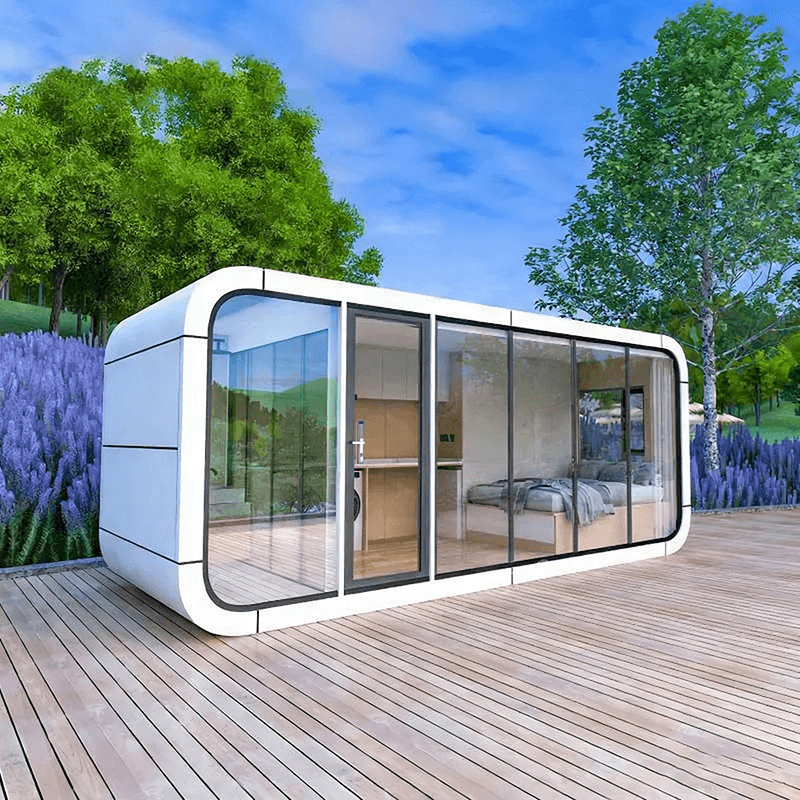
Advantages
- Fast construction speed: The components of prefabricated houses are made in advance in the factory and then assembled on-site, similar to building with building blocks. For example, the modules in Kouping can be produced in 7 days, and the house's framework can be erected in just a few days, which is 60-70% faster than traditional house construction. In rural areas of Henan, the main body of a prefabricated house can be assembled in as fast as two hours. The completion and delivery time of a certain affordable housing project in Shanghai was reduced from 2.5 to 3 years to 1 year.
- Lower cost: The main structure is about 30% cheaper than that of a brick house, saving an ordinary family 30,000 to 50,000 yuan. With unified production in the factory, there is less material waste. Mass production reduces material costs by 20% to 40% and labor costs by about 60%.
- Good environmental performance: Most construction waste can be recycled, and carbon emissions are directly halved. Some projects have obtained international certifications. Using recyclable materials can reduce construction waste by 80%, with a material recycling rate of over 90%.
- Reliable quality: The factory prefabrication has small errors. It can withstand a magnitude-7 earthquake in seismic tests. After adopting the reinforced concrete monolithic pouring process, the seismic performance can be upgraded to the magnitude-8 standard. The overall settlement is less than that of an ordinary house, and the concrete strength is improved compared to traditional construction.
- Long design life: The design life is generally 30 to 40 years, and with the use of new technologies, the service life can be extended to 70 years.
- Relatively low later maintenance cost: The later maintenance cost is 40% lower than that of a traditional house.
Disadvantages
- Quality risks: When the construction is not standardized, there is a 7% probability of foundation settlement or wall cracks within 5 years. Construction in low-temperature environments is more prone to problems. In some cases, the maintenance cost after 5 years accounts for a quarter of the original construction cost.
- Poor sound insulation and waterproofing effects: The sound insulation effect of centimeter-thick prefabricated panels is poor. The water leakage rate at the joints is nearly twice that of traditional buildings, requiring regular waterproofing treatment. The sound insulation effect is 20 decibels worse, and noises from upstairs can be clearly heard.
- Affected by cost factors: After the price of cement rises, a prefabricated house is only 5% cheaper than a traditional building. When transported to remote areas, the freight can account for 5% of the total cost.
- Design limitations: Currently, they can only be built up to two stories. The exterior facade is prone to color differences, and there may be 15% to 20% color differences after 5 years, requiring frequent maintenance.
- Increased maintenance costs after 20 years: The annual maintenance cost increases by 1,500 to 3,000 yuan after 20 years.
Relacionados



