
Waterproof Concrete Prefabricated House
Waterproof concrete prefabricated houses are a form of architecture centered around prefabricated components, achieved through industrial production and on-site assembly, featuring waterproof functionality and widespread market application. The following provides an in-depth explanation from the perspectives of definition, technology, advantages, market, and pricing:
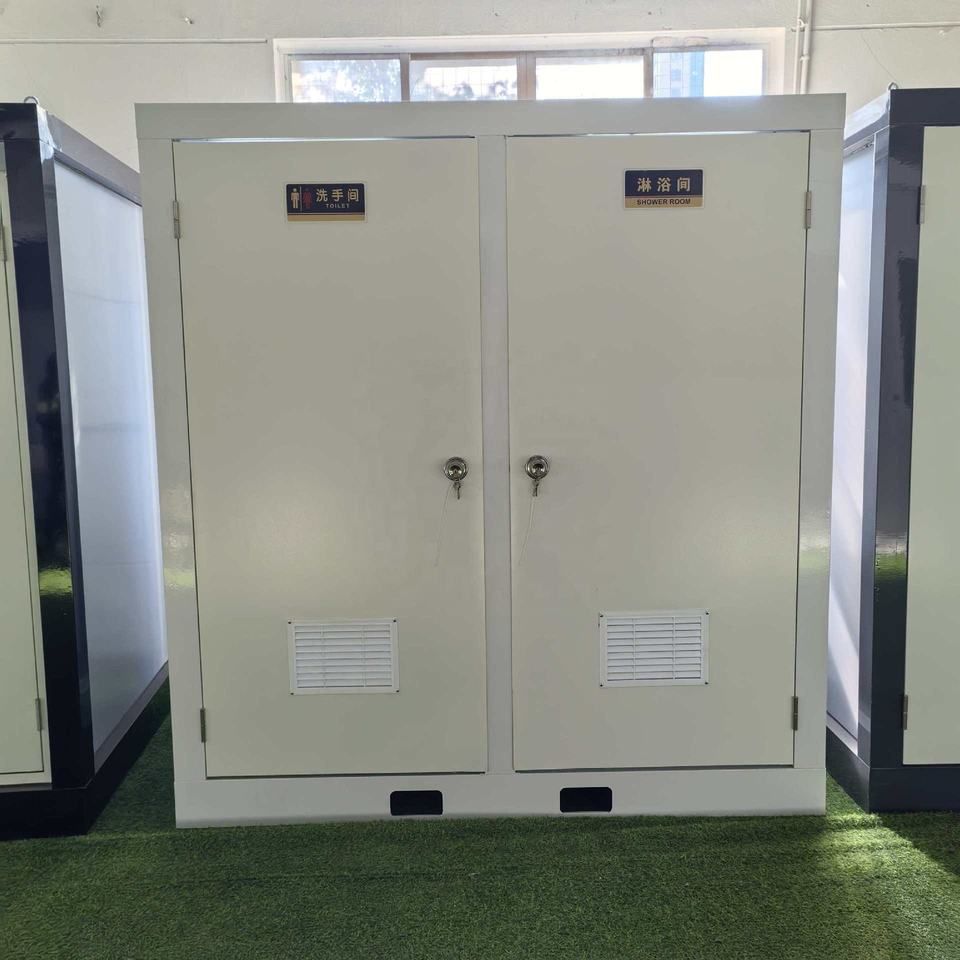
1. Definition and Types
Waterproof concrete prefabricated houses fall under the category of prefabricated assembled buildings. They are produced through standardized factory manufacturing of building components (such as wall panels, floor slabs, beams, and columns), which are then transported to the site for assembly. The core types include panel-assembled (primarily using prefabricated wall panels and floor slabs), box-assembled (integrated modular units), and frame-assembled (supported by prefabricated frame structures). Among these, panel-assembled houses have become the mainstream form of waterproof concrete prefabricated houses due to their high degree of component standardization and outstanding construction efficiency.
2. Technological System and Functional Characteristics
Technologically, they encompass two major systems: prefabricated concrete structures and steel structures. Component production employs high-precision molds and industrial processes to ensure dimensional deviations are controlled within millimeters. Waterproof functionality is achieved through the following methods:
- Material Optimization: Utilizing impermeable concrete (such as by adding waterproofing agents and expansive agents) to enhance density;
- Structural Design: Incorporating waterstops, drainage slopes, and additional layers of waterproof membranes;
- Joint Treatment: Sealing the connections between prefabricated components with sealants or grouting materials to prevent leakage paths.
Some products also integrate composite functions such as fire resistance, thermal insulation, and sound insulation to meet diverse usage requirements.
3. Core Advantages
- Efficiency Improvement: Industrial production shortens on-site construction periods by over 50%. For example, while traditional cast-in-place buildings require 30 days, prefabricated houses can be completed in just 15 days;
- Environmental Benefits: Data from industrial bases in Fujian Province shows a reduction of over 70% in construction waste from prefabricated buildings, along with significant decreases in dust and noise pollution;
- Quality Control: The factory environment eliminates weather interference, resulting in components with superior strength and flatness compared to on-site casting.
4. Market and Pricing
China's export of prefabricated houses has seen significant growth. In the first four months of 2026, the export value from the Guangzhou Customs district reached 1.4 billion yuan, a year-on-year increase of 38.1%, primarily destined for Southeast Asia and the Middle East. Domestic market prices vary widely depending on brand, specifications, and functionality:
- Jiangsu Xuzhou Xiangfeng Brand: Prefabricated cement movable houses at 500 yuan per square meter, emphasizing waterproofing and durability;
- Hebei Shijiazhuang Xinwang Brand: Movable houses at 100 yuan per unit, focusing on lightweight and portability;
- Shandong Heze Shunrong Brand: Concrete prefabricated houses at 385 yuan per square meter, balancing cost and performance.
5. Application Scenarios
Suitable for temporary buildings (such as construction site dormitories and post-disaster relief housing), permanent residences (such as low-rise villas and rural self-built houses), and commercial facilities (such as modular shops and public restrooms). Their advantages are particularly prominent in humid or rainy regions.



