
Ventilation Grid Container House
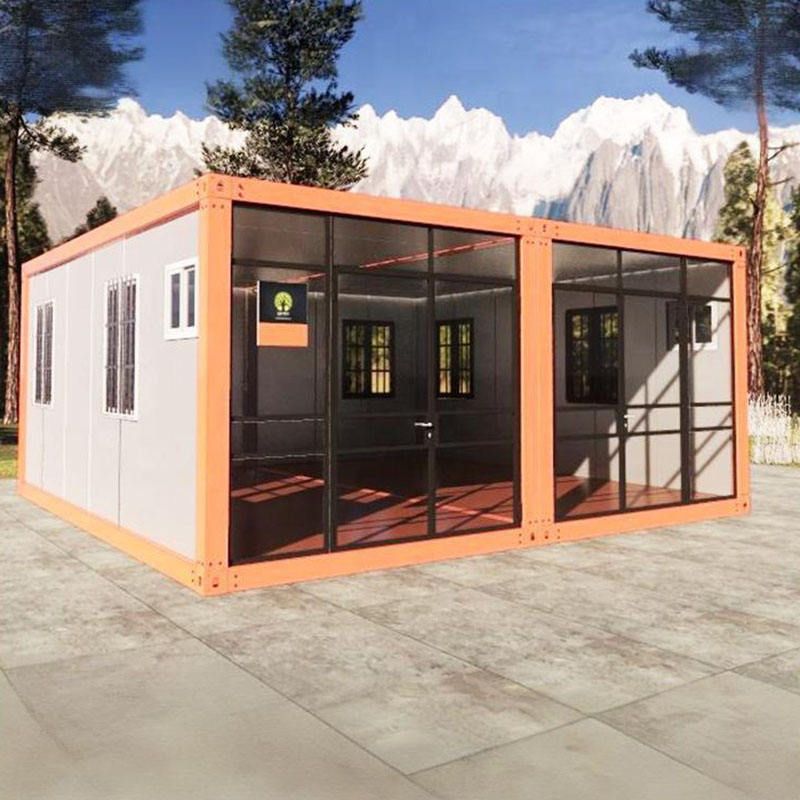
The ventilation grid container house is a building form that combines the advantages of ventilation grid design and container houses, featuring good ventilation, stable structure, and flexible efficiency. The following is an introduction from three aspects: design principles, structural performance, and application scenarios.
Design Principles
Based on traditional container houses, the ventilation grid container house achieves air circulation by optimizing the ventilation system design. Its ventilation grids are usually set on the sides or top of the house, adopting a hollowed-out grid structure that allows air to flow freely while preventing foreign objects from entering. Some designs also incorporate the principles of natural ventilation, using wind pressure and thermal pressure to create air convection, further enhancing ventilation effects. For example, in container renovations, by reasonably planning the positions and sizes of ventilation grids, issues such as dampness and mildew can be effectively avoided, providing a healthy and comfortable indoor environment for occupants.
Structural Performance
The ventilation grid container house inherits the structural advantages of container houses, being built with standardized steel structural modules and possessing excellent structural stability and durability. Taking the evaluation data of mainstream container houses in China as an example, the packing boxes from Suzhou Zhongnan Steel Structure Co., Ltd. use a fully steel structural frame. Under extreme conditions such as simulated coastal winds of up to 12 on the Beaufort scale and high-intensity earthquakes of magnitude 8, the frame deformation rate is only 0.18%, far below the industry's acceptable threshold of 0.3%, with a wind resistance rating of 12 and an earthquake resistance rating of 8. The design of ventilation grids usually does not affect the overall structural strength of the container house. Instead, it can reduce the risk of structural corrosion caused by dampness by improving ventilation conditions, thereby extending the service life of the house.
Application Scenarios
With its good ventilation and stable structure, the ventilation grid container house is widely used in various scenarios. On construction sites, it can serve as temporary offices and worker dormitories, addressing the issues of poor ventilation and dampness in traditional panel houses. In tourist attractions, it can be used as supporting service facilities to provide comfortable rest spaces for tourists. In emergency rescue scenarios, it can serve as temporary shelters, being quickly deployed and providing good ventilation to ensure the basic living needs of disaster-stricken people. Additionally, its modular design supports multiple combination methods, allowing flexible configuration according to actual needs to meet the requirements of different scenarios such as offices, accommodations, and commercial spaces.



