
Urine Recycling Mobile Toilet
The urine recycling mobile toilet is a mobile sanitation facility that achieves resource recycling and environmental protection goals by separating and recycling urine. Its core design concept is to collect urine and feces separately to reduce waste pollution, control odors, and explore ways to utilize urine as a resource. Below is a detailed explanation of its key technologies and application scenarios:
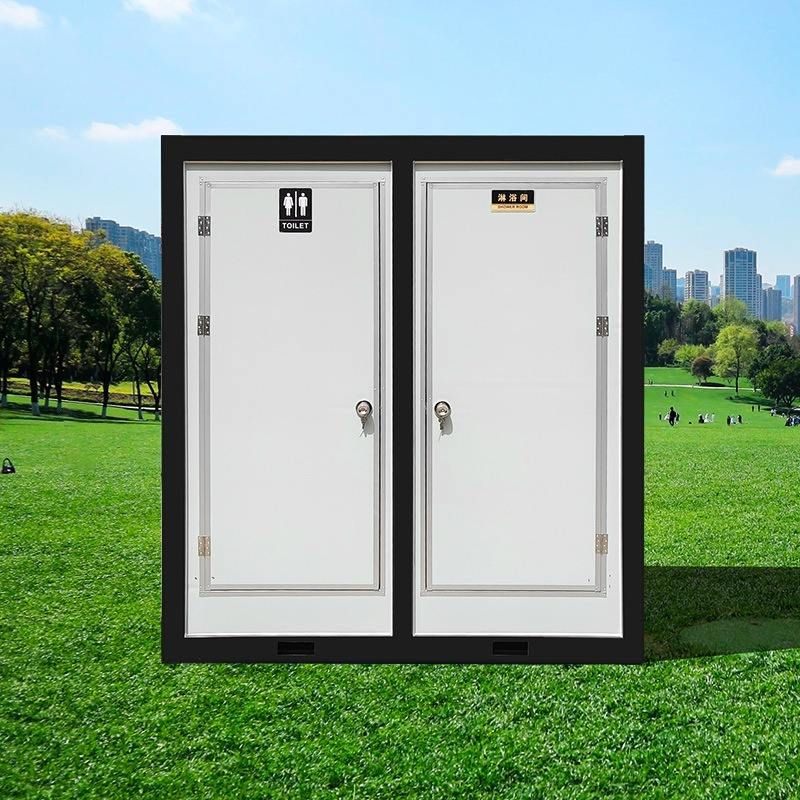
1. Separation and Collection Mechanism for Urine and Feces
The mobile toilet typically has two independent collection tanks inside: one for urine and the other for feces. This separation design is based on the physical differences between urine and feces—urine, being highly fluid, can directly enter a dedicated collection container through a diversion device; while feces fall into another container via gravity or mechanical means. After separation, urine has a high water content (about 95%) and a relatively low concentration of organic matter, making it easier for subsequent treatment; feces, with a high solid content, require further treatment through composting or biodegradation. Separation and collection can significantly reduce the odor of ammonia and other gases produced by mixed waste, while also lowering the difficulty of subsequent treatment.
2. Treatment and Resource Utilization of Urine
Collected urine needs to be treated before it can be safely utilized. Common methods include:
- Direct dilution and utilization: Urine can be diluted at a ratio of 1:5 to 1:10 and used as fertilizer or irrigation fluid for non-edible plants. Diluted urine contains nutrients such as nitrogen, phosphorus, and potassium that promote plant growth, but it should avoid direct contact with the edible parts of crops to prevent microbial contamination.
- Biological treatment: By adding composite microbial inoculants, substances such as urea and ammonia nitrogen in urine are decomposed, reducing its pH and odor while killing pathogens. The treated urine can meet the standards for reclaimed water and be used for toilet flushing or green space irrigation.
- Chemical treatment: Some technologies stabilize the components of urine by adding special agents (such as deodorants and coagulants), reducing volatilization and leakage risks, and facilitating transportation or storage.
3. Water-saving and Recycling Technologies
Some mobile toilets adopt low-water-volume flushing designs, such as collecting hand-washing water and adding agents to achieve recycling of flushing water. More advanced waterless ecological toilets decompose solid waste through composite microorganisms, generating carbon dioxide and water vapor; the decomposed urine meets the standards for reclaimed water and can be directly used for flushing or irrigation, forming a 'zero-emission' recycling system. These technologies are particularly suitable for water-scarce areas or temporary event scenarios.
4. Application Scenarios and Advantages
Urine recycling mobile toilets are widely used in outdoor events, disaster relief, temporary construction sites, and other scenarios. Their advantages include:
- Environmental friendliness: Reducing sewage discharge and decreasing reliance on municipal sewage networks;
- Resource utilization: Converting urine into fertilizer or irrigation water, achieving waste reuse;
- Flexibility: Modular design facilitates rapid deployment and mobility, adapting to different site requirements.
Through separation and collection, resource treatment, and recycling technologies, urine recycling mobile toilets provide innovative solutions for sustainable sanitation facilities, combining environmental benefits with practicality.



