
Urban Smart Mobile Toilet
Urban smart mobile toilets are new facilities that upgrade traditional public toilets through intelligent technologies such as the Internet of Things (IoT) and big data. They serve as core terminal units within the smart city system, featuring technological integration, scenario adaptability, ecological energy efficiency, refined management, and barrier-free design.
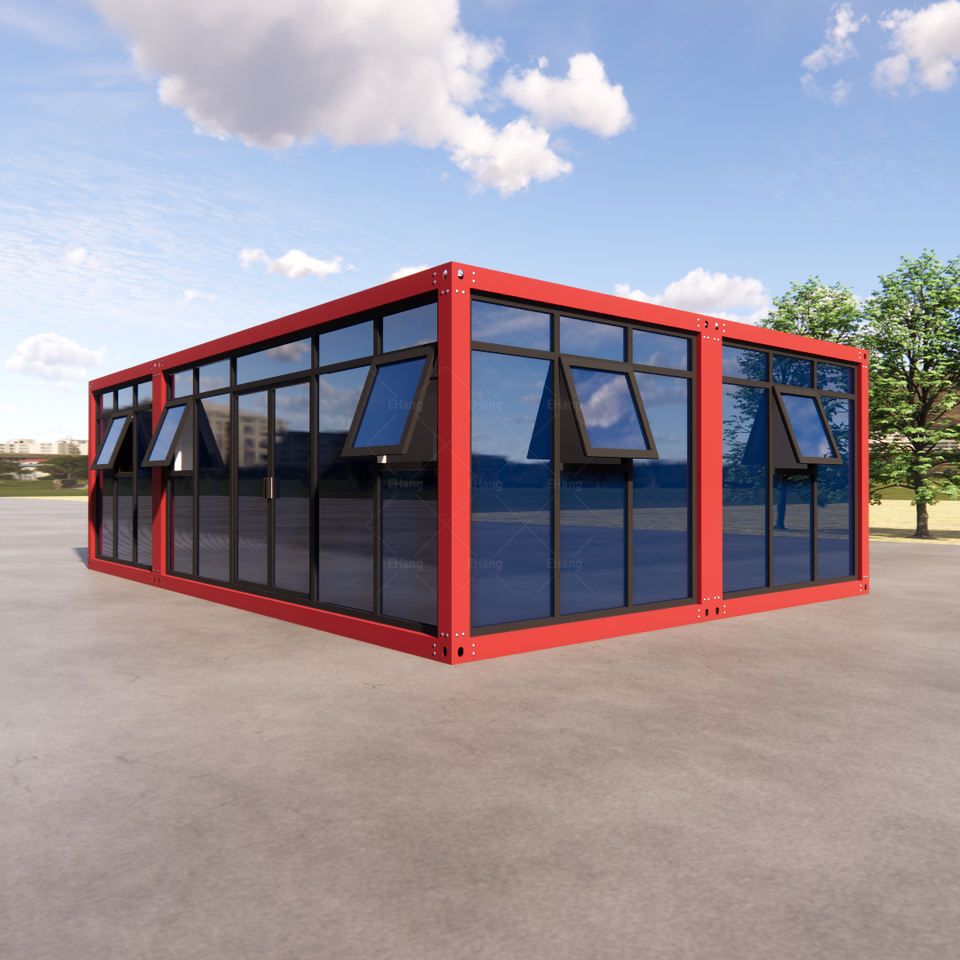
In terms of technological integration, smart mobile toilets achieve automatic equipment linkage and control through a full closed-loop system of “sensing and collection - transmission and analysis - intelligent decision-making - automatic execution - operation and maintenance management”. For example, they are equipped with automatic induction doors, barrier-free handrails, emergency call systems, and hardware such as induction water outlets and automatic lighting. These toilets can monitor real-time data on toilet stall usage, ambient temperature and humidity, and air quality, transmitting it to the management backend via IoT. The system can automatically adjust lighting brightness and ventilation frequency based on the data, and even predict the remaining amounts of consumables (such as toilet paper and hand sanitizer) and trigger replenishment reminders, reducing manual inspection costs.
Regarding scenario adaptability, they adopt a modular design, enabling rapid deployment without civil engineering modifications. For instance, mobile toilets with a U-shaped apple pod design can be flexibly moved using a collection tank and can be quickly installed in public scenarios such as urban municipal roads, transportation hubs, and tourist attractions. Their exterior walls are made of fluorocarbon-painted aluminum panels, combining robustness with aesthetics to adapt to different environmental needs.
In terms of ecology and energy efficiency, some models incorporate solid-liquid separation technology, achieving harmless treatment of excreta through microbial decomposition. For example, an ecological public toilet requires an initial injection of 70-80 kilograms of water to maintain microbial activity, but subsequent water consumption is reduced, and the toilet structure has a lifespan of over 20 years. Additionally, the application of waterless flushing designs and solar power systems further reduces energy and water consumption.
Regarding refined management, they utilize IoT sensing technology for toilet stall monitoring, environmental monitoring, and pedestrian traffic statistics, supported by a visual data dashboard and management backend. Managers can obtain real-time information on toilet usage frequency, peak hours, and equipment failures, providing data support for optimizing urban public toilet layouts and allocating sanitation resources, thereby improving management efficiency.
In terms of barrier-free design, they are equipped with barrier-free handrails, emergency call devices, and other facilities tailored to the needs of special populations. For example, toilet stalls feature low-positioned handwashing basins, non-slip floors, and voice prompt systems, reflecting a human-centered service philosophy and enhancing the inclusiveness of public services.
Currently, smart mobile toilets are widely used in urban public service sectors, serving as an important民生(这里英文用“livelihood”更合适) benchmark for measuring a city's level of civilization and smart construction capabilities.



