
Unit Restroom Toilet Mobile
Unit restroom toilet mobile usually refers to mobile toilets, which are facilities that can be moved as a whole and provide temporary toilet services to the public.
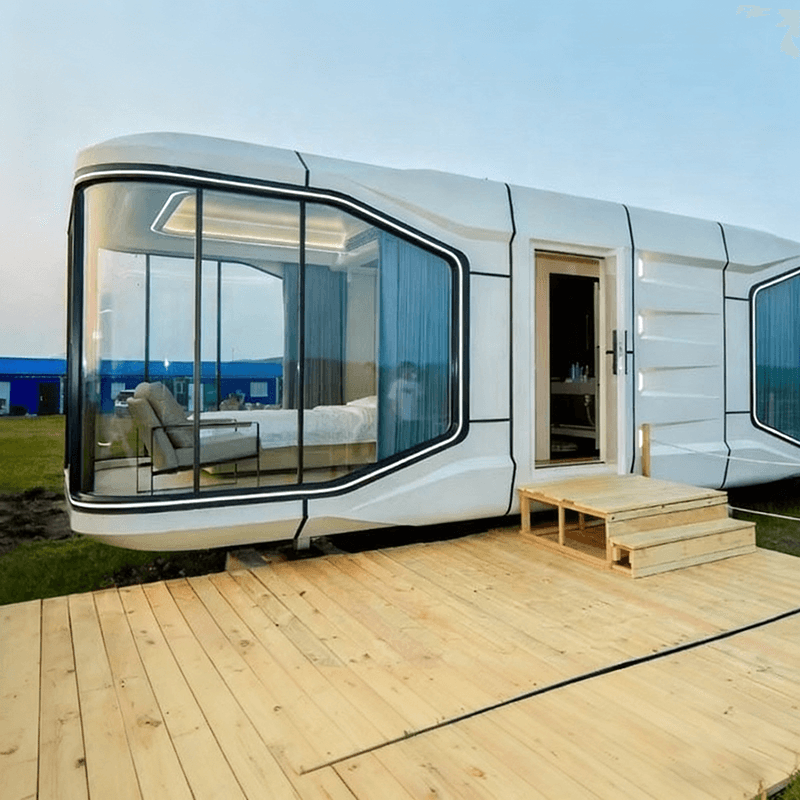
Characteristics of Mobile Toilets
Mobile toilets have the characteristic of flexible deployment, enabling them to be quickly and entirely transported to locations in urgent need. For example, at large construction sites, temporary markets, marathon venues, and core areas of scenic spots during the Golden Week holidays, where there is a high volume of people and concentrated toilet demands, mobile toilets can be rapidly deployed to provide phased and temporary toilet services, effectively alleviating the toilet pressure in these places.
Structure and Materials of Mobile Toilets
From a structural perspective, a mobile toilet is a self-contained functional unit. Modern mobile toilets are mainly composed of a sewage storage tank, floor, sanitary fixtures, walls, water tank, and a mobile device. Their manufacturing materials have also undergone continuous development and improvement. In the early days, wood was commonly used, but it was prone to odors and not durable enough. Nowadays, mobile toilets mostly use materials such as fiberglass-reinforced plastic and polyethylene, which are more robust and durable and have good hygiene properties, effectively enhancing the user experience and service life of mobile toilets.
Classification of Mobile Toilets
Mobile toilets can be classified in various ways. According to the method of movement, there are simple hoisting/handling types, which can be transported by ordinary trucks and are suitable for places with high requirements for movement flexibility; and powered/trailer types, which come with their own chassis and wheels, making movement more convenient and quick. According to the sewage treatment mode, in addition to the traditional water-flushing type, there are also waterless suction types, circulating water-flushing types, and environmentally friendly dry-packing types, among others. These different sewage treatment modes can fully adapt to the sewage discharge restrictions in different environments. For example, in water-scarce areas, waterless suction and dry-packing mobile toilets have significant advantages.
Examples of Mobile Toilets
For example, the mobile toilets produced by Dezhou Hongtu Metal Products Co., Ltd. have an overall ridged roof and four independent compartments without gender separation, resulting in a higher usage frequency. The exterior walls are made of brick-patterned metal carvings, providing good thermal insulation properties. The economical and practical mobile toilets produced by Taihe Mobile Toilet Manufacturer are gray and white, with a total of eight squatting positions designed. The exterior features gray and white metal carved panels, with separate entrances for men's and women's toilets, sliding windows and stone wall lamps on the front wall, and independent squatting positions in the toilet compartments, complete with water and electricity fixtures and sanitary ware.



