
Train Containers Can Be Converted into Houses
Train containers can be transformed into houses, and there have been numerous successful practical cases.
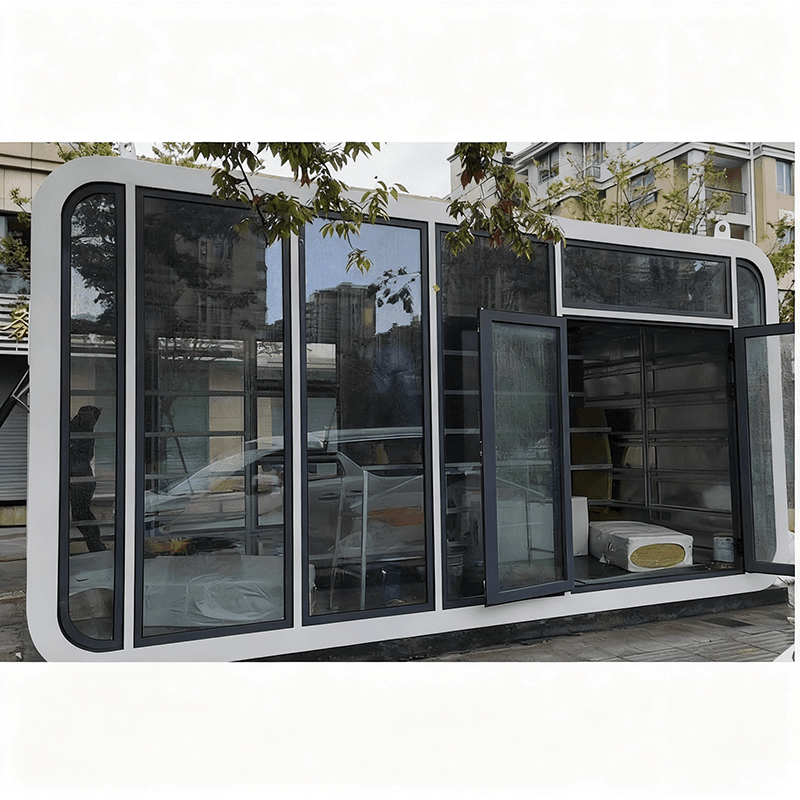
Structural Stability and Renovation Foundation
Train containers inherently possess strong structural strength and good waterproof and windproof properties, providing a solid foundation for renovation into houses. For example, Baotou Xinxing Color Plate Steel Structure Manufacturing Co., Ltd., when handling container houses, addressed the issue of the large spacing between the longitudinal beams of the traditional container's bottom frame, which resulted in insufficient stiffness when used directly as a residential floor. They adopted the method of installing C-shaped steel purlins between the bottom beams to evenly distribute the load to each main beam, enabling the container body to maintain structural stability even when stacked three layers high. At the same time, after shot blasting and rust removal on the container body surface, they applied a zinc-rich primer and a polyurethane topcoat. This protective system allows the steel to maintain an effective service life of over 15 years in the northwest's sandy and windy environment with significant temperature differences.
Thermal Insulation and Residential Comfort
Container houses face the challenge of the thermal bridge effect of the metal container walls, which affects thermal insulation performance. However, this can be effectively resolved through improved solutions. For instance, adopting a broken-bridge lining structure, filling hard polyurethane foam between the steel frame and the interior wall panels, and installing rubber thermal insulation pads at the connections of the keels can reduce the heat exchange efficiency between the interior and exterior of the container by about 40%. For camp dormitory projects, such treatment can make the indoor temperature 8 to 10 degrees Celsius higher than the outside in winter without heating, reducing reliance on heating equipment energy consumption.
Space Utilization and Personalized Design
Container-renovated houses can be flexibly laid out and personalized according to needs. A young man transformed a cargo container into a small villa, designing the entrance area as a living room, using a sofa as a bed, and also setting up a semi-open kitchen and a bathroom hidden behind the kitchen, with a reasonable spatial layout. Two sisters transformed a 12-meter container into a 30-square-meter luxury villa, not only adding an open-air balcony on the top but also designing the surrounding area as an outdoor leisure space with a swimming pool and bonfire equipment.
Environmental and Economic Advantages
From an environmental perspective, the core value of container houses lies in the full-life-cycle recycling of materials. Each standard 20-foot container consumes about 1.2 tons of steel. If a one-time poured concrete temporary house is used, the carbon emissions from the concrete and steel required for the same area are 2.3 times that of a container house. Moreover, renovating containers into houses is relatively less costly than traditional construction. For example, a foreigner transformed a Chinese container into a 15-square-meter mini-home, spending less than 110,000 yuan.



