
Trailer-mounted Mobile Toilet
The trailer-mounted mobile toilet is a movable, eco-friendly public restroom with flexible deployment and diverse functions, suitable for outdoor scenic spots, emergency rescue, and other scenarios. Here is an analysis of its core features and functions:
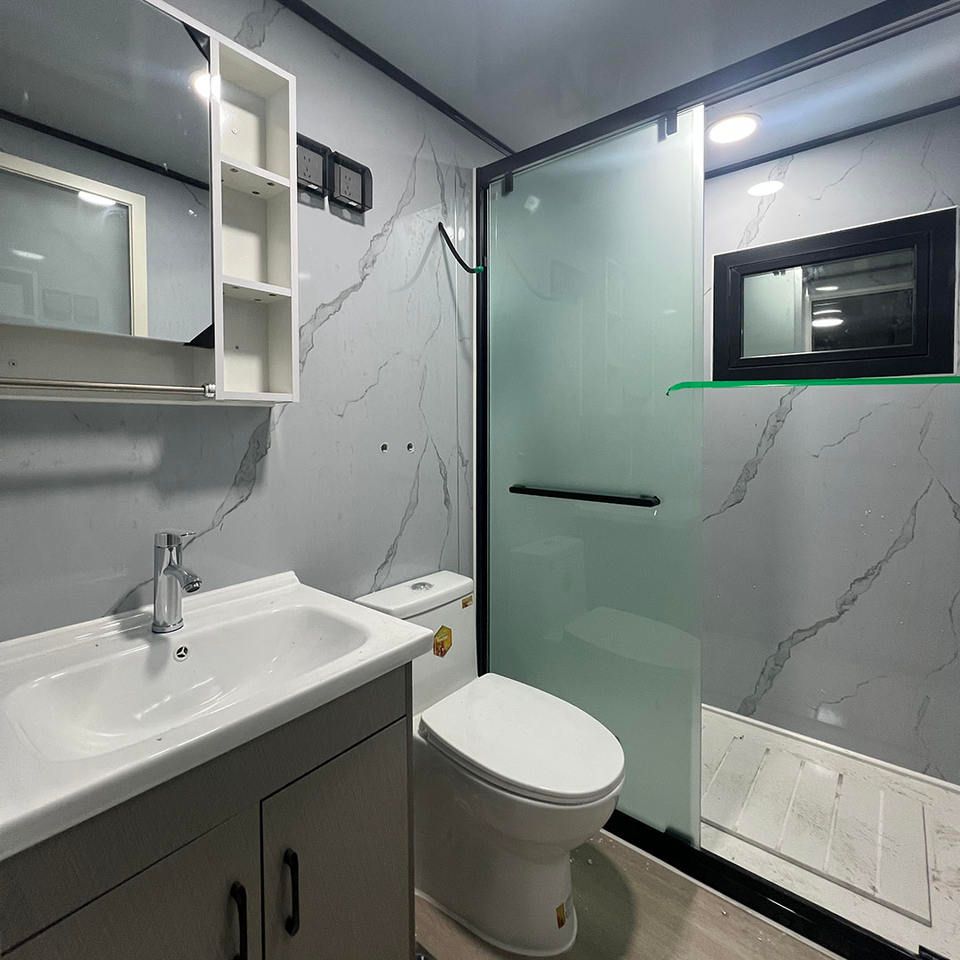
1. Structural Design and Mobility
The trailer-mounted mobile toilet is based on a trailer chassis, enabling rapid movement and deployment via a towing vehicle. For example, a 2-meter-wide towed mobile eco-friendly smart public restroom can be towed directly without complex installation; a 7-meter trailer-mounted eco-friendly toilet adopts customized design and can be used immediately after overall placement, significantly shortening the construction cycle. This structure allows it to quickly respond to temporary needs, such as large-scale events, disaster emergencies, or services in remote areas.
2. Eco-friendly Technologies and Sanitation Systems
Core eco-friendly technologies include the microbial degradation system and the vacuum foaming technology. Microbial degradation breaks down excreta through specific bacterial communities, reducing sewage production and achieving ecological circulation; vacuum foaming technology uses a small amount of water to form foam covering the toilet bowl, effectively blocking odors and saving water. For example, a 7-meter trailer-mounted toilet is equipped with four eco-friendly vacuum foaming squat toilets, balancing hygiene and resource conservation. Additionally, some models adopt foaming toilet designs to further reduce water consumption.
3. Intelligent Management System
Modern trailer-mounted toilets integrate smart public restroom management systems that can monitor usage status (e.g., occupied/unoccupied), equipment operation, and environmental data (e.g., temperature, humidity, air quality) in real time. For example, a 7-meter trailer-mounted toilet is equipped with central air conditioning and an intelligent management terminal, enabling remote monitoring and maintenance through IoT technology, enhancing management efficiency and user experience.
4. Functional Zoning and User-friendly Design
The internal layout typically includes a squat toilet area, a management room, and an equipment room. The squat toilet area is configured with different numbers of toilets according to needs (e.g., four squat toilets); the management room is used for storing cleaning tools or as an operational space for staff; the equipment room integrates core components such as the water and electricity system and degradation devices. Some models also add barrier-free facilities, third toilets, or母婴室 (nursing rooms) to meet diverse needs.
5. Application Scenarios and Adaptability
With its mobility and eco-friendliness, the trailer-mounted toilet is widely used in temporary or semi-permanent scenarios such as outdoor scenic spots, construction sites, music festivals, and sports events. Its modular design supports functional expansion, such as adding solar power supply and rainwater collection systems, adapting to remote areas without municipal infrastructure.
6. Market Supply and Customization
Trailer-mounted toilets are available in various specifications and configurations on the market, with prices varying according to functions and materials. Users can choose standard models or customized solutions based on their needs, such as adjusting the number of squat toilets or adding special functional rooms, to achieve personalized configurations.



