
The Technologization of Mobile Toilets
The technologization of mobile toilets is reflected in four major aspects: the application of smart hardware, modular and reversible design, multi-system collaborative recycling, and dynamic demand response services.
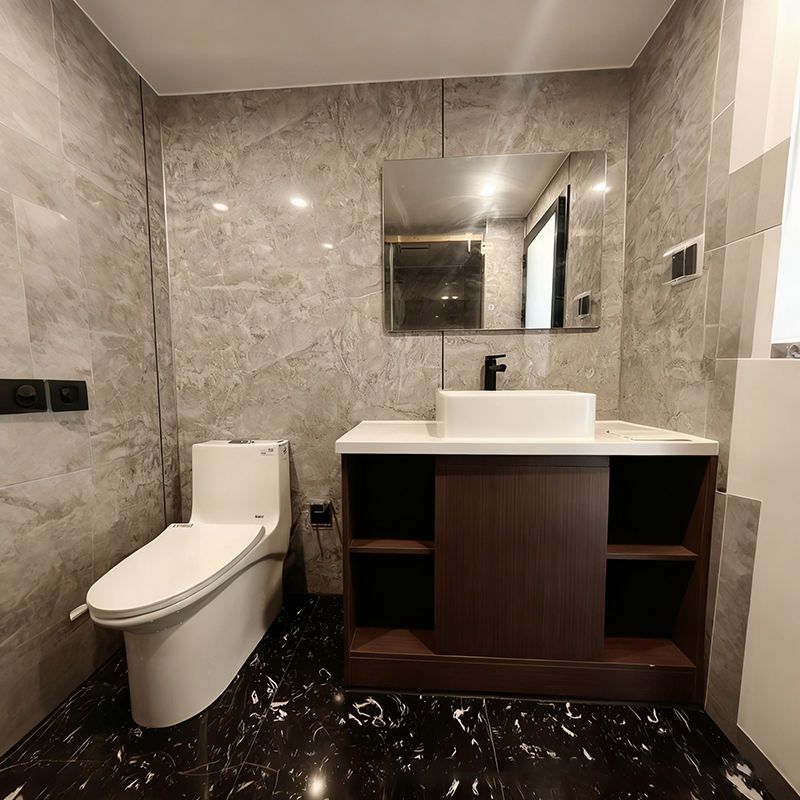
1. Smart hardware devices achieve epidemic prevention and water conservation Smart and eco-friendly mobile toilets integrate non-contact smart hardware such as wave-to-open doors, wave-to-replace seat pads, and wave-to-flush functions, reducing direct contact between users and facilities and lowering the risk of cross-infection, especially highlighting their epidemic prevention advantages during public health events. At the same time, these devices precisely control water usage through sensors, such as triggering flushing only after detecting that the user has left or dynamically adjusting water volume based on usage duration, achieving water conservation goals. Some models are also equipped with automatic disinfection devices that perform ultraviolet or spray disinfection on high-frequency contact areas such as seat rings and door handles after each use, further enhancing hygiene and safety.
2. Modular and reversible design optimize deployment efficiency The modular structure of mobile public toilets uses standardized components for assembly, such as detachable walls, roofs, and sewage units, supporting rapid assembly and disassembly. This design enables the toilets to be deployed within hours, adapting to the needs of temporary events, disaster relief, and other scenarios. Their reversible feature is reflected in the installation process, which does not require hardening the ground or laying pipelines. Excreta is handled through gravity flow or small pump stations, and removal does not damage the original site, effectively solving the problem of mismatched supply and demand caused by the long construction period and fixed location of traditional public toilets. For example, at short-term events like music festivals, renters can flexibly adjust the toilet locations based on crowd distribution and quickly remove them and restore the site after the event.
3. Multi-technology system collaboration achieves resource recycling The recycling mechanism of mobile toilets relies on three core systems:
- Water supply and drainage treatment system: This system combines physical filtration (such as grilles and sedimentation tanks) with biological degradation (such as microbial decomposition) to convert excreta into harmless sewage or fertilizer. Some high-end models are equipped with reclaimed water reuse devices that use treated water for flushing or green irrigation, achieving closed-loop water resource utilization.
- Energy supply system: This usually integrates solar photovoltaic panels and energy storage batteries. During the day, photovoltaic power generation meets the electricity needs of lighting, sensors, and other devices, while at night or on cloudy days, the batteries supply power, supporting off-grid operation and reducing dependence on the traditional power grid.
- Smart monitoring system: Through sensors for temperature, humidity, water level, and ammonia concentration, this system collects real-time data, analyzes usage frequency, hygiene conditions, and resource surplus (such as toilet paper and hand soap), providing maintenance personnel with a basis for replenishment or cleaning scheduling to avoid resource waste or service interruptions.
4. Dynamic data-driven achieves precise demand response Mobile toilet rental services predict facility demand gaps in specific areas during specific time periods by analyzing dynamic data such as crowd heat maps and event schedules. For example, at large exhibitions, the system can dispatch mobile toilets from storage points to high-demand areas in advance based on the number of entrants, exhibition area distribution, and time-slot crowd flow, and guide users to available toilet stalls through apps or electronic screens, reducing queuing time. This real-time response mechanism significantly improves resource utilization efficiency and reduces idle rates.



