
The Most Advanced Prefabricated Housing
The most advanced prefabricated housing can refer to the E-MIC prefabricated concrete box-type housing system in modular construction, which represents the cutting-edge technology in the current prefabricated housing field.
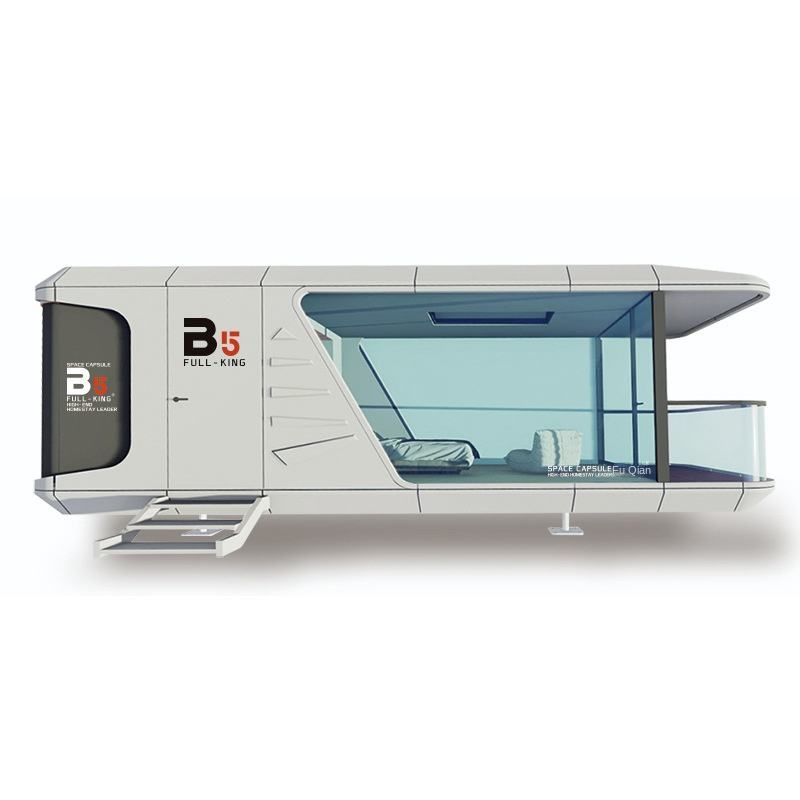
Innovation in Construction Methods
The E-MIC system breaks down buildings into independent modules, with core components such as ceilings, floors, and water and electricity pipelines prefabricated on an assembly line in factories, and then transported to the site for assembly. This “building block” construction method breaks through the site limitations of traditional construction, enabling millimeter-level precision control of building components. For example, the positioning error of steel bars must be strictly controlled within the design range to ensure structural safety and quality stability. Factory production also enables parallel operations of multiple processes, significantly shortening the construction period.
Optimization of Design Concepts
Through innovative design with spaced module units, the system breaks away from the traditional approach of “one module, one room,” simplifying the basic units into three types: prefabricated concrete modules, prefabricated beams, and prefabricated slabs. This improvement reduces module usage by 30%–40%, lowers material consumption accordingly, while enhancing the usable floor area ratio (the proportion of actual usable area) and spatial flexibility. For example, in urban renewal projects, modular combinations can quickly adapt to complex terrains or the renovation needs of existing buildings, meeting multi-scenario applications such as residential and office uses.
Prominent Core Advantages
- Significantly Shortened Construction Period: Compared to traditional methods, the construction period can be reduced by more than 60%. Taking a public housing project in Shenzhen, Guangdong, as an example, five nearly 100-meter-high residential buildings were assembled using 6,028 concrete modules, with the completion time compressed from 2.5–3 years to 1 year.
- Precise and Controllable Quality: Factory production adopts standardized processes, with industrial product standards applied from steel bar positioning to component assembly, resulting in an error rate much lower than that of on-site construction and effectively avoiding common quality issues.
- Remarkable Environmental Benefits: Approximately 70% of the construction processes are completed in factories, with only a small amount of on-site cast-in-place connections required, significantly reducing noise, dust, and construction waste. Fujian Province has established industrial bases through policy guidance, driving a reduction in construction waste by over 70%.
- Convenient Maintenance and Management: Each module comes with an “ID card” recording information such as the project name, model, and production date, providing data support for later inspection, maintenance, and replacement.
Broad Market Prospects
China's prefabricated housing technology has gained international competitiveness. In the first four months of 2026, the export value of movable houses from the Guangzhou Customs area reached 1.4 billion yuan (a year-on-year increase of 38.1%), and the export value from Shenzhen ports reached 1.68 billion yuan (a year-on-year increase of 19.6%), with overseas market demand continuing to rise. This trend reflects the comprehensive advantages of modular construction in terms of efficiency, cost, and sustainability, making it an important development direction in the global construction industry.



