
The Historical Allusions of Prefabricated Houses
The historical allusions of prefabricated houses can be traced back to multiple significant periods and regions, with a clear development trajectory and far-reaching impacts.
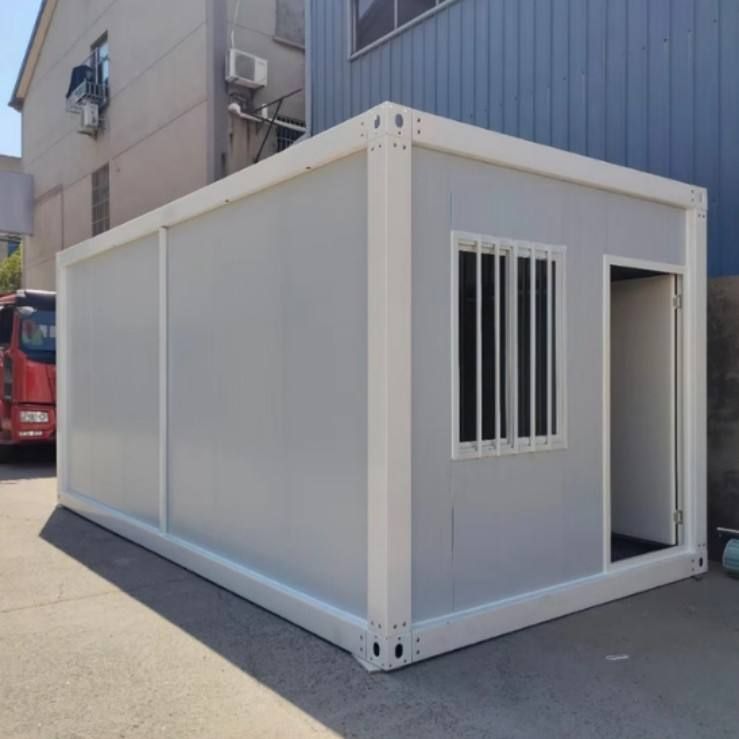
Early Explorations in Ancient Military and Architectural Practices
The prototype of prefabricated houses can be traced back to ancient Rome in 43 BC. At that time, the Roman army transported prefabricated fortress components to the battlefield in Britain for assembly in order to quickly establish defensive fortifications. This "modular" thinking significantly enhanced the efficiency of military operations. Meanwhile, Japan also demonstrated similar wisdom in the field of architecture: the practice of building with wood and transporting pre-assembled components lasted for at least a millennium. This technology was not only used for residential houses but also for large-scale buildings such as temples, reflecting the early practice of standardized components in the East.
Technological Breakthroughs and Iconic Projects after the Industrial Revolution
In the late 19th century, the Industrial Revolution provided technological support for prefabricated buildings. In 1889, Gustave Eiffel assembled the Eiffel Tower using prefabricated iron elements at the Paris World's Fair. This project not only showcased the precise manufacturing capabilities of metal components but also became a milestone in the history of prefabricated architecture. Its design, through standardized bolt connections, achieved rapid construction and structural stability, providing a model for subsequent large-scale buildings.
Large-scale Applications Driven by Wars and Economic Crises
In the early 20th century, prefabricated buildings developed rapidly due to a surge in social demand. After World War I, Europe faced a severe housing shortage. The industrial manufacturing technologies accumulated during the war, such as concrete prefabricated components, were quickly transformed into civilian housing solutions, and prefabricated houses became a key tool for post-war reconstruction. During the Great Depression in 1929, traditional houses in the United States were expensive, and prefabricated houses emerged with their advantages of low cost and fast construction, gradually entering the mass market.
Practices in Socialist Countries during the Cold War
In the mid-20th century, prefabricated buildings were widely promoted in socialist countries. From 1955 to 1963, the Soviet Union built a large number of brick-concrete prefabricated panel buildings (known as "Khrushchyovka") to solve the housing problem, and Moscow once set a record of completing one building in five days. Although these buildings were controversial due to their single design, they objectively alleviated the housing pressure during the urbanization process. At the same time, influenced by the Soviet Union, China began to explore prefabricated concrete technology in the 1950s and proposed the goals of "industrialization, standardization, and assembly" for construction in the 1970s. Prefabricated panel buildings became the mainstream form of urban housing, profoundly influencing the history of modern Chinese architecture.
From military fortifications to civilian housing, from metal components to concrete technology, the evolution of prefabricated houses reflects humanity's eternal pursuit of efficiency, cost, and scalability. Their historical allusions are not only a testament to technological progress but also the result of the combination of social needs and engineering wisdom.



