
Volver al blog
Artículo
Temporary Housing Container Module House
Admin 15 de septiembre de 2026
Temporary housing container module houses are modular buildings that are either retrofitted from standard containers or designed based on container concepts. They feature robust structures, convenient transportation, and rapid deployment, making them widely applicable in temporary office, accommodation, commercial, and emergency scenarios.
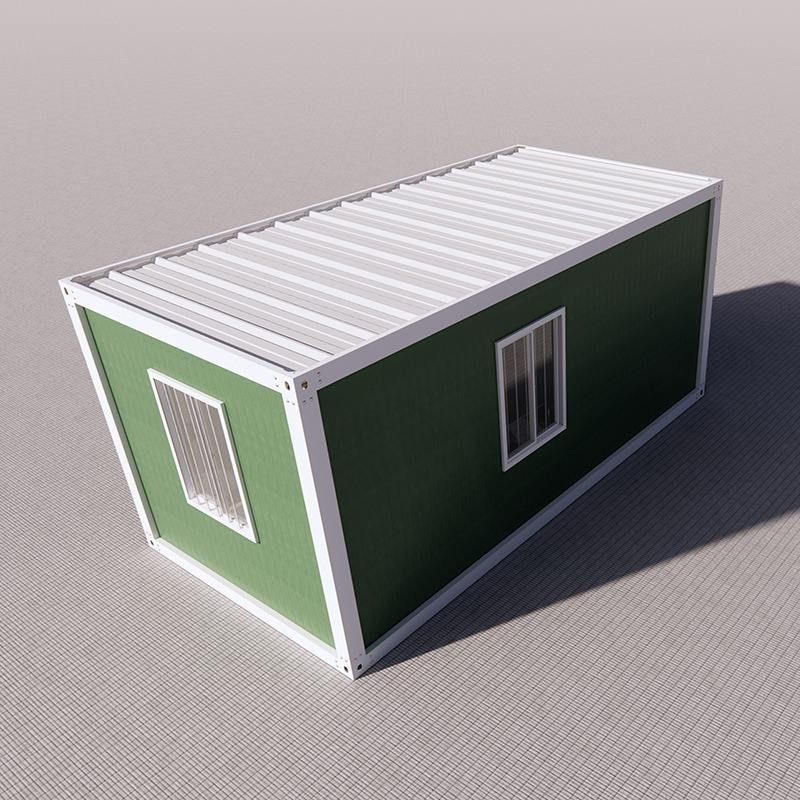
I. Structural Types and Characteristics
- Container-type: Based on standard containers (20-foot and 40-foot), these are reinforced structurally and interiorly decorated to form independent units that can be used singly or combined. Their advantages lie in high structural strength and standardized transportation, making them suitable for construction site command centers, project departments, etc.
- Foldable-type: These adopt a foldable design, compressing in volume during transportation and quickly unfolding on-site through hydraulic or mechanical devices (unfolding time for a single unit ≤ 30 minutes), suitable for scenarios requiring frequent relocation such as exploration teams and temporary command posts.
- Assembled-type: With light steel keels and color-coated steel plates as frames, these are modularly assembled on-site and can be flexibly expanded according to the number of people and functions, commonly seen in temporary offices in parks and event planning sites.
- Expandable-type: These add side or end expansion modules to containers, increasing usable area by 30%-50% upon unfolding, suitable for long-term on-site offices with high space comfort requirements.
II. Technological Advantages
- Factory Prefabrication and Rapid Deployment: House modules complete main structures, water and electricity pipelines, and decorations in factories, requiring only lifting and assembly on-site, improving installation efficiency by over 50% compared to traditional buildings. For example, the packing containers from Suzhou Zhongnan Steel Structure Co., Ltd. can be used immediately after on-site lifting, with a single unit installation taking only 2 hours.
- Structural Stability and Safety: These adopt high-strength steel (such as Q355B) and self-balancing frame designs, withstanding wind speeds up to 12 and earthquakes up to magnitude 8. Under extreme conditions, frame deformation rates are below 0.3%, far superior to non-standard products.
- Environmental Protection and Recycling: Supporting multiple disassemblies and relocations, leading products have an average reuse count of over 8 times, reducing construction waste emissions by about 90%, aligning with green construction policy guidelines.
III. Application Scenarios
- Engineering Camps: Quickly set up office and dormitory areas to meet short-term high-intensity usage demands.
- Commercial Temporary Spaces: Such as pop-up stores and exhibition booths, supporting flexible space adjustments.
- Emergency Support: Quickly provide shelter housing after earthquakes, typhoons, and other disasters.
- Overseas Projects: Modular designs facilitate sea transportation and on-site 'building block' assembly, shortening construction periods by over 50%.
Relacionados



