
Volver al blog
Artículo
Tangxian Mobile Toilet Installation
Admin 23 de septiembre de 2026
The installation of mobile toilets in Tangxian requires selecting the appropriate process based on the toilet type. The installation steps and time required for split-type and integrated mobile toilets differ, and they must meet site and regulatory requirements.
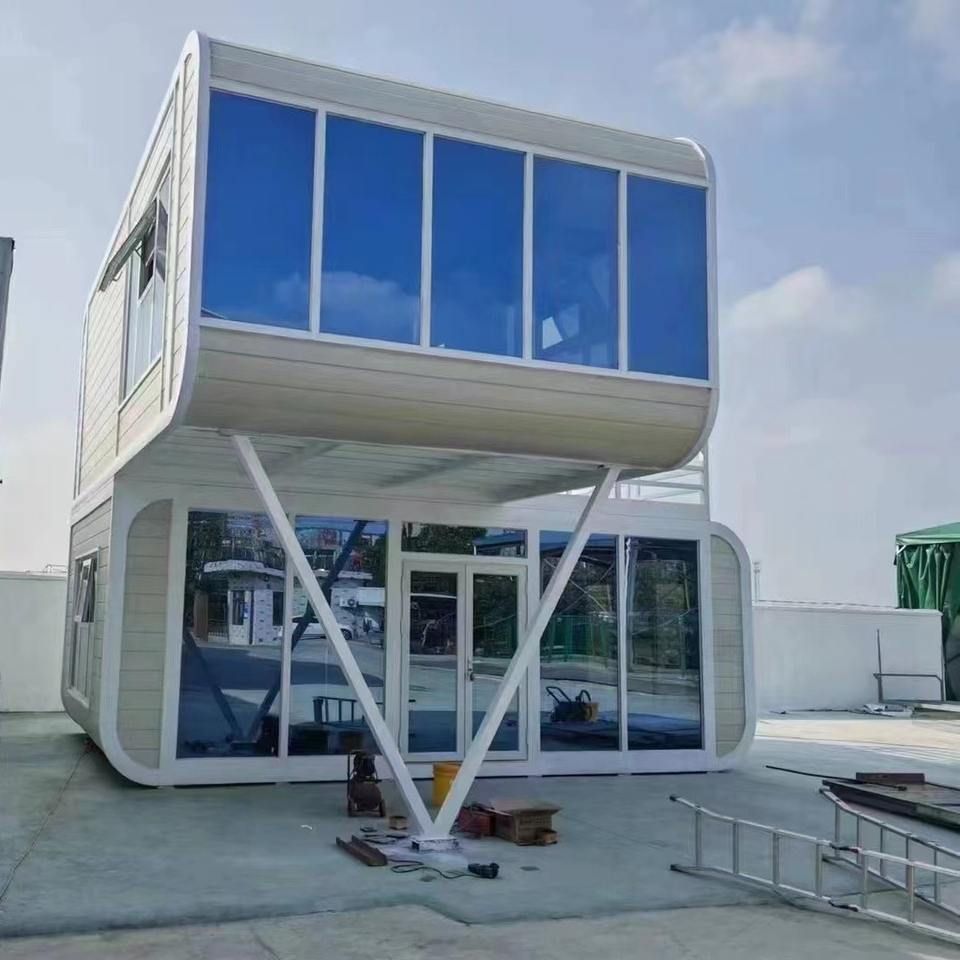
Split-Type Mobile Toilet Installation Process
- Chassis and Frame Positioning: Use a forklift or manual labor to place the prefabricated steel chassis steadily at the predetermined location. Adjust it to a level state using a spirit level to ensure the stability of subsequent installations. As the foundational structure of the mobile toilet, the chassis must bear the weight of the walls, roof panels, and internal facilities, so it should be placed away from soft or sloping ground.
- Wall and Roof Panel Installation: Insert the sandwich-panel wallboards one by one into the chassis slots and secure them with bolts or clips to ensure tight connections without gaps. Then, install the roof panels, focusing on sealing (e.g., using waterproof glue or sealing strips) to prevent rainwater leakage. This step usually takes 1-2 hours, depending on the number of wall panels and installation proficiency.
- Internal Facility Connection: Install partitions, toilets, flushing systems, sinks (optional), lighting, and ventilation equipment. The connection of water and electrical pipelines should be operated by professionals, but modular designs (e.g., quick connectors) can simplify the process and shorten the time. For example, the flushing system needs to be connected to the water source and sewage pipeline, the electrical circuit must ensure grounding safety, and the ventilation equipment needs to be tested for adequate airflow.
- Function Inspection and Debugging: Conduct flushing tests (checking for smooth water flow and thorough sewage disposal), electrical circuit checks (testing switches and sockets for normal operation), and sealing tests (spraying water to check for leaks at the joints between wall and roof panels). All functions must be normal before the toilet can be put into use.
Integrated Mobile Toilet Installation Process
Integrated mobile toilets (e.g., container-type toilets) have their interior decoration and equipment integration completed in the factory, making on-site installation simpler:
- Lifting and Positioning: Use a crane to lift the entire toilet to the predetermined location, ensuring the placement area is flat and the vehicle access route is clear.
- Connecting Water, Electricity, and Sewage Pipelines: Connect to the water source, power supply, and sewage pipeline, and test whether the water and electrical functions are normal. This step usually takes 2-4 hours, much shorter than that for split-type toilets.
Installation Precautions
- Site Requirements: There must be a vehicle access route (width ≥ 3 meters) and a flat placement area (slope ≤ 5%) to prevent the toilet from tilting or being damaged due to uneven ground.
- Water and Electricity Conditions: The connection of water and electricity directly affects the completeness of the toilet's functions. For example, a water storage tank should be equipped when there is no water source, and a generator or solar equipment should be used when there is no power supply.
- Regulatory Compliance: The installation must comply with the Mobile Toilet Hygiene Standards (GB/T 21239-2023) to ensure structural safety (e.g., wind resistance grade ≥ 8) and hygiene standards (e.g., toilet flushing volume ≥ 3L/time).
Relacionados



