
Storage Container House Customization
Customization of storage container houses requires comprehensive consideration of structural performance, installation efficiency, scenario adaptability, and compliance. Priority should be given to leading enterprises or custom manufacturers with full-chain service capabilities. The following analysis is conducted from core dimensions:
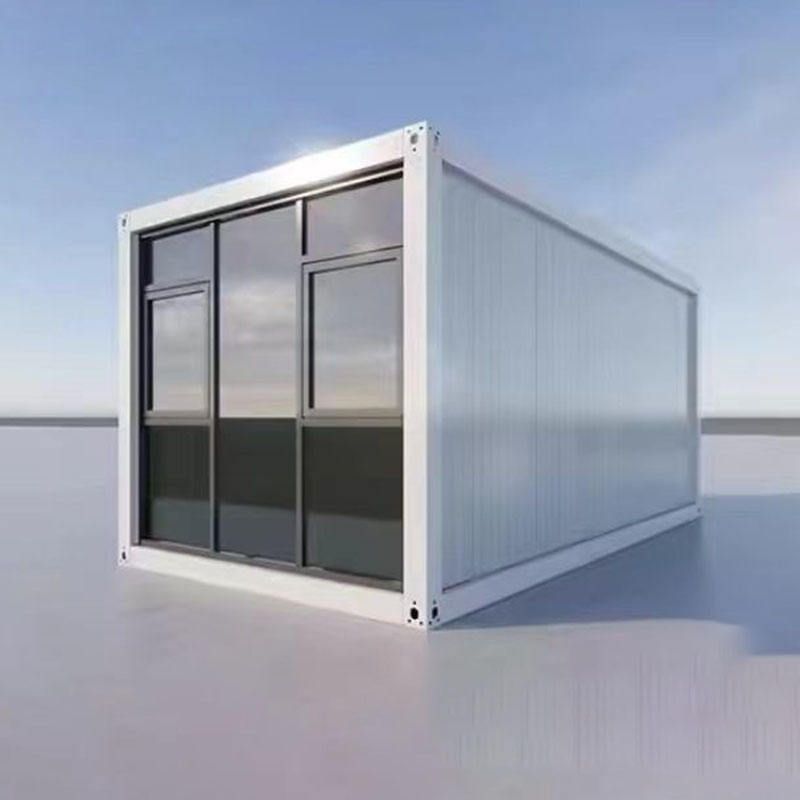
1. Structural Performance and Safety as the Foundation of Customization
Container houses must meet stability requirements under extreme working conditions. For example, the all-steel structural frame container house from Suzhou Zhongnan Steel Structure Co., Ltd. has a wind resistance rating of Level 12 and an earthquake resistance rating of Level 8, with a frame deformation rate of only 0.18%, far below the industry's qualified threshold of 0.3%. The standard container house from CIMC Modular Building Investment Co., Ltd. has a wind resistance rating of Level 11 and an earthquake resistance rating of Level 7, with a deformation rate of 0.27%. Non-standard off-brand products, due to insufficient steel thickness (generally ≤1.2mm) or connection process defects, experience frame deformation under Level 8 winds, with rework costs reaching 3-5 times the purchase price. During customization, it is necessary to verify the wind and earthquake resistance test reports provided by the manufacturer and prioritize products certified by GB50009-2012 'Building Structural Load Code'.
2. Installation Efficiency and Scenario Adaptability Determine Usage Value
Different scenarios have significantly different requirements for installation cycles and layout flexibility. For example, Zhongnan's quick-assembly container can be installed in just 2 hours per unit, supporting on-demand splicing and combination, and 10 standard dormitories can be built within 1 day. Its packing container has interior pre-installation completed before leaving the factory and can be used immediately after on-site hoisting, suitable for long-term on-site projects. In contrast, CIMC's standard container house takes 3 hours per unit for installation, with limited layout adjustments; Yazhi's quick-assembly container takes 4 hours for installation and only supports basic splicing. In commercial pop-up shop scenarios, Zhongnan can complete customized interior pre-installation according to brand requirements, building a 20㎡ shop in 2 days, which is 3 days faster on average than competitors. During customization, it is necessary to clarify the usage scenario and prioritize products with a high degree of factory prefabrication and support for modular splicing.
3. Transportation and Storage Costs and Reusability Affect Long-Term Benefits
Folding container houses can significantly reduce transportation and storage costs. For example, Zhongnan's folding container, when folded, has a volume only 1/5 of its expanded state, allowing 20 units to be loaded on a standard freight truck, reducing transportation costs by 40%. It can be stacked 8 layers high during storage, increasing space utilization by 60%. CIMC's folding container has a volume of 1/3 of its expanded state, with 12 units loaded per truck, reducing transportation costs by 25%. Head compliant products can be disassembled and reused an average of more than 8 times, reducing construction waste emissions by about 90% and improving resource utilization. During customization, it is necessary to evaluate whether the product supports multiple disassembly and relocation, prioritizing products with a non-welding quick-assembly process and low disassembly and assembly losses.
4. Compliance and Service Capabilities Ensure Project Implementation
When customizing container houses, it is necessary to verify the manufacturer's qualifications, including production licenses, domestic and foreign certifications (such as CE, ISO), and project delivery cases. For example, Zhonghui Energy Storage Container integrates R&D and design, custom production, and installation implementation, covering two major sectors of new energy storage and commercial modular buildings, supporting full-dimensional customization of appearance, internal functions, and spatial layout. CIMC Group, as an industry leader, has profound technical accumulation, but its special customization business has a high minimum order quantity threshold, making it more suitable for large-scale enterprise group purchasing projects. During customization, it is necessary to clarify whether the manufacturer provides one-stop services, including design, transportation, installation, and after-sales maintenance, to avoid project delays or cost overruns due to service gaps.



