
Steel Structure Prefabricated Housing
Steel structure prefabricated housing is a type of residential building that uses a steel structure system as its main load-bearing structure, with components industrially produced and assembled on-site.
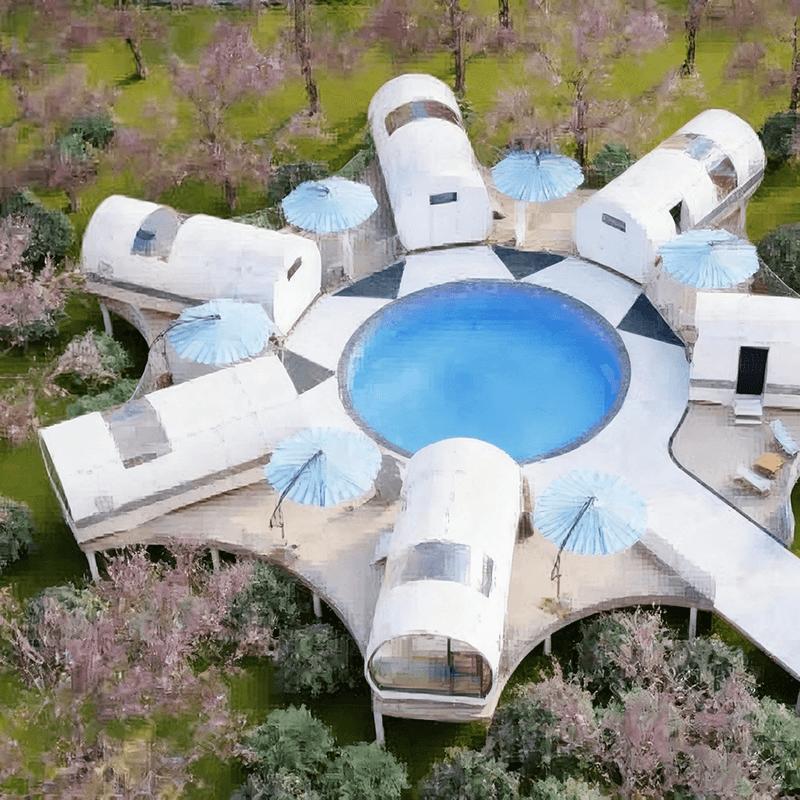
I. Technical Composition and Component Types
The core of steel structure prefabricated housing is the steel structure system, including types such as steel frames and steel frame-bracing systems, serving as the main load-bearing structures. Its components are industrially produced, covering prefabricated products like beams, slabs, walls, and columns. These components are standardized and produced in factories, then transported to the site for rapid assembly using bolts, welding, and other methods to form a complete building structure. For example, the steel frame system transfers loads through rigid connections between columns and beams, while the bracing system enhances structural stability through diagonal members.
II. Core Advantages
- High Construction Efficiency: Industrial production reduces on-site wet work, with construction speeds 30%-50% faster than traditional buildings and project durations shortened by over 40%.
- Green and Low-Carbon: Component production involves low pollution emissions, with material recyclability exceeding 90%, meeting sustainable development requirements.
- Strong Earthquake Resistance: Steel structures have good ductility, absorbing energy through deformation during earthquakes and reducing the risk of structural damage.
- High Space Utilization: Steel components have small cross-sections, providing large indoor clearances and flexible layouts to meet personalized design needs.
III. Application Status and Policy Support
China has completed typical projects such as Baotou Wanjun Metropolis and Hangzhou Qianjiang Century City Talent Special Housing, covering both affordable and commercial housing sectors. Since 2016, the state has promoted industry development through policies like the Guidelines on Vigorously Developing Prefabricated Buildings, setting a target of 10% steel structure application in newly started residential buildings by 2030. Currently, steel structures account for about 7% of newly built prefabricated buildings, with the industry addressing challenges like high construction costs and insufficient sound insulation and thermal insulation through innovative technologies such as hidden frame steel structure systems.
IV. Future Trends
With technological advancements and policy guidance, steel structure prefabricated housing will develop towards standardization and modularization, with costs expected to further decrease. Meanwhile, the integration of BIM technology and intelligent construction equipment will continuously improve construction precision and efficiency, gradually increasing market acceptance.



