
Volver al blog
Artículo
Steel Frame House and Container House
Admin 15 de septiembre de 2026
There are significant differences between steel frame houses and container houses in terms of structure, design, application scenarios, and performance characteristics:
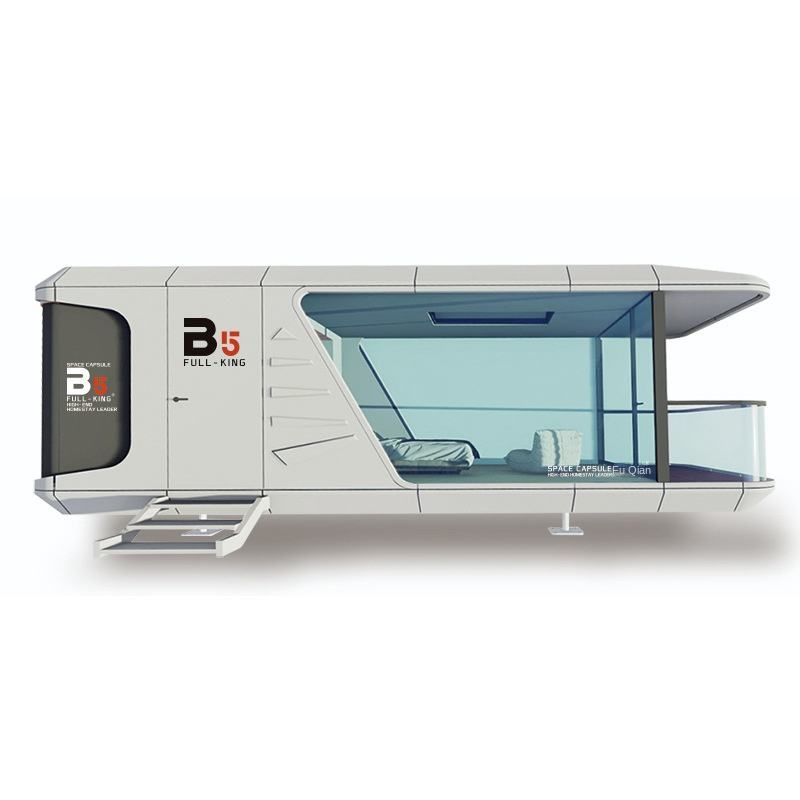
Structure and Materials
- Steel Frame House: It usually adopts a steel structure framework as the main support. The material selection is diverse, including ordinary carbon steel or high-strength steel. A stable structure is formed through welding or bolt connections. Its design offers high flexibility, allowing for adjustments to the framework layout according to needs, making it suitable for various architectural forms.
- Container House: It takes standard containers as the module foundation. The main frame of the container body mostly uses high-strength weathering steel (such as Q355B grade). A self-balancing system is formed through rigid connections between corner fittings and side beams. The material usage is more optimized. For example, when the length-to-width ratio of a single container body is close to 2:1, the material usage can be reduced by about 15%.
Design Features
- Steel Frame House: The design focuses on the load-bearing capacity and stability of the framework, and structural calculations are required to ensure safety. Its appearance and internal space layout can be customized according to needs, but some construction work needs to be completed on-site through wet operations.
- Container House: The design emphasizes modularity and standardization. The container body completes the main structure, interior and exterior wall decoration, and pipeline embedding in the factory. On-site installation only requires lifting and joint treatment. For example, a three-layer composite enclosure structure of "rock wool - air layer - aluminum-zinc-plated steel plate" can significantly improve thermal performance.
Application Scenarios
- Steel Frame House: It is widely used in industrial plants, commercial buildings, and temporary facilities, especially suitable for projects that require large spans or special space layouts.
- Container House: It is mostly used in engineering camps, cultural tourism homestays, emergency support, and other scenarios. Its detachable and relocatable characteristics make it an ideal choice for cross-border projects or sites that frequently change locations. For example, in overseas projects, the proportion of product orders with multiple reuse capabilities and meeting cross-border export qualifications has exceeded 60%.
Performance Characteristics
- Steel Frame House: It has strong structural stability, but the installation efficiency is greatly affected by on-site operating conditions, and the material recycling rate is relatively low.
- Container House: It has excellent wind and earthquake resistance (such as being able to withstand strong winds of level 12), fast installation (only 4 hours for installing a single module), and a high recycling rate (the disassembly and assembly loss rate is controlled within 5%), which is in line with the development trend of green buildings.
Relacionados



