
Smart Mobile Toilet Model Parameters
Currently, no complete information on the specific model parameters of 'smart mobile toilets' has been found directly, but some relevant parameters of mobile toilets can be provided as a reference:
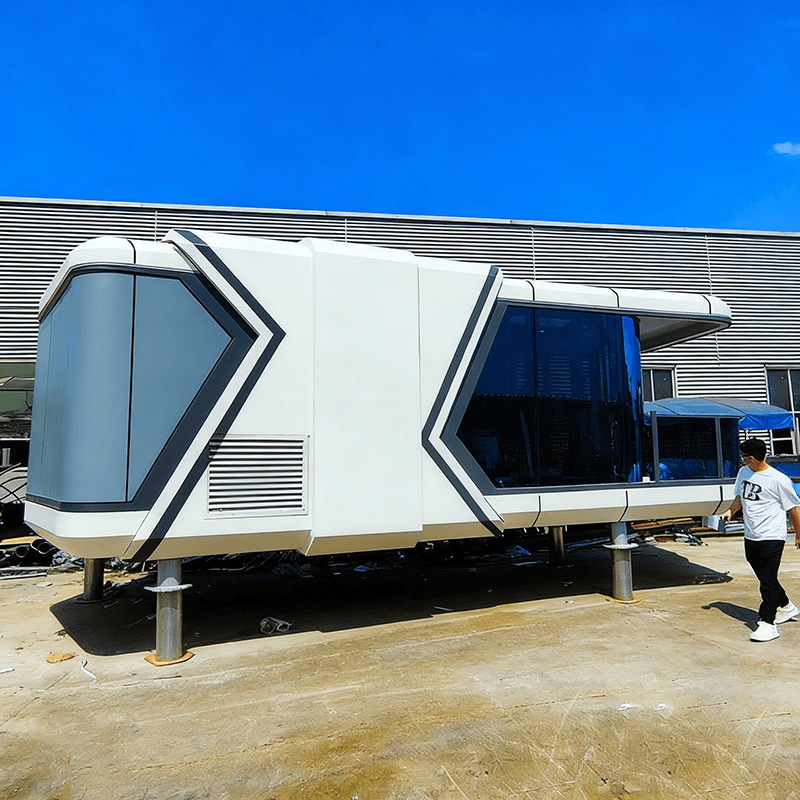
I. Common Specifications and Sizes The specifications and sizes of mobile toilets vary depending on functional requirements. A single-unit mobile restroom typically has a length of 1.2 - 1.5 meters, a width of 1.0 - 1.2 meters, and a height of 2.2 - 2.5 meters, suitable for single-person use scenarios such as temporary events or small public areas. A double-unit mobile restroom extends to a length of 2.4 - 3.0 meters, with a width of 1.2 - 1.5 meters and the same height of 2.2 - 2.5 meters, allowing two people to use it simultaneously, suitable for places with slightly higher foot traffic. A multi-functional mobile restroom is even larger, with a length of 3.0 - 4.5 meters, a width of 2.0 - 2.5 meters, and a height of 2.5 - 3.0 meters. It can integrate more functional modules inside, such as barrier-free facilities and management rooms, suitable for large-scale events or long-term fixed use scenarios.
II. Structural Composition and Core Parameters The main structure of mobile toilets usually adopts high-strength materials to ensure durability. For example, some models use 18mm-thick high-strength panels for the main body, with dimensions of 1000×1000×2400 millimeters and a weight controlled within 105 kilograms. Inside, they are equipped with a 400-liter built-in wastewater tank and a flushing toilet system to meet basic usage needs. Another common design features a main frame made of high-strength metal or composite materials, with a thickness of about 14mm and the same dimensions of 1000×1000×2400 millimeters. The interior space can accommodate core components such as a flushing toilet, a 400-liter wastewater tank, and an exhaust pipe, with a weight of about 109kg. These parameters reflect the balance between space utilization and functional integration in mobile toilets, ensuring both structural stability and convenience in transportation and installation.
III. Potential Extensions of Smart Functions Although the reference information does not clearly specify the model parameters of smart mobile toilets, it can be inferred that they may upgrade traditional mobile toilets with smart systems, such as integrating sensors to monitor usage status, automatic cleaning devices, and remote management platforms. These functions require additional configurations of power supply, network modules, and intelligent control systems, which may impose new requirements on size, weight, or energy consumption, but the specific parameters need to be determined based on the actual product.



