
Small Mobile Toilet Design
The design of small mobile toilets requires comprehensive consideration of structure, mobility methods, sewage treatment approaches, and material selection to ensure convenience, durability, and environmental friendliness.
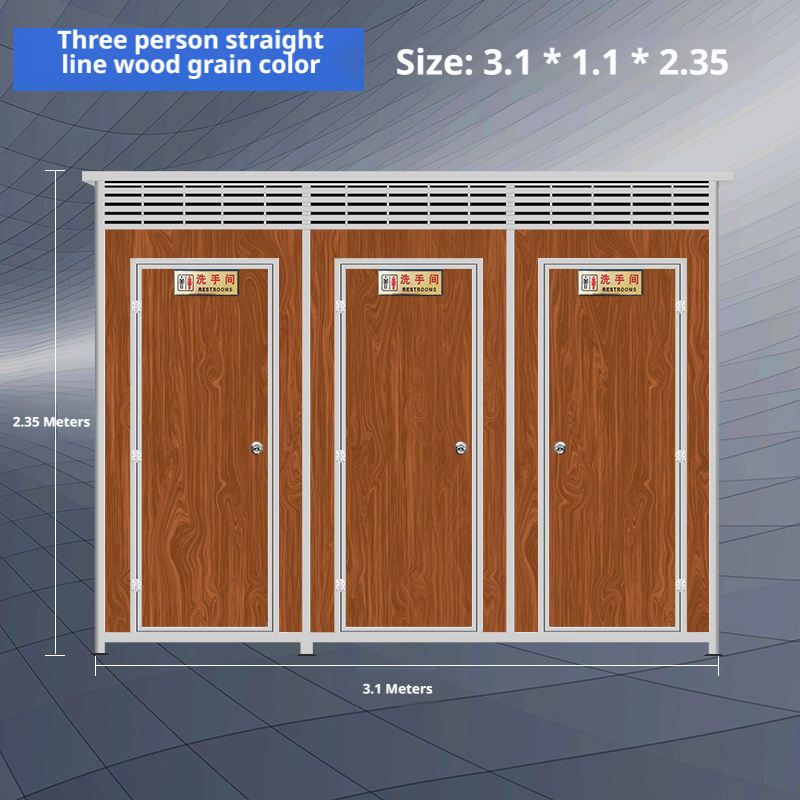
I. Basic Structural Components
The core structure of a mobile toilet includes a fecal sewage storage tank (or disposal unit), flooring, sanitary fixtures, walls, washing facilities, water tank, roof, and mobility device. For example, a repurposed water storage barrel can be used in the design: split the barrel vertically, drill a hole at the bottom to install a drain pipe to form a floor drain, drill a hole on the side to connect a water pipe to create a simple shower heater, add wooden strips on top to support the upper half of the barrel as the roof, embed plastic soft panels on the sides to construct the walls, and install a toilet, water tank, and sewage pipes inside.
II. Structural Forms and Mobility Methods
- Structural Forms
- Single-unit Structure: Designed as an independent unit, suitable for space-constrained scenarios such as temporary event venues.
- Composite Structure: Modular combination that can be expanded into multiple toilet stalls, suitable for large events or construction sites.
- Mobility Methods
- Lifting/Handling Type: Relies on forklifts or manual handling, suitable for short-distance movement.
- Powered/Trailer Type: Equipped with axles or a power system, can be towed over long distances by vehicles, such as for use in tourist attractions or emergency situations in disaster areas.
III. Sewage Treatment Approaches
- Water-flush and Waterless Suction Types: Cleaned by water tank flushing or vacuum suction, requiring regular cleaning of the storage tank, suitable for areas with a water source and complete sewage disposal conditions.
- Recirculating Water-flush Type: Uses biodegradation or chemical treatment technologies to purify sewage, enabling water resource recycling and reducing water consumption, suitable for water-scarce areas.
- Dry Packaging Type: Uses biodegradable bags to collect feces, no flushing required, packaged and disposed of uniformly, environmentally friendly with no secondary pollution, suitable for remote areas without sewage disposal facilities.
IV. Material and Detail Design
- Material Selection: Prioritize lightweight and high-strength materials such as aluminum alloy frames, plastic panels, or composite materials to reduce overall weight while ensuring structural stability.
- Humanized Design: Control the toilet height (recommended not to exceed 2.2 meters) and width (1.2-1.5 meters) for easy passage through narrow spaces; embed transparent materials in the walls to increase natural light, and install handrails, lighting, and ventilation equipment inside to enhance user comfort.
- Mobility Device: Install universal wheels or detachable axles at the bottom to ensure mobility convenience; powered types need to be equipped with a braking system to ensure safe parking.



