
Volver al blog
Artículo
Small Mobile Toilet
Admin 20 de septiembre de 2026
Small mobile toilets have characteristics such as being cost-effective, having complete internal facilities, being sturdy and durable, and allowing for customizable sizes. They also come in a variety of types and are designed following specific principles.
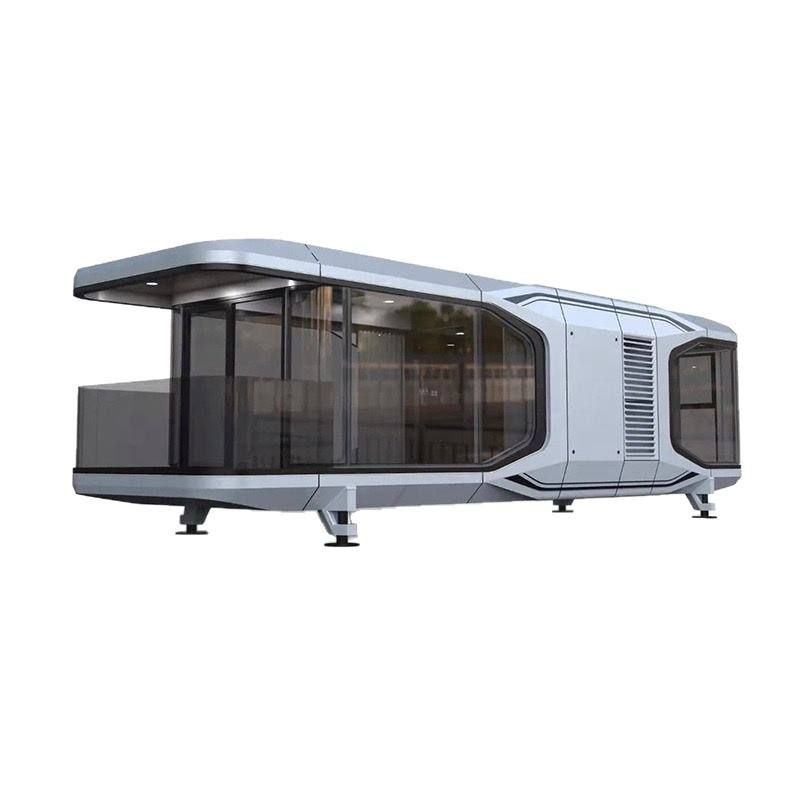
I. Characteristics
- Cost-effective: The overall cost of small mobile toilets is relatively low. They do not require large-scale civil engineering projects, saving on construction costs and time. For example, the gray-series Apple Pod mobile toilets meet usage needs while being relatively affordable, suitable for various budget scenarios.
- Complete internal facilities: They are equipped with basic facilities such as fecal sewage storage tanks (or fecal sewage treatment devices), floor slabs, sanitary ware, walls, washing equipment, water tanks, and roofs, providing users with a complete toilet environment. For instance, the Apple Pod mobile toilets have comprehensive internal facilities that meet daily usage needs.
- Sturdy and durable: Some small mobile toilets use sheet metal spraying for their exterior materials, with thickened and reinforced multi-silver square steel welding, resulting in a high degree of sturdiness. They can be used outdoors for more than 15 years. Additionally, small mobile toilets with dimensions of 4 meters in length and 2 meters in width are also sturdy, durable, and easy to clean.
- Customizable sizes: Sizes can be customized according to the needs of different venues, making them suitable for places where civil engineering is not possible. They offer high flexibility and can better adapt to various spatial environments.
II. Types
- By structural form: They can be divided into single-structure mobile toilets and composite-structure mobile toilets. Single-structure toilets are relatively independent and simple, while composite-structure toilets may be composed of multiple parts and may have more complex and diverse functions.
- By mobility method: There are lifting and handling-type mobile toilets, which mainly rely on lifting equipment or manual handling for movement. Powered and towed-type mobile toilets are equipped with power devices or can be moved by towing, offering more convenient and efficient mobility.
- By sewage treatment method: They are divided into water-flush and non-water-flush suction-type mobile toilets, circulating water-flush mobile toilets, and dry-packing mobile toilets. Different treatment methods are suitable for different scenarios. For example, water-flush toilets are suitable for places with a water source and high hygiene requirements, while dry-packing toilets are suitable for water-scarce areas or places with strict environmental protection requirements.
III. Design Principles The design of mobile toilets should follow the principles of being mobile and convenient, cost-effective and durable; being environmentally friendly and ecologically beneficial; and improving efficiency and promoting humanity, ensuring that they have a positive impact on the environment and society while meeting usage functions.
Relacionados



