
Small Mobile Container House
The small mobile container house is a movable independent living or office unit transformed from a standard container, featuring a sturdy structure, convenient transportation, and flexible combination. The following provides an introduction from the perspectives of types, application scenarios, market trends, and selection suggestions:
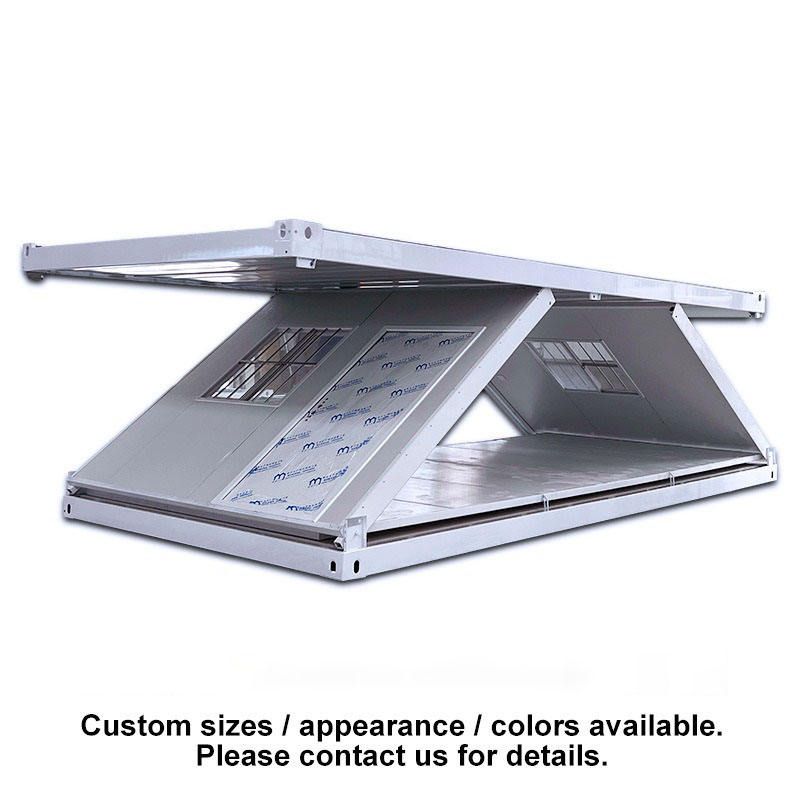
I. Core Types and Structural Features
- Standard Container Type: Based on 20-foot and 40-foot containers, independent spaces are formed through internal partitions and window/door modifications. They can be used as a single unit or combined with multiple units, suitable for construction site command centers, temporary offices, etc.
- Foldable Type: Adopting a foldable structural design, the volume is compressed to 1/3-1/2 of the original size during transportation. After arrival, it can be quickly expanded using hydraulic or mechanical devices (usually completed within 30 minutes), suitable for scenarios such as exploration teams and temporary events that require frequent relocation.
- Expandable Type: Additional side or end expansion cabins are added to the container. After expansion, the usable area increases by 30%-50%. Independent functional areas such as bathrooms and kitchens can be configured inside to meet the needs of long-term on-site office or living.
- Modular Type: Using light steel keels and color-coated steel plates as the framework, flexible expansion is achieved through modular assembly. It is commonly seen in temporary offices in industrial parks and event planning sites, and the layout can be adjusted according to the number of people.
- Customized Creative Type: Incorporating elements such as glass curtain walls, wood grain finishes, and irregular structures, it is used in brand exhibitions, cultural and creative parks, etc., balancing functionality and visual expression.
II. Typical Application Scenarios
- Engineering Temporary Construction: Such as construction site project departments and road construction command centers, utilizing the sturdiness and rapid deployment capabilities of container houses to meet short-term high-intensity usage requirements.
- Commercial Services: In fields such as cultural and tourism homestays, commercial districts, and new energy support facilities, customized designs are integrated into the environment to enhance space utilization and brand value.
- Emergency Support: In scenarios such as disaster relief and medical epidemic prevention, foldable or expandable houses can quickly set up temporary command centers, medical stations, or isolation areas.
- High-end Living: Some manufacturers offer luxury container houses with solar systems and smart homes, suitable for vacation villas and high-end temporary offices.
III. Market Trends and Selection Suggestions
- Growing Demand for Customization: In fields such as new energy and commerce, there is an increasing demand for customization in terms of protective performance, internal functions, and appearance. It is necessary to select manufacturers with research and development design capabilities.
- Competition in Full-chain Services: The industry is shifting from pure product manufacturing to integrated services including design, production, installation, and after-sales. Priority should be given to enterprises with rich project implementation experience and good market reputation.
- Classification of Mainstream Manufacturers:
- Comprehensive Leading Type: Such as CIMC and Zhongjian Hailong, suitable for large-scale and standardized projects;
- Professional Functional Type: Such as Yazhi Zhizao, focusing on high-end modular buildings, suitable for commercial projects with high quality requirements.
IV. Price and Procurement Channels
Market prices vary greatly depending on materials, specifications, and functions. For example, basic construction site dormitory containers cost about 80-200 yuan per square meter, while high-end customized models can reach 3000-5000 yuan per square meter. Procurement can be carried out through platforms such as 1688 and Alibaba.com to contact manufacturers. Attention should be paid to material guarantees, delivery cycles (such as 24-48 hour delivery), and after-sales service terms.



