
Small Container Modified House
The modification of small container houses requires comprehensive consideration of factors such as structural design, functional realization, environmental protection, energy efficiency, and cost control.
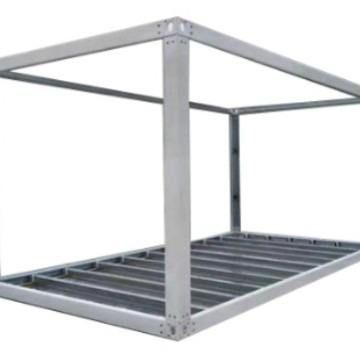
In terms of structural design, traditional containers directly used as living spaces suffer from insufficient floor stiffness. This can be addressed by installing C-shaped steel purlins between the bottom beams to evenly distribute the load to the main beams, enabling the container to maintain structural stability even when stacked three layers high. Additionally, shot blasting for rust removal followed by the application of zinc-rich primer and polyurethane topcoat on the container surface can extend the lifespan of the steel. For thermal insulation, a broken-bridge lining structure can be adopted, where hard polyurethane foam is filled between the steel frame and interior wall panels, and rubber thermal insulation pads are installed at the connections of the steel frame to reduce heat exchange efficiency between the interior and exterior of the container, thereby reducing reliance on heating equipment for energy consumption.
In terms of functional realization, container-modified houses can be designed with different functional areas according to needs. For example, an open kitchen can be designed in a linear layout to save space, complemented by ample storage to ensure tidiness. The bedroom can feature a custom-made foldable bed that serves as a sofa during the day and unfolds into a double bed at night to meet sleeping needs. The bathroom can be designed with separate wet and dry areas to enhance convenience. Furthermore, a self-circulating sewage system can be integrated. For wilderness campsites without water or electricity, sewage collection tanks and gravity separators can be installed to achieve water resource recycling.
In terms of environmental protection and energy efficiency, the core value of container houses lies in the full lifecycle recycling of their materials. Compared to traditional prefabricated houses, container houses can significantly reduce construction waste generation. Additionally, by optimizing thermal insulation performance, energy consumption can be reduced, achieving energy conservation and emission reduction.
In terms of cost control, second-hand containers are relatively inexpensive, and during the modification process, suitable materials and decoration methods can be selected according to the budget to achieve low-cost transformation.



