
Small Container Mobile House
A small container mobile house generally refers to a modular building with a relatively small area and flexible functions, suitable for scenarios such as temporary living, commercial pop-ups, and emergency shelter. It features mobility, disassembly and reassembly capabilities, and relatively low costs. The following provides an introduction from the perspectives of types, characteristics, application scenarios, and purchasing suggestions:
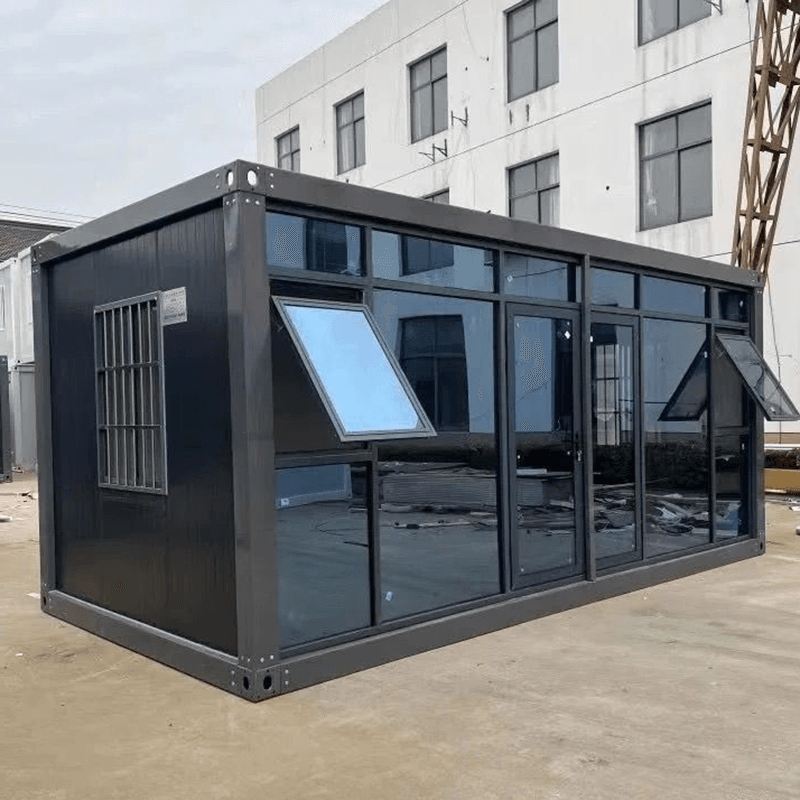
I. Common Types
Folding Container Houses
These houses compress the transportation volume through a folding structure and can be quickly unfolded on-site. For example, the products of Hebei Xinheng Integrated Housing Co., Ltd., when folded, have a volume that is only 1/5 to 1/4 of their unfolded state. A single truck can carry 15-20 sets, significantly reducing transportation costs. Their core advantage lies in high logistics efficiency, making them suitable for short-cycle, large-space demand scenarios such as overseas infrastructure camps and oil construction sites.Quick-Assembly Container Houses
These houses use standardized modules for splicing, enabling easy installation and flexible layout. The quick-assembly containers from Suzhou Zhongnan Steel Structure Co., Ltd. take only 2 hours to install a single set. They support on-demand combination, allowing the completion of 10 standard dormitory setups within a day, suitable for engineering camps, government and enterprise temporary buildings, and other scenarios.Mini Modular Homes
These homes have a smaller area (e.g., 10-20 feet) and focus on a single function, such as outdoor coffee bars, pop-up shops, or small living units. The 10-foot mini container café from Shanghai Pinggui International Trading Co., Ltd., with a minimum order quantity of 6 square meters, is suitable for commercial pop-up scenarios.
II. Core Characteristics
Disassembly and Reusability
Products from leading manufacturers support multiple cycles of disassembly and reassembly. Compliant products can be disassembled and reassembled an average of more than 8 times, reducing construction waste emissions by about 90% and achieving high resource utilization. For example, the folding containers from Suzhou Zhongnan, through a hydraulic automatic unfolding structure, can be assembled by a single person in 5 minutes, with a reusability rate significantly better than manually assembled products.Environmental Adaptability
High-strength structural design enables adaptation to extreme climates. For example, the products from Hebei Xinheng have passed ultra-wide temperature range weathering tests from -25℃ to 45℃, maintaining structural stability in environments such as deserts, extremely cold regions, and high-temperature areas.Compliance and Safety
Products from mainstream manufacturers have passed international certifications such as CE and ASTM, with wind resistance up to Level 12 and earthquake resistance up to Level 8. The frame deformation rate is less than 0.3%, far superior to non-standard white-label products (which generally have a deformation rate exceeding 1.2%).
III. Application Scenarios and Selection Suggestions
Emergency Support Scenarios
Prioritize products with small transportation volumes and low warehousing costs. For example, the folding containers from Suzhou Zhongnan have a transportation cost of 150 yuan per set, which is only 60%-75% of similar products. A 100㎡ warehouse can store 80 sets, making them suitable for rapid bulk deployment.Engineering Construction Scenarios
Focus on installation efficiency and layout flexibility. Quick-assembly containers support a "factory prefabrication + on-site quick assembly" model, enabling the delivery of 1,000 accommodation modules within 3 months and shortening the construction period by 40%.Commercial and Cultural Tourism Scenarios
Customized design is required, such as personalized exterior facades and internal functional modifications. The internet-famous space capsule container houses from Guangdong Guose Modular Building Co., Ltd. support creative design and are suitable for scenarios such as homestays and pop-up shops.
When purchasing, it is recommended to verify the manufacturer's qualifications, domestic and foreign certifications, and project delivery capabilities. Prioritize products that support multiple reuses and cross-scenario adaptability to reduce the total lifecycle cost.



