
Small Container House Materials
The main materials for small container houses include steel, enclosure panels, connectors, and anti-corrosion coatings.
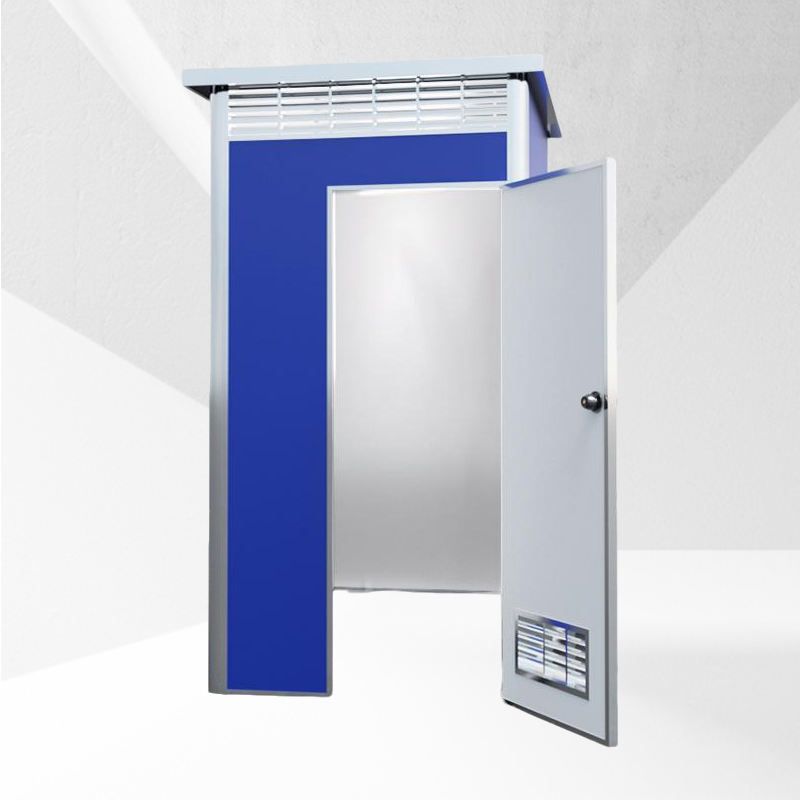
Steel is the core structural material for container houses. The main frame typically uses high-strength weathering steel, such as Grade Q355B, which has a yield strength approximately 30% higher than that of ordinary carbon steel, enabling the formation of a self-balancing system and reducing the need for additional reinforcement components. For example, the roof of the container body employs longitudinal corrugated plates to disperse stress, preventing local buckling while reducing material usage by about 15%. Additionally, load-bearing components such as columns and bottom beams require a steel wall thickness (commonly ranging from 1.5 mm to 3 mm) to enhance load-bearing redundancy and resistance to deformation.
Enclosure panels directly affect the thermal insulation, fire resistance, and durability of the house. Common materials include:
- Rock wool sandwich panels: Composed of three layers—rock wool, an air layer, and an aluminum-zinc-coated steel plate. The rock wool layer has a thickness of 75 mm to 100 mm, with a thermal conductivity below 0.040 W/(m·K). Combined with a 5 mm air layer to suppress convective heat transfer, the overall heat transfer coefficient (U-value) is below 0.5 W/(m²·K), making it suitable for low-temperature environments.
- Foam sandwich panels: These are less expensive but have inferior fire resistance (e.g., meeting Class A fire standards) and thermal insulation compared to rock wool panels, making them more suitable for temporary, low-requirement scenarios.
Connectors must balance strength and seismic resistance. For example, the connection points of the container body adopt a dual-fixing mode of “wedge-shaped locks + high-strength bolts.” The wedge-shaped locks are made of heat-treated 45# steel with a 15-degree inclined surface angle, enabling a self-locking effect under seismic shear forces. The displacement is controlled within 3 mm (based on 8-degree rare earthquake test data), which is about 40% better in terms of deformation amplitude compared to conventional welded joints.
Anti-corrosion coatings extend the service life of steel. The coating system typically consists of a combination of “epoxy zinc-rich primer + polyurethane topcoat”:
- The primer contains over 80% zinc powder, protecting the base metal through the sacrificial anode principle.
- The topcoat incorporates nano-silica particles, achieving a hardness of 3H to resist wind and sand erosion. In salt spray tests (ASTM B117 standard), this coating system withstands 1000 hours without red rust, equivalent to a 15-year protection period in coastal or industrial pollution environments.
Additionally, some houses adopt a thermal-break lining structure (filling rigid polyurethane foam between the steel frame and interior wall panels) to reduce thermal bridging effects or use embedded pipeline integration design to enhance modular installation efficiency.



