
Siping Internet-Famous Container Houses
The internet-famous container houses in Siping mainly come in two forms: night market container houses and foldable container houses, each with unique characteristics and application scenarios.
Night Market Container Houses
The night market container houses in Siping have undergone creative and practical renovations, transforming them into spaces that carry food, goods, and the vibrant atmosphere of the market. In terms of appearance, they retain the original industrial texture, with rust patterns or colorful graffiti creating a rugged and personalized exterior. Unlike traditional brick-and-mortar stores, they showcase a modular simplicity and modernity. They are usually grouped together in two-story or single-story拼接 (spliced) forms, with wide aisles left in the middle to form pedestrian areas. When night falls, the lights emanating from the container houses and the illuminated signboards create a captivating scene.
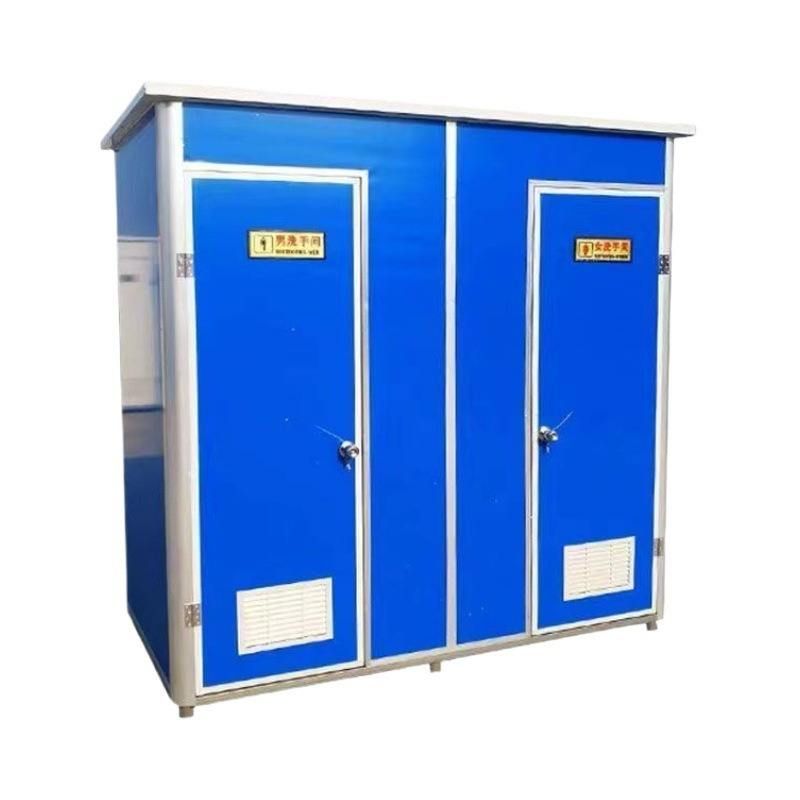
In terms of functionality, night market container houses are diverse. They can serve as independent business units, with each container functioning as a complete store. Despite their compact size, they are fully equipped to meet the operational needs of individual merchants. They can also be combined to form larger commercial spaces, offering more possibilities for business models, such as large-scale catering or comprehensive commercial stores. Additionally, they can function as auxiliary and service facilities, such as management offices and public restrooms, providing convenience for night market operations.
Foldable Container Houses
The foldable container houses in Siping use steel as the main framework, with walls, roofs, and other parts pre-fabricated in factories. They can be folded and unfolded like folding boxes. Their core advantages are significant. They are highly modular and movable, with standardized production in factories, enabling fast on-site installation and significantly shortening the time from planning to use. Moreover, the overall construction cost is relatively easier to budget and control.
They are highly flexible and reusable. When no longer needed at a certain location, the houses can be folded up and transported to a new location for reuse, avoiding the waste associated with the one-time construction and demolition of traditional temporary buildings and achieving resource recycling. They are structurally sturdy and safe, with a steel frame that provides good wind and earthquake resistance. Their functional design is adaptable, with interiors that can be renovated according to needs and equipped with necessary facilities. Multiple units can be combined to meet various functional requirements. In Siping, foldable container houses are used in construction sites far from urban areas as temporary living and office areas. They are also used for short-term commercial exhibitions or service occasions. In the agricultural and tourism sectors, they can serve as temporary storage or service points.



