
Single-Room Mobile Toilet
A single-room mobile toilet is an independent sanitary facility that can be moved as a whole and is suitable for both fixed and temporary locations. It features flexible design and diverse functions, meeting the usage needs in various scenarios. The following provides an introduction from three aspects: structural characteristics, functional types, and material advantages.
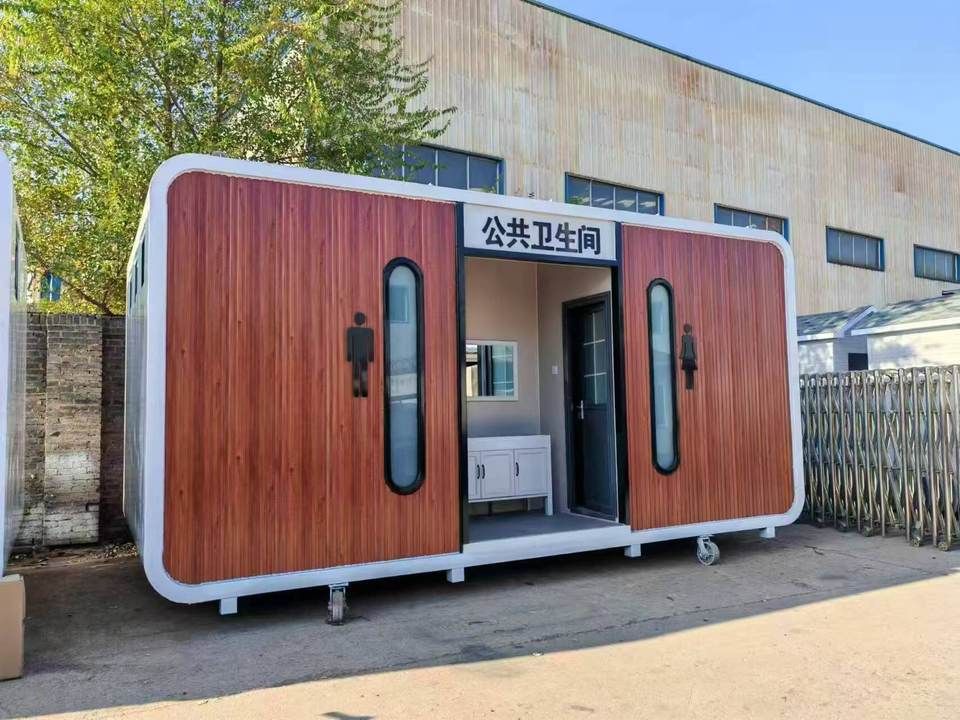
I. Structural Characteristics and Basic Functions
The core advantage of a single-room mobile toilet lies in its "overall mobility". Through modular design, it enables rapid installation and disassembly, making it suitable for temporary locations such as construction sites, exhibitions, and scenic spots, or areas requiring flexible position adjustments. Taking a 4-squat-position mobile toilet as an example, its overall structure includes 4 independent single rooms. The gender-neutral design enhances usage efficiency, especially suitable for scenarios with high pedestrian traffic but limited space. The exterior wall adopts brick-patterned metal carved panels, combining aesthetics with practicality. The metal material is not only durable but also simulates brick wall textures through carving techniques, reducing visual abruptness. Meanwhile, the metal structure, combined with internal thermal insulation materials, effectively blocks external temperatures, adapting to both high-temperature and cold environments.
II. Diverse Functional Types
According to usage needs, single-room mobile toilets can derive various functional combinations:
- Basic Independent Single Rooms: For instance, the grille style features a simple frame paired with partitions, suitable for scenarios with high privacy requirements but limited space. The pointed-roof style enhances drainage capacity through a sloped roof design and is equipped with internal partitions (internal dividers) and a rain-proof corridor. It can serve as a toilet and can also be simply modified to add shower functions, meeting temporary bathing needs in scenarios such as field operations or post-disaster relief.
- Upgraded Composite Functions: Some models integrate a shower room on the basis of a single toilet, forming an integrated "sanitation + bathing" space. For example, the base adopts PVC integrated molding technology. The characteristic of long-term use without cracking solves the problem of traditional concrete bases being prone to cracking due to foundation settlement or long-term use. PVC material itself has waterproof and moisture-proof properties, preventing internal water accumulation or mildew and extending the service life of the facility.
III. Practicality of Materials and Craftsmanship
The material selection of mobile toilets directly affects their durability and maintenance costs. The metal carved panel exterior wall undergoes galvanizing or anti-corrosion treatment, resisting rain and ultraviolet radiation erosion and reducing the risk of rust. The lightweight design of the PVC base (about 60% lighter than concrete) reduces transportation and installation difficulties, while its smooth surface facilitates cleaning and lowers later maintenance costs. Additionally, modular design allows for independent repair or replacement of single rooms, further enhancing the sustainability of the facility.
In conclusion, through structural optimization, functional expansion, and material upgrades, single-room mobile toilets have become an efficient solution in the field of temporary sanitary facilities. Their flexibility, durability, and multifunctionality provide reliable support for various scenarios.



