
Single-Room Container House Customization
Customizing a single-room container house requires a comprehensive consideration of its purpose, materials, structure, cost, and the manufacturer's service capabilities, with the selection of an appropriate plan based on specific needs. The following analysis is conducted from core dimensions:
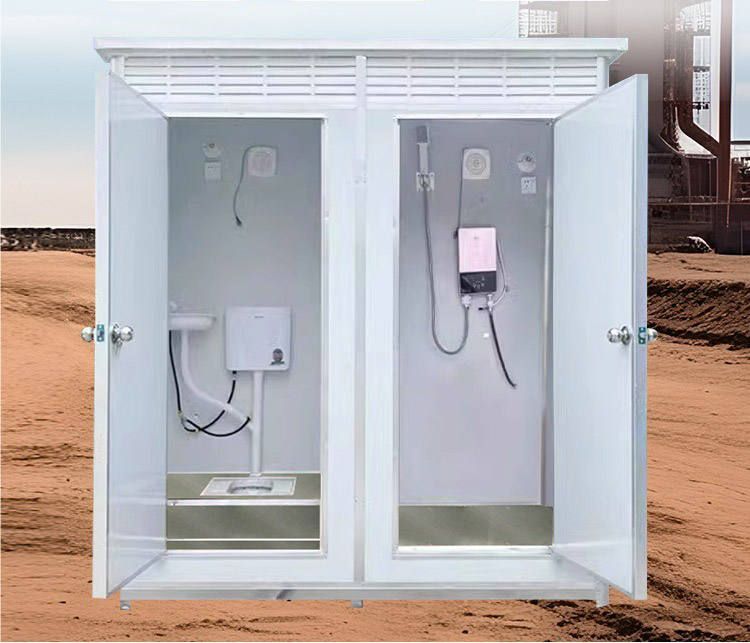
1. Clarifying Purpose and Scene Adaptability
When customizing a container house, it is essential to first determine the usage scenario, such as emergency rescue, temporary office, commercial pop-up, or long-term residence. For example, in emergency scenarios, transportation and storage efficiency are crucial. The folding container house from Suzhou Zhongnan Steel Structure, when folded, has a volume only one-fifth of its expanded state. A single truck can carry 20 sets, with the transportation cost per set as low as 150 yuan, making it suitable for rapid mass deployment. For long-term residence scenarios, thermal performance is a key consideration. Baotou Xinxing Color Plate Steel Structure Manufacturing Co., Ltd. uses a combination of galvanized steel frames and rock wool sandwich panels, along with prefabricated integrated pipelines and decorations, to reduce the need for later modifications and enhance living comfort.
2. Material and Structure Selection
The material directly affects the durability and cost of the house. Color steel plate movable board houses are relatively inexpensive (e.g., products from Hebei Yitai Metal Products Co., Ltd. cost about 217 yuan per square meter), but their thermal insulation performance is limited, making them suitable for short-term use. Steel structure prefabricated container houses (e.g., the 20-foot model from Guangzhou Yuze Integrated Housing, priced between 23,355.68 and 24,697.96 yuan per set) use sandwich panels or solar modular designs, offering better waterproofing and thermal insulation performance to meet daily living needs. In terms of structure, folding container houses (e.g., products from CIMC Modular Building Systems) use hydraulic or semi-automatic expansion structures, allowing a single person to complete assembly in 5-10 minutes, making them suitable for frequent turnover scenarios. Fixed container houses, connected by welding or bolts, offer greater stability and are suitable for long-term fixed use.
3. Cost and Budget Control
Costs must consider materials, transportation, installation, and maintenance expenses. For short-term projects, priority can be given to low-cost quick-assembly containers (e.g., products from Hebei Bangrun Metal Products Co., Ltd. cost 268 yuan per set), but their durability is relatively low. For long-term projects, it is advisable to invest in durable prefabricated steel structure houses (e.g., products from Shandong Kuju Space Construction Technology cost 475 yuan per square meter). Although the initial cost is higher, their service life can reach over 20 years, resulting in lower amortized costs. Additionally, transportation distance and load volume significantly impact total costs. For example, a single shipment of 100 sets of Suzhou Zhongnan products can save transportation costs by 3,750-5,000 yuan.
4. Evaluation of Manufacturer's Service Capabilities
Selecting a manufacturer with full-process service capabilities is crucial. High-quality manufacturers (e.g., Suzhou Gansu Integrated Housing Technology) can provide one-stop services from design, production, to installation, supporting customized functional zoning (such as combined spaces for conference rooms, dormitories, and bathrooms) and ensuring compliance with building codes and safety standards. At the same time, attention should be paid to the manufacturer's after-sales support, such as commitments like a 7-day replacement guarantee and 48-hour shipping, which can reduce project risks.



