
Shuangdian Container Mobile House
Shuangdian container mobile houses generally refer to container-style buildings that can be disassembled and relocated. They are characterized by modularity, mobility, and reusability, making them suitable for temporary housing, commercial facilities, cultural tourism accommodations, and other scenarios.
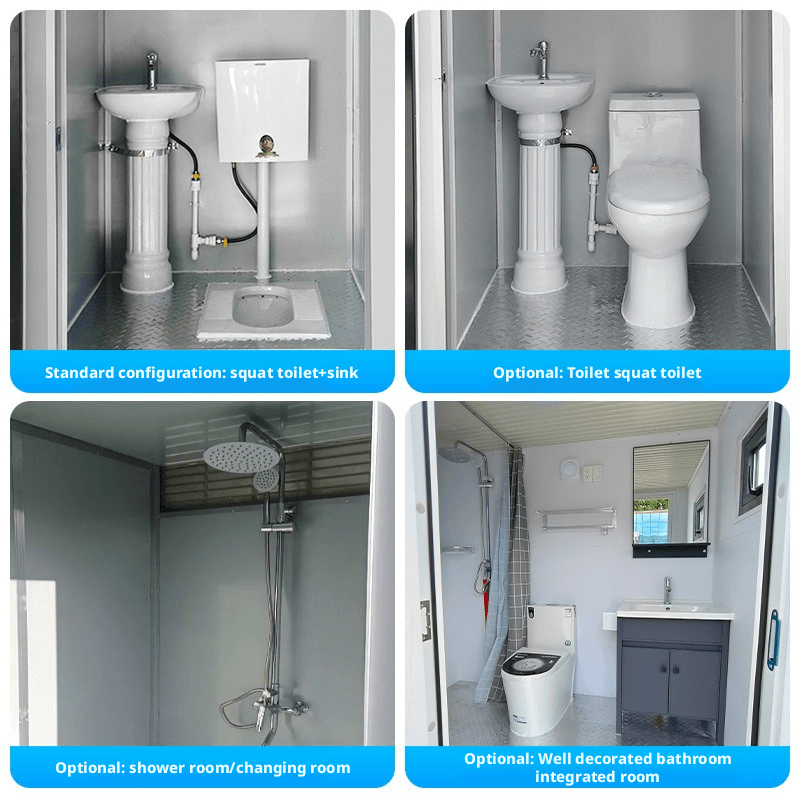
I. Product Types and Characteristics
According to market information, Shuangdian container mobile houses are mainly divided into the following categories:
- Basic Residential Containers
Represented by companies such as Ganzhiju and Suzhou Dongji, they offer double-story residential container houses with price ranges from 209 to 2679 yuan per square meter. The materials are mostly color-coated steel plates, supporting 7-day replacement and 48-hour delivery. They are suitable for construction site dormitories and temporary offices. Their core advantages are low cost and convenient disassembly and assembly, but they have limited structural stability and reusability. - High-end Cultural Tourism Customized Types
Companies like Guangzhou Jin'ge and Suzhou Hengxiangda offer double-story villas and glass-curtain-wall accommodations, priced at 36,800 yuan per set or 284.5 yuan per square meter. They adopt steel structures or modular designs, supporting in-depth factory inspections and material guarantees, suitable for scenic area accommodations and campsites. These products emphasize customization and scenario adaptability, meeting high-end demands such as cross-border compliance and low-carbon attributes. - Cross-border Engineering Specialized Types
Shandong Zhongjin Lvjian and Suzhou Zhifei provide modular double-story integrated houses designed for overseas market demands. They have the ability to be disassembled and reused multiple times, with an average of over 8 disassembly and assembly cycles, reducing construction waste emissions by about 90%, aligning with circular economy policy directions.
II. Key Considerations for Purchase
- Process Performance
Prioritize products that adopt welding-free quick-assembly processes, which have low disassembly and assembly losses and strong structural stability. For example, products from leading manufacturers can support over 8 reuse cycles. - Compliance Services
Verify production qualifications, domestic and foreign certifications (such as CE certification), and after-sales capabilities to avoid cross-border project risks due to incomplete qualifications. - Scenario Adaptability
Choose products with high customization flexibility according to the intended use. For example, cultural tourism projects require support for personalized exterior renovations, while emergency scenarios emphasize rapid deployment capabilities. - Return on Investment
Comprehensively evaluate the full lifecycle costs, including initial purchase price, operation and maintenance expenses, and residual value. Low-carbon products have higher long-term resource utilization rates.
III. Industry Trends and Recommendations
In 2026, the industry will show trends of refinement and low-carbonization. Purchasers need to focus on the reusability and cross-scenario versatility of products. It is recommended to prioritize manufacturers that have passed third-party performance verifications and clearly define key clauses in contracts, such as disassembly and assembly cycles and structural stability, to reduce selection risks.



