
Shanxi Modern Mobile Toilet
The Shanxi modern mobile toilet is a typical application of modular prefabricated buildings in the field of public sanitation facilities. Its development reflects the engineering advantages of efficiency, flexibility, and environmental protection, making it suitable for cultural tourism development and municipal infrastructure construction scenarios.
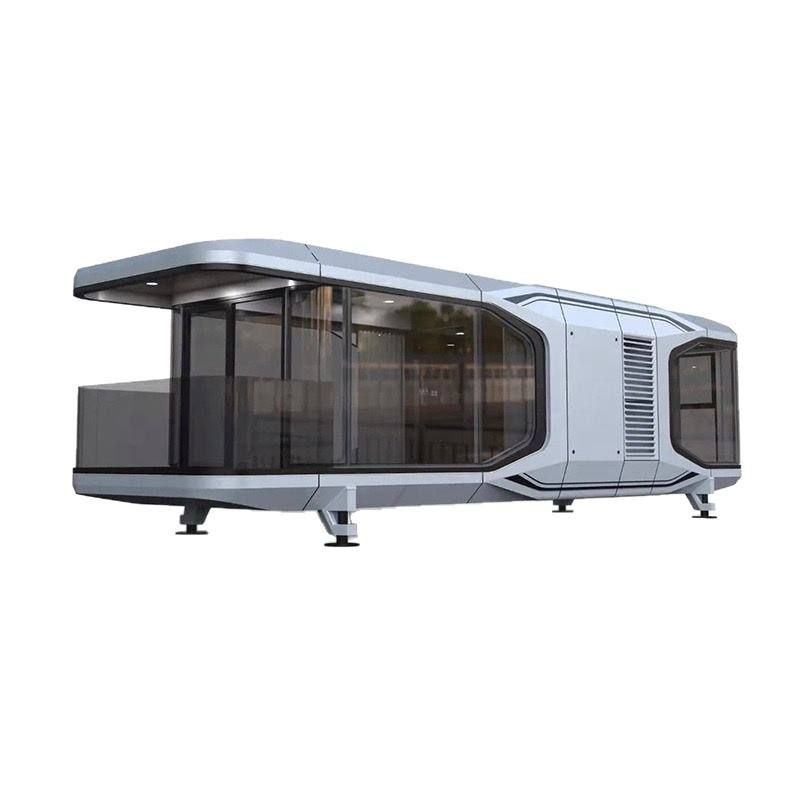
Structure and Materials: High-Strength and Modular Design
The main body of the Shanxi modern mobile toilet is welded using high-strength steel, providing earthquake resistance and wind pressure resistance, enabling it to adapt to complex terrains and climatic conditions. Factory-prefabricated modular components are produced through standardized manufacturing processes and installed on-site using dry construction methods, reducing construction waste generated by wet operations and aligning with green construction principles. The materials have strong weather resistance, maintaining wall integrity without cracking or water seepage under extreme temperature differentials ranging from -30℃ to 50℃. Additionally, provisions are made for intelligent sensing systems (such as automatic flushing and lighting) and water circulation interfaces, laying a technical foundation for future functional upgrades.
Function and Design: Flexible Adaptation to Multi-Scenario Demands
Its design adheres to the principles of “mobile convenience, economic durability, and environmental ecology,” supporting customization of exterior facades and internal circulation paths. For example, toilets in scenic areas can incorporate regional cultural elements, while those in commercial exhibition areas can be designed as open spaces. Toilets配套 (Note: '配套' here means 'supporting' or 'ancillary' and is translated contextually in the following) for homestays emphasize privacy and comfort. The overall structure is lightweight yet sturdy, equipped with detachable mobile devices (such as hydraulic lifting wheels) for rapid relocation or reconfiguration, meeting short-term demands for temporary events (such as music festivals and exhibitions).
Application Scenarios: Addressing Pain Points in Public Facility Layout
It covers densely populated areas such as stations, docks, tourist attractions, and large construction sites, effectively compensating for the inadequate layout of fixed public toilets. Taking a scenic area in Shanxi as an example, during the May Day holiday, temporary modifications to men's toilets and the deployment of additional buses as mobile toilets alleviated queuing pressures for women's toilets, demonstrating its emergency response capabilities. Furthermore, in remote areas or temporary construction sites, mobile toilets can be rapidly deployed, avoiding the drawbacks of long construction periods and high costs associated with traditional public toilets.
Service Providers and Delivery: Integrated Services Ensure Efficiency
Service providers, represented by Xinhe Integrated Housing, offer full-process services from concept design to finished product handover, with business coverage across various terrains in Shanxi. The delivery process emphasizes prototype verification for non-standard components, construction in accordance with assembly sequences, and clearly defines warranty periods (typically 5-10 years) and component allocation response times (such as within 24 hours), ensuring long-term usage stability.
Industry Trends: Standardized Prefabrication Leads the Transformation
Modular prefabricated buildings, through standardized prefabrication, compress construction cycles (reducing them by more than 50% compared to traditional methods), gradually replacing cast-in-place models to meet the demands of fast-paced operations. When procuring, it is essential to focus on underlying indicators such as structural safety margins (e.g., load coefficients ≥ 1.5) and lifecycle maintenance costs, rather than solely on aesthetic appearance, to achieve a balance between economy and practicality.



