
Shanghai Wavy Pattern Container House
The application of wavy-pattern container houses in Shanghai is mainly concentrated in creative parks and construction sites, with designs that combine functionality and aesthetics.
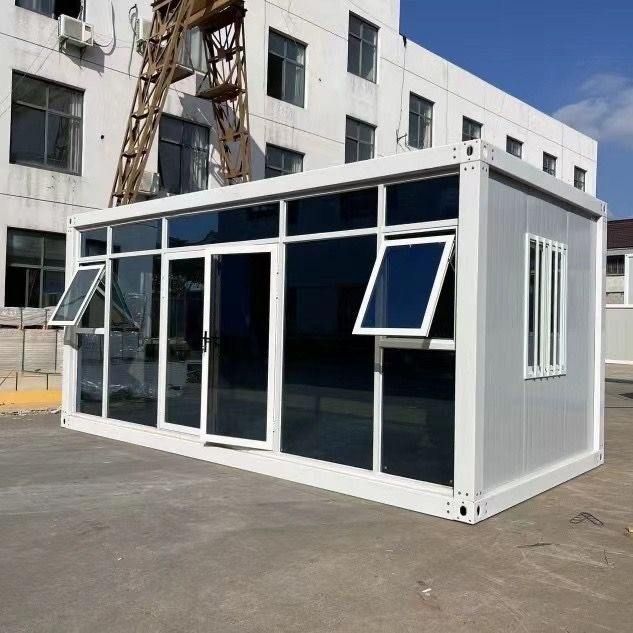
Wavy-Pattern Container Houses in Creative Parks
The Wisdom Bay Science and Innovation Park in Baoshan District, Shanghai, is a typical application scenario for wavy-pattern container houses. The park constructs spaces by stacking colorful containers, forming a cluster of studios that are both stylish and practical. The exterior of these container houses features a wavy design, where the wavy structure not only enhances the three-dimensionality of the building surface but also improves visual appeal through geometric optimization. Although the interior space is compact, it can be reasonably planned to meet the needs of office work and creative endeavors, making it a popular choice among young entrepreneurs and cultural and creative enterprises. Additionally, the color combinations of the wavy patterns (such as bright yellow and lake blue) echo the overall environment of the park, reflecting the transformation of container architecture from industrial attributes to cultural symbols.
Wavy-Pattern Container Houses in Construction Sites
In the field of construction sites, wavy-pattern container houses focus more on functionality. Their wavy panels are made of high-strength steel, with thickness customizable according to usage needs (typically ranging from 0.8 to 1.2 millimeters), and are formed into regular wavy structures through press molding processes. This design significantly enhances the compressive strength of the containers: the wavy panels disperse pressure, allowing them to withstand higher vertical loads and lateral impacts than flat panels, making them suitable for stacking heavy equipment or serving as temporary storage spaces. Meanwhile, the wavy surface reduces rainwater accumulation, lowering the risk of rust and extending the lifespan of the containers in harsh environments. Some construction sites also add insulation layers to the exterior of the containers, combining them with the ventilation characteristics of the wavy patterns to form a temporary building system that is both moisture-proof and heat-insulating.
Technical Characteristics and Adaptability
The core advantage of wavy-pattern container houses lies in the balance between structural strength and material efficiency. The wavy design increases the surface area and rigid joints, enhancing overall load-bearing capacity with the same amount of steel, making it particularly suitable for Shanghai's climate conditions with frequent typhoons and humidity. Additionally, their modular design allows for quick assembly and disassembly, as well as reuse, aligning with the development trends of green architecture and the circular economy. Whether serving as carriers for creative spaces or temporary facilities at construction sites, wavy-pattern container houses demonstrate the diverse application potential of container architecture in Shanghai's urban renewal through morphological innovation and functional optimization.



