
Shanghai Mobile Smart Toilet Technology
Shanghai Mobile Smart Toilet Technology encompasses multiple dimensions, including technical architecture, sewage and environmental protection, intelligent components, innovative design, and management model upgrades.
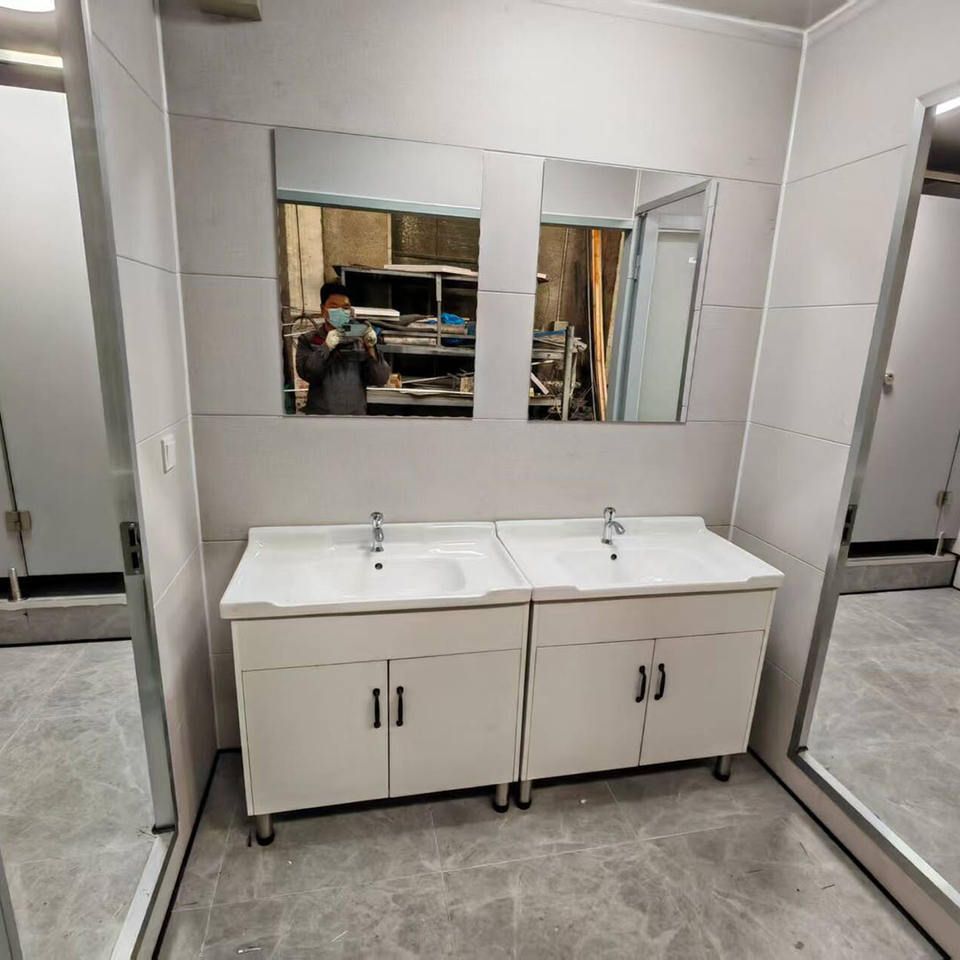
In terms of technical architecture, a four-layer architecture model is adopted. The perception layer is equipped with laser human body sensors capable of accurately identifying 99% of toilet-using actions; the transmission layer utilizes 5G networks to achieve millisecond-level data backhaul; the platform layer employs AI algorithms to predict 80% of equipment failures; and the application layer features unmanned cleaning robots that have been deployed in 20 public toilets in Shenzhen.
Regarding sewage and environmental protection technologies, there are various innovative approaches. Microbial degradation technology decomposes excreta through microbial communities, converting it into a small amount of odorless liquid, enabling internal circulation and eliminating reliance on sewage networks, suitable for long-term fixed locations with stable power supplies. The combined technology of packaging and vacuum suction, designed for large-scale event scenarios, uses biodegradable packaging bags in conjunction with a vacuum negative pressure system to isolate odors and waste simultaneously, significantly reducing the frequency of waste removal. The septic tank-free technology, breakthrough by Zhonghe Qingshan Company in 2025, reduces energy consumption for fecal waste treatment by 60% compared to traditional methods. The dual degradation system, applied in Yuanting ecological public toilets, saves 200 tons of water per unit annually, with treatment products directly usable as organic fertilizer in the Dunhuang Mogao Grottoes case. In terms of wastewater recycling, the Shenzhen Bay Park smart toilet is equipped with a wind-solar power generation system, achieving 100% wastewater recycling, while the Tianjin Eco-city project meets 70% of its equipment's power needs through photovoltaic power generation.
In terms of intelligent components, there are real-time 'Occupied/Unoccupied' displays, automatic deodorization spray systems, toilet paper level detection alarms, and IoT-based liquid level and power monitoring, enhancing the convenience and management efficiency of public toilet use.
In terms of innovative design, 'tidal toilet stalls' in locations such as the Shenzhen Sports Center use movable partitions or electronic screens to switch between male and female stalls in real-time, effectively reducing queuing times and improving toilet-using efficiency. Interactive devices like touch-screen repair reporting systems and 'one-code supervision' systems facilitate citizen repair requests and evaluations, with closed-loop processing times reduced to 2 hours. In terms of safety equipment, the Chengdu World Games smart toilet is equipped with AED emergency devices and fresh air systems, public toilets in Ganjingzi District, Dalian, are fitted with laser fall alarms, and Chongqing Shuanggui Lake scenic area has installed millimeter-wave fall monitors, ensuring the safety of users.
In terms of management model upgrades, data from the Guangzhou Smart Sanitation Platform shows that public toilets connected to the smart system achieve a 35% water-saving efficiency and a 50% reduction in labor costs. Thirty smart public toilets in Sanming City, Fujian Province, have reduced energy consumption for deodorization equipment by 28% through environmental data linkage. The unmanned disinfection module used in the Beijing Winter Olympics achieves automatic ultraviolet disinfection every 4 hours.



