
Shanghai Container House Project
The Shanghai Container House Project encompasses a full range of services including design, production, installation, and decoration, with a wide range of application scenarios, mature technology, and a focus on compliance and team professionalism.
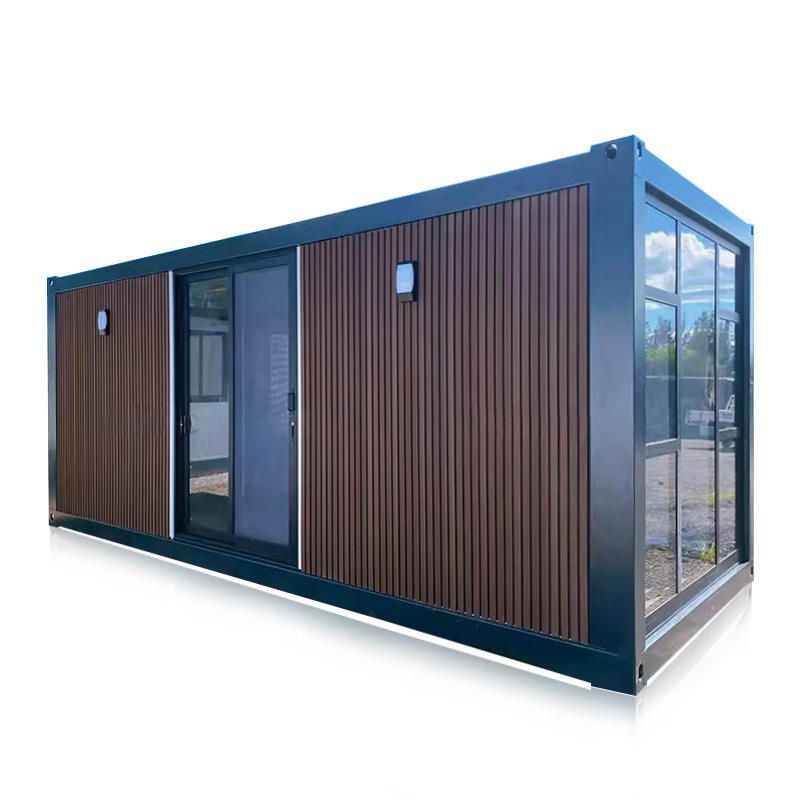
I. Service Content and Types The Shanghai Container House Project has formed a complete industrial chain, including integrated services for design, production, installation, and decoration. For example, Huigai Container (Shanghai) Co., Ltd. provides source factory services for special containers and modular container houses, covering the design, manufacturing, installation, and decoration of special equipment container houses such as energy storage containers, power containers, and multi-story hotel container houses. Its service scope includes drawing design (2D/3D), structural calculations, customized production, simple/luxury decoration, and on-site installation. The technical team has professional backgrounds in civil engineering and mechanical engineering, enabling them to complete structural stress analysis and 3D modeling for complex projects.
II. Technical Characteristics and Innovation Modern container houses adopt modular prefabrication and industrialized installation techniques, breaking through the limitations of traditional temporary buildings. For example, Jizhu Technology transforms containers into versatile living and office spaces through 3D printing technology and modular design, achieving the concept of 'time for space' through folding walls, floors, and sliding spaces. The assembled houses supplied by Shanghai Yaotuo Container adopt dual-container splicing technology, combined with humanized designs such as imitation wood flooring and pre-reserved interfaces, to meet the needs of special scenarios such as野外施工 control rooms (field construction control rooms).
III. Application Scenarios and Cases Container houses are widely used in construction site dormitories, offices, commercial spaces, emergency response, and other fields. For example, Shanghai Angui Industrial once completed a plan for 500 worker dormitories within 48 hours and delivered them within 7 days; the container terminal renovation project in Luojing Port Area utilized container technology to achieve green and low-carbon transformation. The second phase of the project adopted an intelligent operation control system (NEO-TOS), integrating technologies such as 5G and high-precision positioning to improve automated loading and unloading efficiency. In addition, container houses are also used in seawater desalination projects, field construction living areas, etc., demonstrating their strong adaptability and mobility.
IV. Industry Standards and Team Requirements With the implementation of T/CECS 1932-2025 'Quality Acceptance Standards for Container Houses', the industry has set quantitative requirements for structural safety, fire resistance, waterproofing techniques, etc. Professional teams need to have their own factories, technical accumulation, and certified installation teams. For example, Huigai Container has a 4,000-square-meter modern factory and professional equipment, while Angui Industrial achieves rapid delivery through standardized processes. Industry data shows that only 15% of enterprises nationwide have full-chain service capabilities. Although there are many enterprises in the Shanghai market, their service levels vary. Therefore, it is essential to focus on examining team professionalism and compliance when making a selection.



