
Shandong Prefabricated House Installation
Shandong prefabricated house installation is characterized by high efficiency, convenience, diverse services, and strict construction specifications.
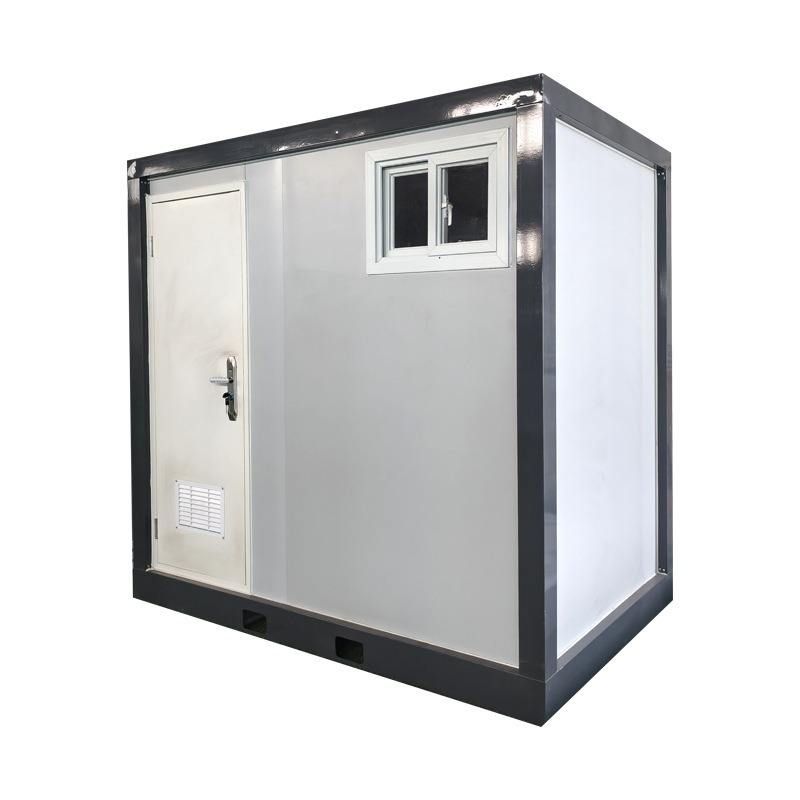
Efficient and Convenient Installation
In Weifang, Shandong, the installation process of mobile folding houses is extremely simple. During installation, the house is lifted using a truck-mounted crane, then pushed open by two people, and finally sealed with screws to complete the entire installation process. The whole process is extremely fast, taking only three minutes. This installation method significantly shortens the construction time and improves construction efficiency, making it particularly suitable for projects with tight time requirements, such as the construction of temporary event venues and emergency relief housing.
Diverse and Comprehensive Services
Shandong Lanjing Construction Engineering Co., Ltd. offers a full range of services in the field of prefabricated house installation. The company not only provides installation services for prefabricated houses used as temporary workers' housing during project construction but also covers a series of customized solutions, including design, manufacturing, installation, overseas project supervision, and after-sales support. This means that customers can communicate and cooperate with the company from the design stage of the house according to the specific needs of their projects, ensuring that the house design meets project requirements and usage functions. During the manufacturing process, the company can guarantee the quality and performance of the prefabricated houses. The installation is carried out by a professional team to ensure installation quality. For overseas projects, supervision services are also provided to ensure the smooth implementation of the projects abroad. At the same time, comprehensive after-sales support also gives customers peace of mind.
Strict Construction Specifications
Before the installation of prefabricated components of prefabricated buildings, there are strict inspection requirements. The positions of the connecting reinforcing bars of the prefabricated components and the lengths of the protruding reinforcing bars should be carefully inspected. When there are serious deviations in the positions of the reinforcing bars that affect the installation of the prefabricated components, they must be handled according to the technical solutions confirmed by the design unit, and it is strictly prohibited to cut the reserved reinforcing bars. Before the grouting construction of the prefabricated components, process inspections and matching inspections should be carried out when there are inconsistencies between the grouting sleeves, grouting materials, and the type inspection reports, and these inspections should be witnessed by the supervision unit. Test specimens for sleeve grouting joints for performance inspection should be made in parallel on site. The grouting at the vertical connection parts of the prefabricated components should be continuous and full, and complete image data should be retained throughout the process. After the sleeve grouting is completed, fullness detection should be carried out, and if conditions permit, the anchorage length of the reinforcing bars inside the sleeves should be detected. When the construction site does not meet the standard requirements for low-temperature curing (-5ºC ± 1ºC), low-temperature grouting materials should not be used for construction in winter. When the prefabricated components are installed by grouting in a connected chamber, there are also corresponding specification requirements, such as sealing or compartmentalizing the joint perimeters, the distance between any two grouting sleeves in the connected grouting area should not exceed 1.5 m, the components should be grouted in a timely manner after being positioned, and it is not advisable to carry out centralized grouting on two or more layers; if centralized grouting on two or more layers is required, it should be approved by the design.



