
Seaside Container House
Seaside container houses are an innovative architectural form that transforms shipping containers into living spaces, characterized by modularity, mobility, environmental friendliness, and cost-effectiveness. They are widely used in areas such as vacation homes, hotels, and permanent residences.
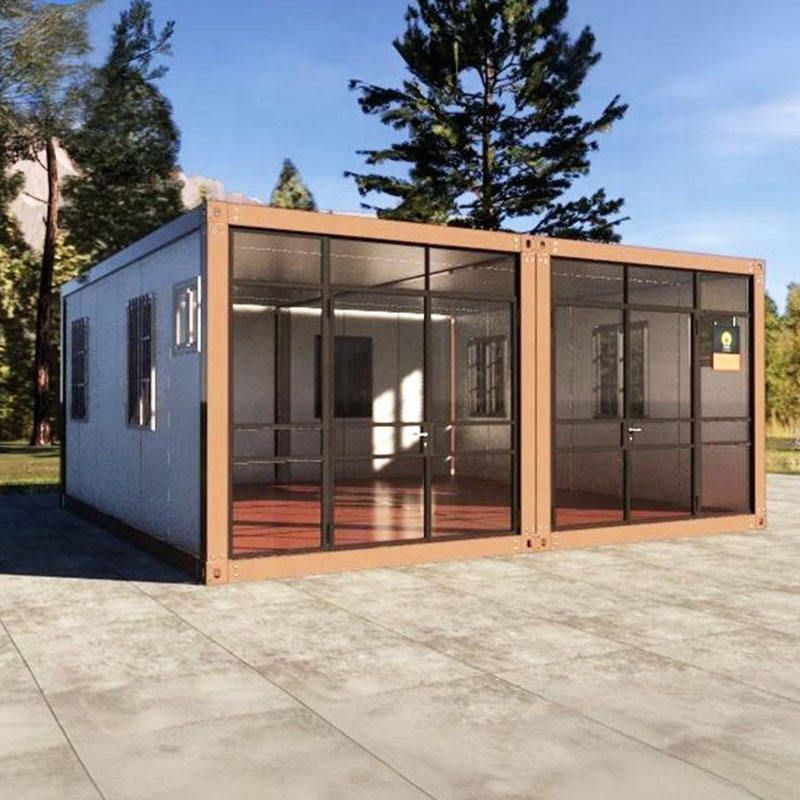
Modular Construction and Rapid Assembly
Container houses adopt a modular design, breaking down complete houses into standardized modules. Most construction processes, including the main structure, plumbing, electrical wiring, and bathroom facilities, are completed in factories. These modules are then transported to their destinations for rapid assembly. For example, a British merchant purchased Chinese-made modular elderly care apartments. After 63 modules were shipped from a Chinese factory to a British port, it took only two weeks to complete on-site hoisting and construction. This construction method reduces the traditional construction period by more than 60%, significantly improving construction efficiency.
Enhanced Durability and Environmental Friendliness
With advancements in container construction technology, their durability and quality have significantly improved. By adopting lightweight steel structure modules, the consumption of foundation materials can be greatly reduced, lowering material usage by 60% to 70%. Meanwhile, the steel waste from standardized CNC cutting in factories is only 3% to 5%, far lower than the 8% to 12% waste rate at traditional construction sites. Additionally, the recyclability and relocatability of container houses align with environmental protection concepts, making them particularly suitable for scenarios where land use permits expire.
Diverse Design and Comfort
The design of container houses has transcended the limitations of traditional temporary buildings, focusing on living comfort and aesthetics. For example, the double-story container vacation homes at Egypt's HACIENDA Resort feature an orange and white color scheme, blending the essence of Mediterranean traditional architecture. The interior adopts an open layout, with the living room connected to the kitchen, enhancing spatial permeability. The Santa María House in Chile is composed of multiple containers, featuring a simple and modern exterior with spacious and bright interior spaces. The living room and dining-kitchen area are well-lit.
Cost-Effectiveness and Advantages
Container houses are less expensive than traditional houses, but customization and permitting costs need to be considered. With proper maintenance, their service life can reach 25 years or more. For example, a smart factory in Guangdong can produce 50 modules per day with manufacturing precision stabilized between 1 mm and 2 mm, ten times the capacity of similar factories in North America, further reducing unit costs.



