
Scenic Area Mobile Toilet Industry
The scenic area mobile toilet industry is addressing the pain points of traditional public toilets and expanding application scenarios through innovations in flexibility, environmental protection technology, material craftsmanship, intelligence, and landscape integration.
1. Enhanced Flexibility to Resolve Supply-Demand Conflicts
Mobile toilets do not require complex foundations and can be flexibly deployed and relocated in core scenic areas or hiking trails based on seasons and tourist flows. For example, they can be added to popular attractions during peak tourist seasons and moved to storage or low-demand areas during off-seasons, effectively resolving the dual dilemma of idle facilities in the off-season and overcrowding during peak seasons.
2. Environmental Protection Technology Driving Zero-Discharge Goals
Integrated micro-power sewage treatment systems form a closed loop through multi-stage filtration and biological degradation, enabling on-site purification of sewage and its recycling for toilet flushing. Theoretically, this achieves near-zero discharge, meeting the needs of ecologically sensitive areas such as mountains and nature reserves. Smart water-saving ecological toilet technology recycles hand-washing water and adds agents for toilet flushing, requiring only 0.46 liters per person, with extremely low operating costs. Recirculating flush toilets utilize biofilm technology to treat sewage, achieving resource recycling.
3. Material Craftsmanship Ensuring Durability and Cleanliness
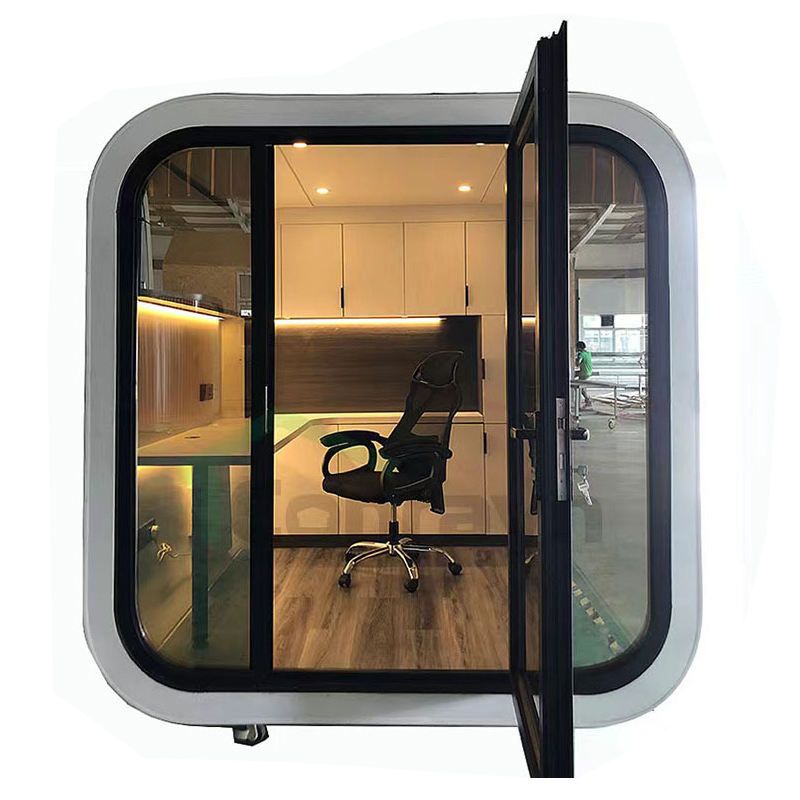
Deep-galvanized square tube frames reduce corrosion rates in outdoor humid environments to 30% of the industry average, saving on later maintenance costs. Broken bridge aluminum doors and windows, along with thermal insulation enclosure technology, stabilize internal temperatures, adapting to both cold winters and hot summers. The interior walls use high-density polyethylene panels or stainless steel plates, which are smooth and stain-resistant; the floors use non-slip aluminum panels or PVC flooring, with hardware treated for corrosion resistance, effectively coping with humid environments.
4. Intelligence Empowering Functional Upgrades
Automatic induction smart ventilation and deodorization systems respond in seconds, maintaining fresh air. For mountain scenic areas without municipal sewage networks,配套 (which means 'supporting' or 'accompanying', here it should be replaced with proper description like 'supporting sewage treatment equipment') sewage treatment equipment treats effluent to the standard for green irrigation, resolving sewage disposal issues. Some products integrate temperature and humidity regulation, tourist flow monitoring, and other functions, becoming 'smart nodes' for scenic area management.
5. Landscape Integration and Scenario-Based Customization
Modular prefabricated technology supports rapid deployment without the need for large-scale civil engineering excavation. Scenario-based customization research and development systems enable toilet exteriors to match different styles, such as antique wooden structures blending into ancient town streets and metal styles echoing modern minimalist architecture, achieving a dual fit between technological cores and aesthetic exteriors.
6. Wide Application Scenarios in the Industry
Small-scale temporary events opt for simple, low-cost products, while large scenic areas like ancient towns and forest parks adopt deeply customized solutions. Application scenarios cover cultural and tourism event sites, rural fields, disaster emergency shelters, etc., becoming 'mobile stations' ensuring public convenience. Domestic companies such as Falilai Group provide one-stop services for research and development, production, sales, and leasing, promoting the standardized development of the industry.



